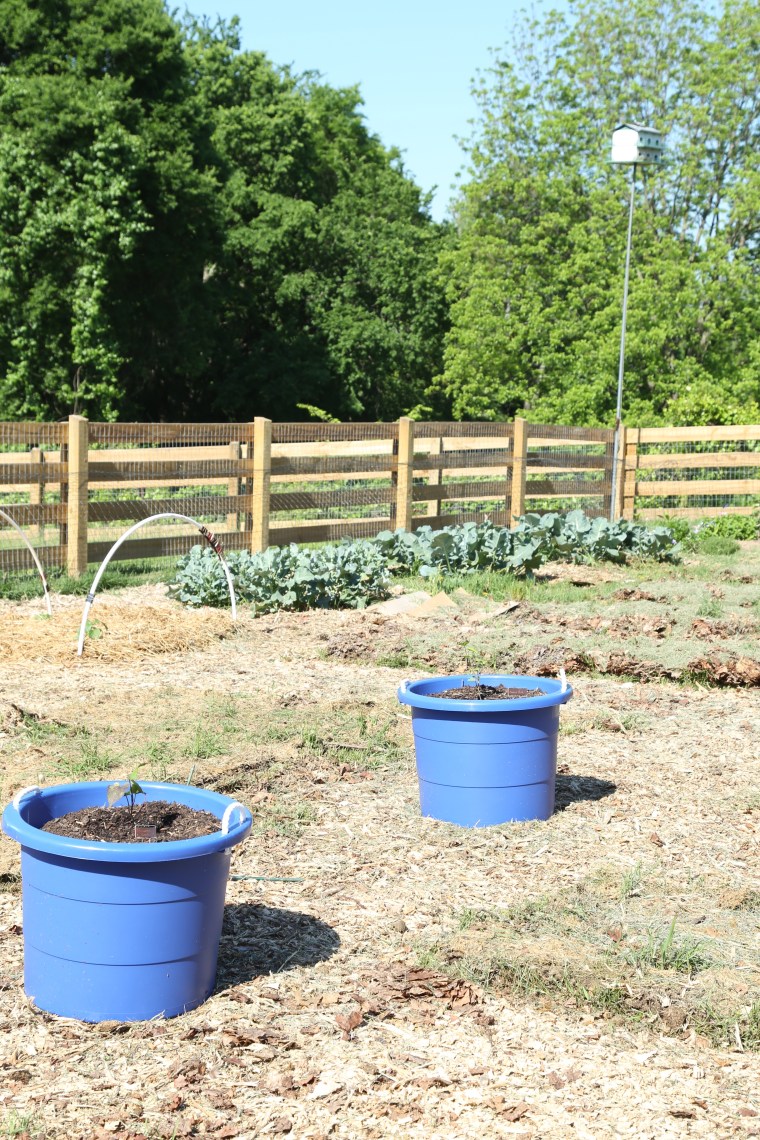
 We have been hard at work building our new garden. Actually, we have been engaged in a war with bermuda grass and right now, we are barely hanging on to the lead in this battle! Despite using lots of cardboard and wood chips, this stuff finds a way to break out and sprout up everywhere. Luckily, there is no shortage of cardboard or wood chips as well as my stubborn determination!
Because of the density of the grass layer, we have turned to a favorite method of building beds and have begun layering materials on top of it rather than break our backs and knees with digging and sifting. The blue tubs each have a sweet potato plant and we are hoping that we will have good luck with this method. In the empty beds, I have layered horse manure, leaves and grass clippings and I will cover the area with cardboard and use purchased organic soil to grow in. Eventually, the layers will compost and the cardboard will disintegrate leaving us with a nutrient rich layer of soil to garden in. Patience is key here because this will take at least a year to accomplish and if all goes well, it will also smother out the bermuda grass in the beds. Otherwise, I will have to dig it out because using something like glyphosate is not an option-read this to see just how bad the stuff is!
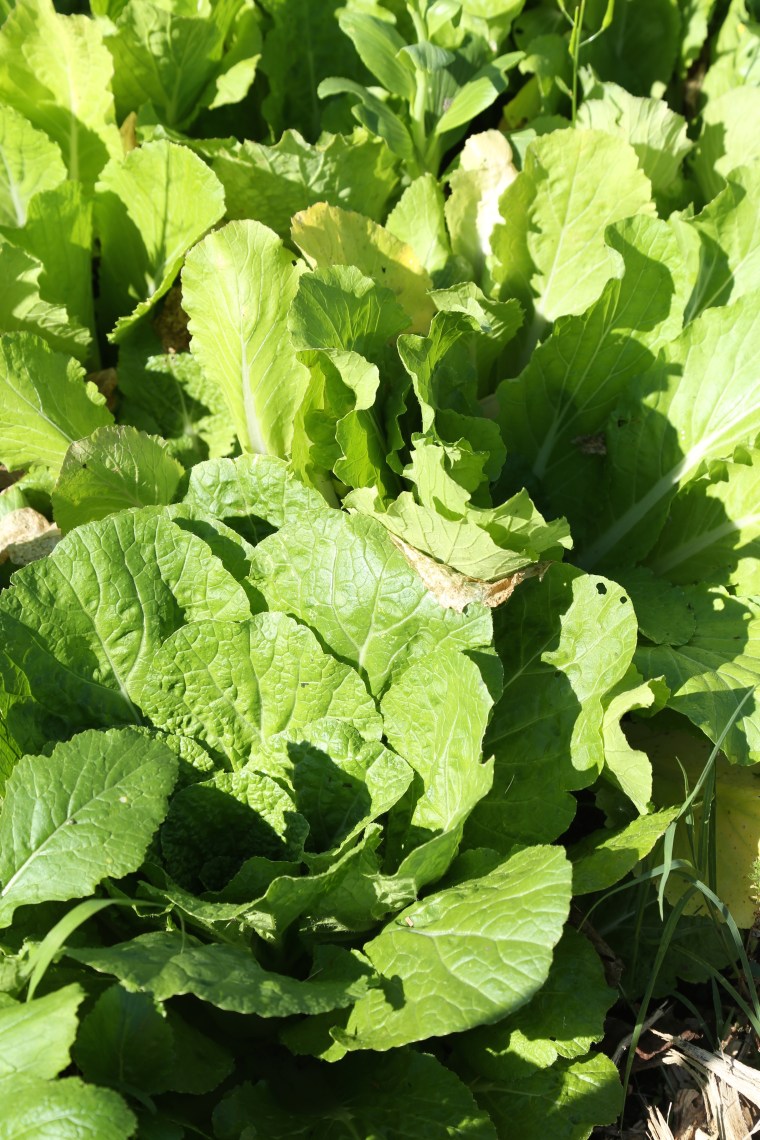 In late winter, I started a few beds by broadcasting a bunch of seeds over them. In this bed, the Chinese Cabbages are doing really well and we should be harvesting them soon!
 These Tokyo Market turnips are a favorite of ours and we are harvesting them about once a week. They are wonderful when roasted and the greens are tender enough that you just have to saute them, no boiling necessary!
 In a nearby bed, I threw in lettuce seeds, obviously too many but, we have had tons of lettuce to eat and to share.
 We purchased about a dozen broccoli plants and we have been eating it roasted and in salads. Did you know that you can harvest those large leaves and eat them too? We have done this on many occasions making the individual plants twice as productive. Use the heads and some of the stems raw in salads and slaws or roast the florets with a little oil and your favorite spice blend. The leaves should be blanched first to soften them, then saute them with a little garlic, you won’t regret it.
 Who doesn’t love surprises? Especially if it is a raspberry bush-we have found two so far!
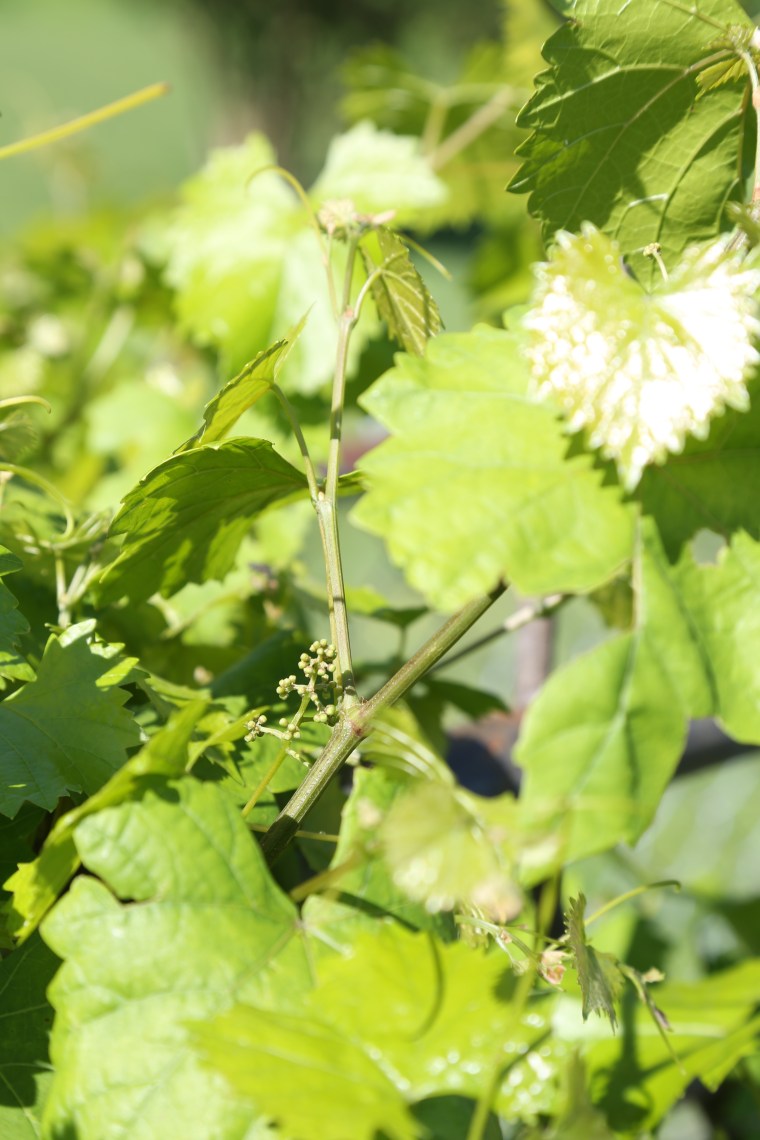 Of course, we learned of the muscadines from a neighbor and earlier this spring, we gave them a hard pruning to alleviate some of the weight and shading on the vines. New vines have erupted and we are starting to see the promise of fruits.
 Beyond the garden is an area where I am hoping to develop a meadow for bees and butterflies. Right now, it is a tangle of weeds and in the middle, is what looks like a dandelion on steroids. Goatsbeard, trogopogon dubius, is a type of salsify and is considered a weed.
 It was disappointing to learn that it is an introduced species and not considered a beneficial addition to the landscape. But that seed head!
 Then there is this guy, Hunky Dory the Americauna rooster we got in the latest brood. He is a handsome fellow but a noisy one as well. We gave him that name because he will crow to let us know that something is not up to his standards. Not enough pellets; crow. No water; crow. Roosting bar fell down; crow. Clock strikes 3am; crow…
 Not only is it against the law, we do not want fertilized eggs or more chickens so the handsome fellow will be rehomed as soon as we can find a suitable situation.
To keep up with the happenings here, sign up for emails. Happy Gardening!
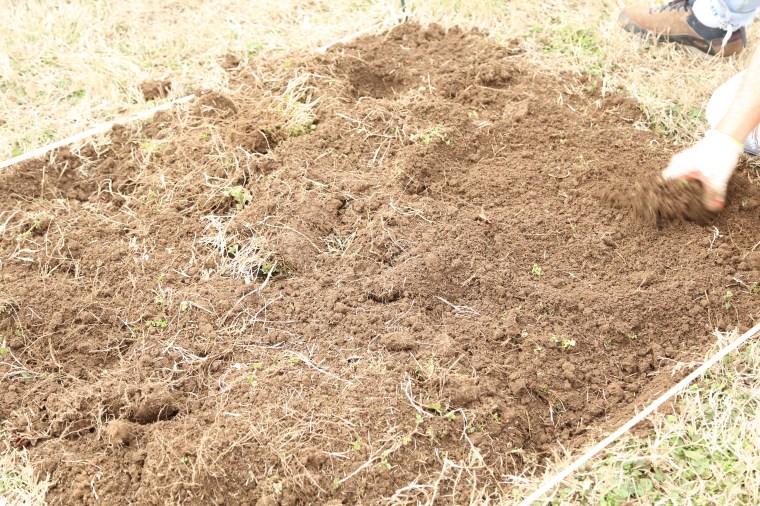 Although the space we have fenced in was once the site of a very successful garden, it hasn’t been maintained in years. Then as if to add insult to injury, some thoughtful person seeded it heavily with Bermuda Grass. Really heavily-inches thick on top with roots half a foot deep. What a nightmare!!! We started the process of building the beds today and in 4 hours time, we only finished 3 (4’x4′) beds. This is going to take a while to do and we may not have much of a garden this spring.
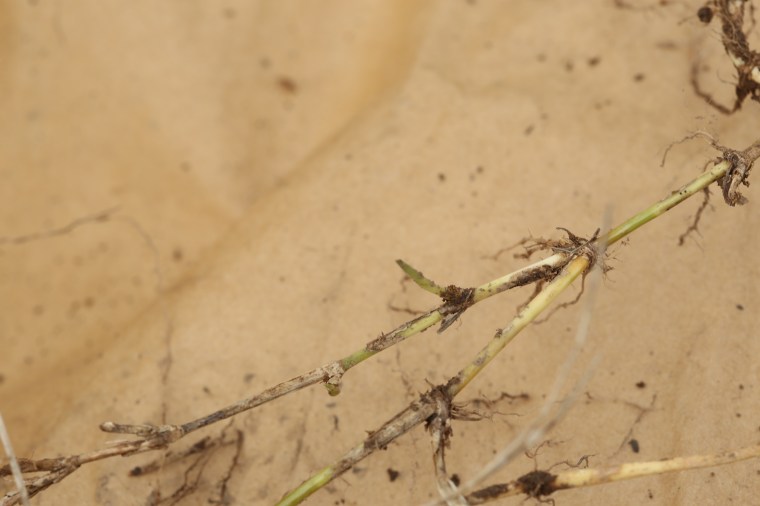 My good friend and fellow Master Gardener Shirley always tells me that Bermuda Grass is meaner than a snake and if you try to rip it out, it gets even meaner. She is absolutely right about that! Each jointed area is a node and it has the potential to become a complete plant. It isn’t enough to just pull it out, you must remove all of the little pieces or you will have lots of new little plants! We spent at least an hour sifting the soil as we turned it to remove as many little pieces as we could.
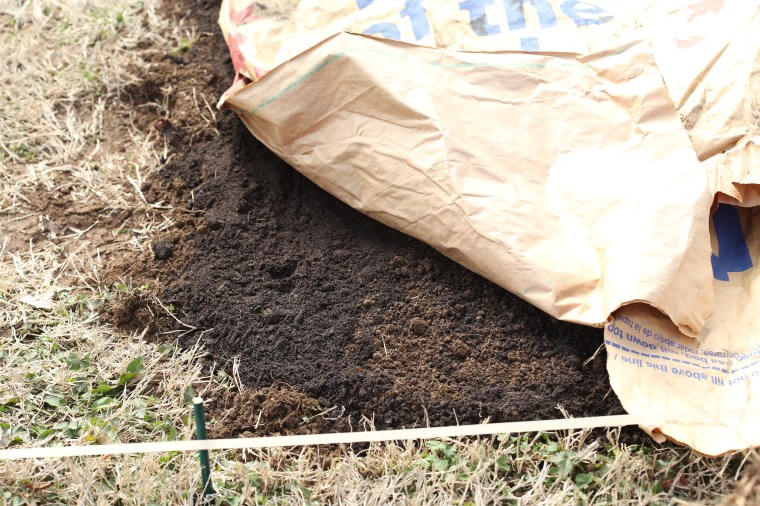 Once the soil was prepped, we spread the contents of a bag of
 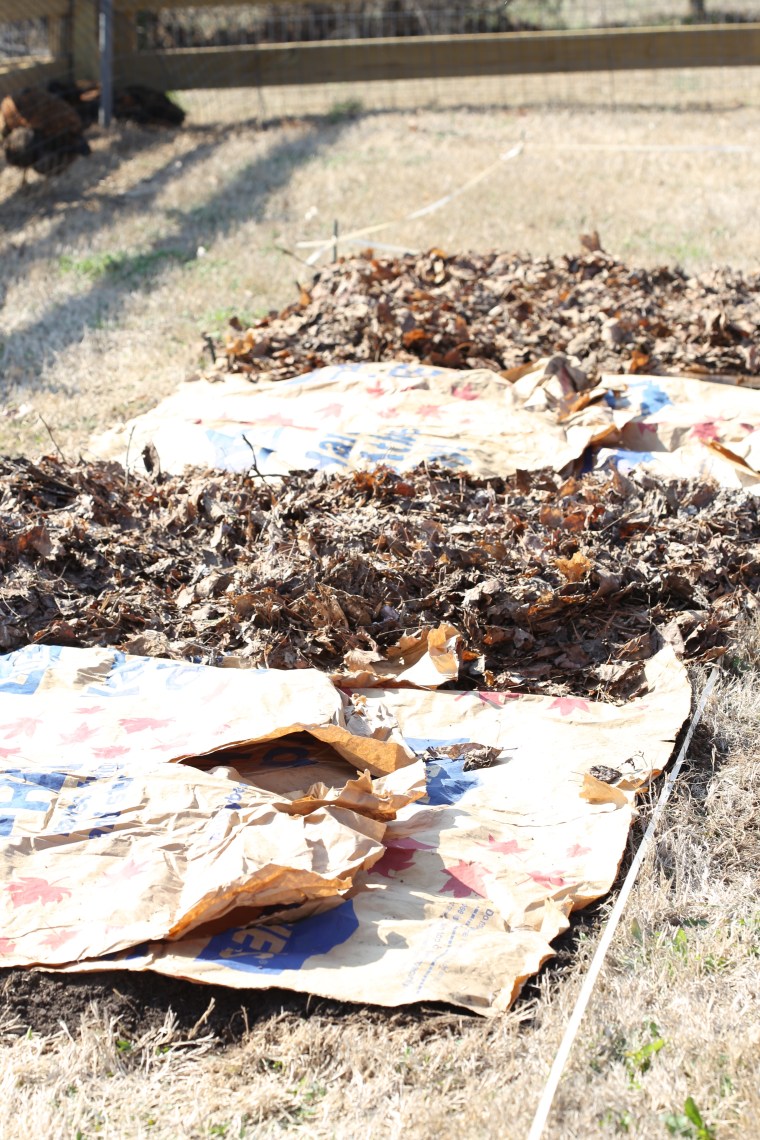 Since we haven’t found an arborist to supply us with wood chips yet, we are using a combination of cardboard and leaves to control the Bermuda Grass in the walkways. Free leaves and cardboard make this project a lot more affordable and keep stuff from going to landfills.
 We purchased a dozen broccoli starts to test our method. To plant each start, I cut an “X” in the paper and folded the pieces underneath to create a hole. Then I used my hands to make a hole and plant each start.
 It isn’t the prettiest bed I have ever seen but it should work!
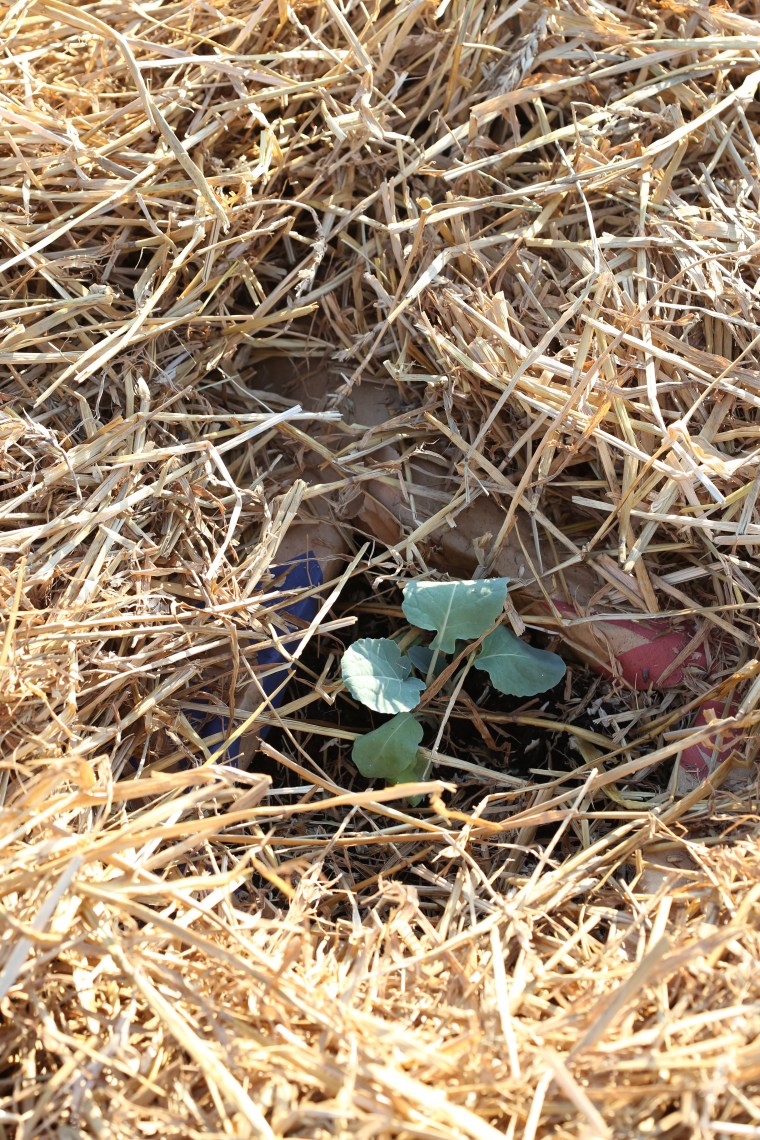 We are also without rain barrels which means using city water and decided to top each square with straw. If all goes well, this layer of straw will help conserve the water so that we do not have to pay Metro for tap water. The added bonus, the paper and straw will also break down over time and help improve the soil.
 will garden for cake