 Isn’t it wonderful when several of your favorite things come together? Everyone who visits this blog knows I love to garden and that baking is what I do professionally. But I am betting that not many of you know that I have a thing for hibiscus plants, specifically, Hibiscus sabdariffa. More commonly known as Roselle, this is the variety of hibiscus used to make tea. Just look at that bloom; how could you not love it?
 While the flower is pretty, and edible, it is a day flower which means it opens for a day and then dies. As soon as the bloom withers, the plant begins producing seeds in the calyx. To make tea, you must gather them before the pod swells with immature seeds. It takes quite a few to make a pot of tea! Because of this, I generally plant 3 or 4 of them around the garden and yard. They can get quite large if the conditions are right; lots of direct sun, plenty of moisture but not soggy.
 If you are looking at this plant and are thinking that it looks like okra, you are right! Hibiscus is also related to cotton and if you spend time in garden centers, you will find that there are lots of perennial and annual varieties of hibiscus. Unfortunately, this variety will not survive a freeze which means you must overwinter it indoors or start over each spring which is what I do. The seeds need heat and will not germinate until the soil is warm. Start them indoors or wait until about May to plant seeds outdoors.
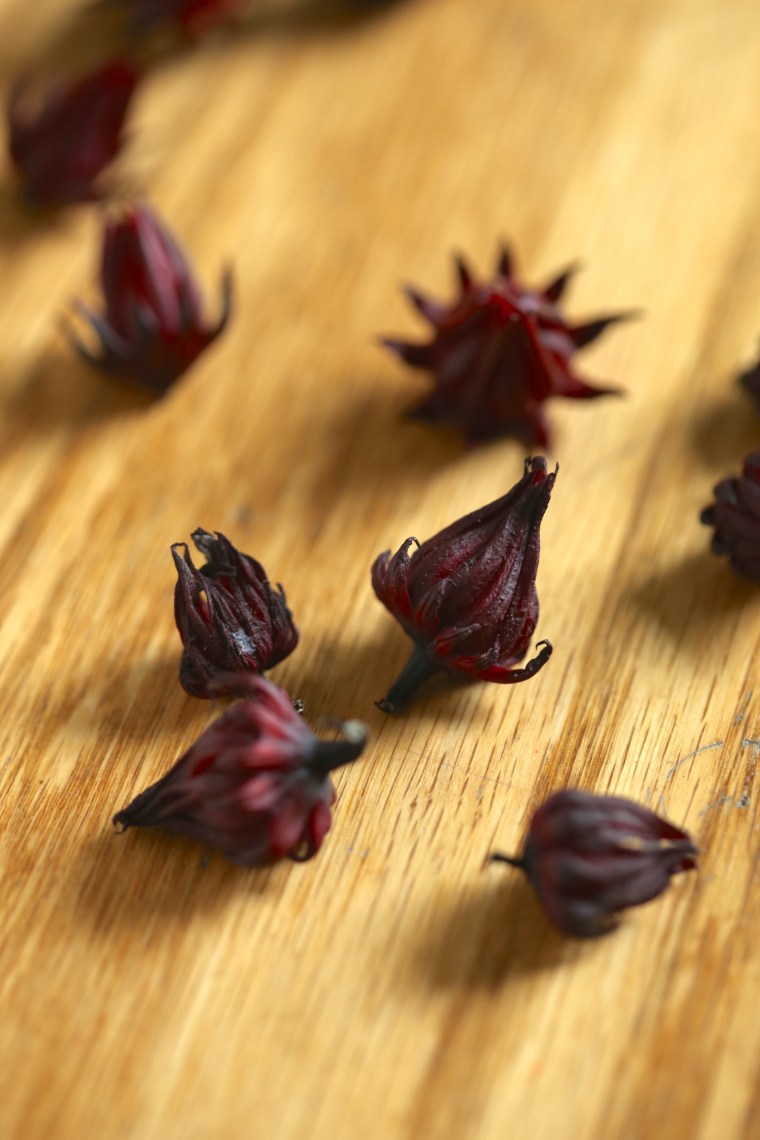 They will begin blooming in late summer and that is when you will have calyxes to collect. Spread them out and dry them completely, I do it in the oven with just the light on. Then when dry, you can store them in a glass jar.
 So what does this plant have to do with baking? This week’s recipe from Baking Chez Moi calls for hibiscus tea! This recipe mixed up quickly and easily and when it was all said and done, I sent these, along with the Valentine’s Share-A-Heart cookies to my girls for Valentine’s Day. They loved them!
 Devon called hers a little pink pizza and looking at that shot, I can see why. However, they tasted like no pizza I have ever eaten! Crispy and flaky and full of vanilla(I was out of rose water) and with just a hint of tangy, floral notes from the hibiscus tea.
 The recipe does not call for much tea so I only used a few calyxes-whizzed them in the spice grinder. My thought is that next time, and there will be a next time, I will use double the amount. After all, summer is coming and I will have more plants in the garden!
 Join us sometime! We love the company. Pick up a copy of Baking Chez Moi and bake along with us. To see how the rest of the bakers did, visit the website.
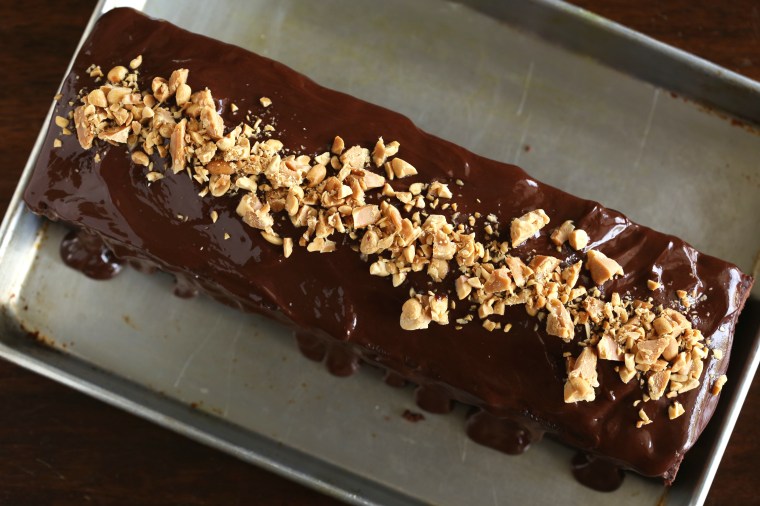 If only I knew what a Sunday in Paris was like; someday… Actually, in this case, it is a reference to a pastry shop in Paris and that is the name of it; Sunday in Paris. This cake is a specialty of theirs and a favorite of Dorie Greenspan’s which is why she developed the recipe for her book, Baking Chez Moi. The Tuesdays with Dorie bakers chose this cake for February and it was a great cake for Valentine’s day, or any day that chocolate and peanut butter are appropriate-otherwise known as everyday in my book!
 Peanut butter is not that popular in Paris where Nutella apparently reigns but here in Tennessee, it flies and fast. We took this cake to a potluck dinner and I came home with crumbs on a dirty tray. The dark, rich cake reminded me of
  This is a recipe I would make again and if you have the book, do not hesitate to try it! To see what the other bakers came up with this week, visit
  It is so nice to be back to baking with the Tuesdays with Dorie gang! Especially when it means baking cookies, lots of cookies! If you recall my post from earlier this month, Dorie Greenspan recently began a
  Do not be intimidated by the call for rolling out the cookies with parchment paper. Over the years, I have rolled out thousands and thousands of cookies and one issue I have always encountered, the added flour from rolling out the cookies can change the consistency of the dough. If you have read any of my posts on rolling cookies, I have always instructed that you brush off as much of the flour as possible to prevent the dough from changing. Dorie has a brilliant suggestion in her recipe; place the dough between two sheets of parchment paper and skip the flour! For small quantities, this is absolutely the way to go and it is definitely a technique I will use again. The parchment paper takes the place of the flour and the consistency of the dough remains the same from start to finish. Keep in mind, repeatedly rolling out the dough will toughen it as the gluten becomes developed but for small quantities like this, you won’t have to worry about that happening.
 If you enjoyed this post, think about baking along with us. Pick up a copy of Dorie’s Cookies and bake cookies to share! Sweeten the world one cookie recipe at a time! To see what the rest of the gang did with their cookies,
  Join the revolution and change the world one cookie at a time. We need more kindness and Dorie Greenspan has decided that baking cookies and sharing them is the way to make the world a sweeter place; I like her thinking and couldn’t agree more! You can read her
 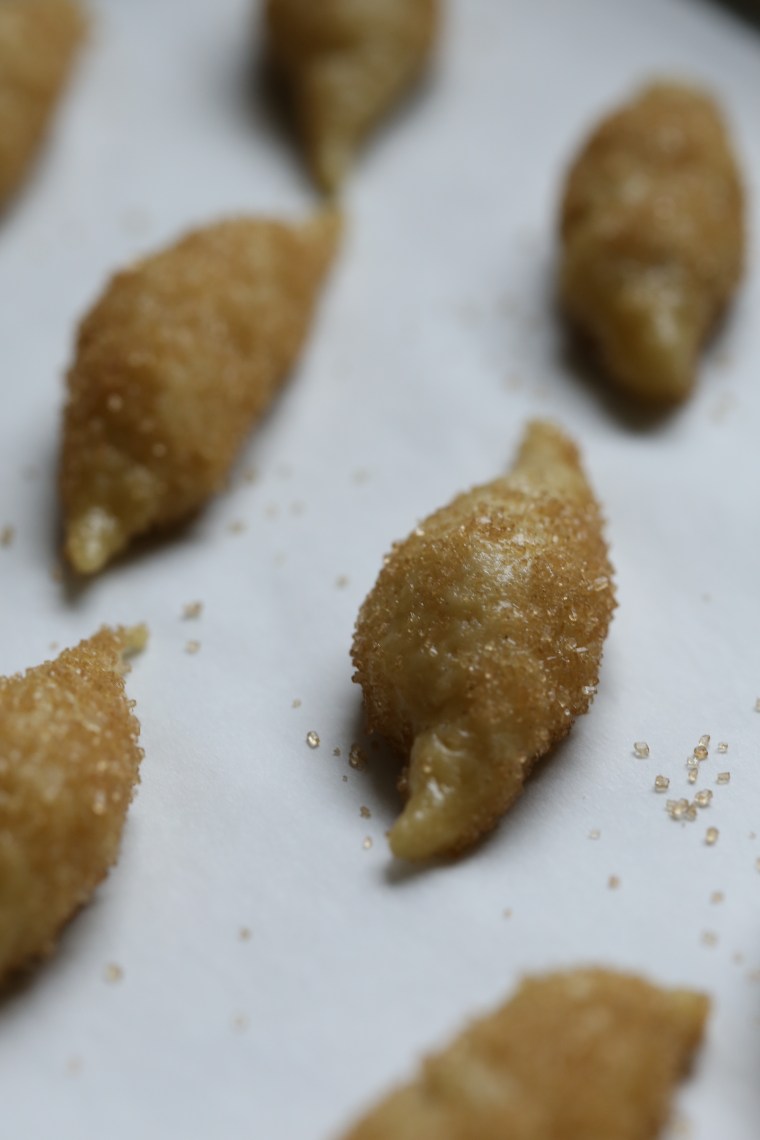 These are the January recipe, Olive Oil and Wine Cookies, and you can find the recipe
 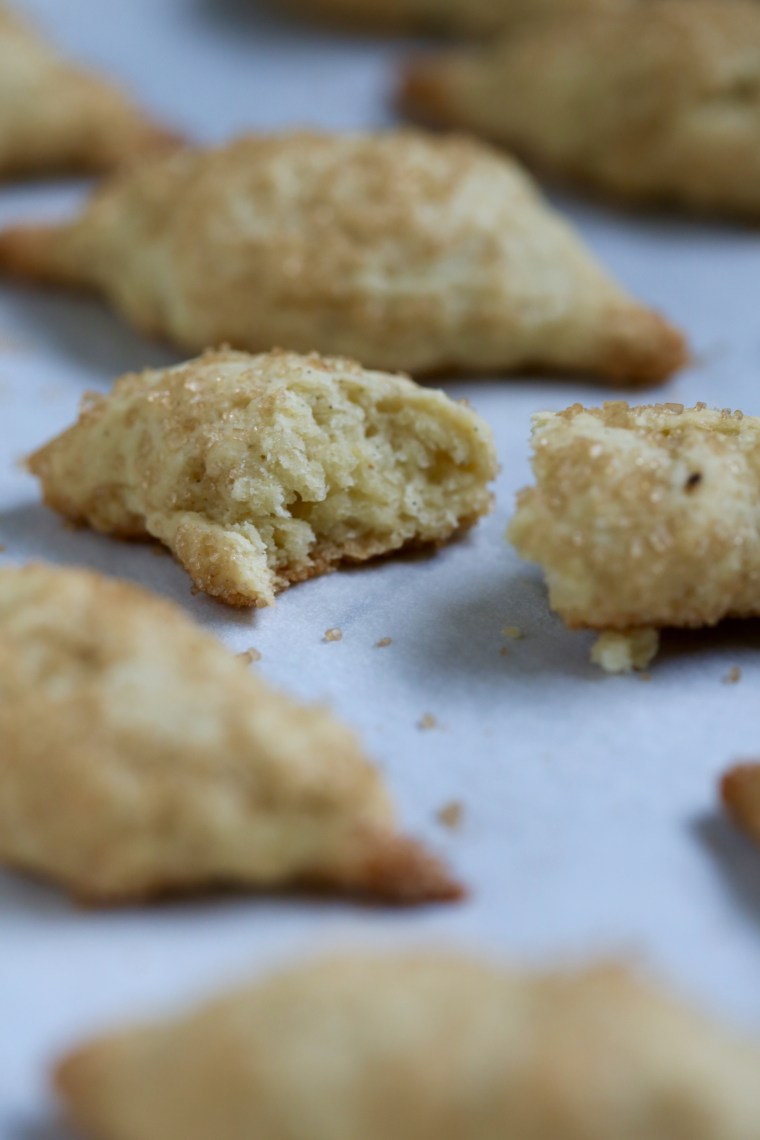 My advice, make these on a day that you have the time and then let them age for three or four days. If you keep them airtight, you will be able to enjoy them for a week after that. They are perfect for sharing and just a perfect for an afternoon cup of tea. Spread the kindness; bake cookies and share them!
 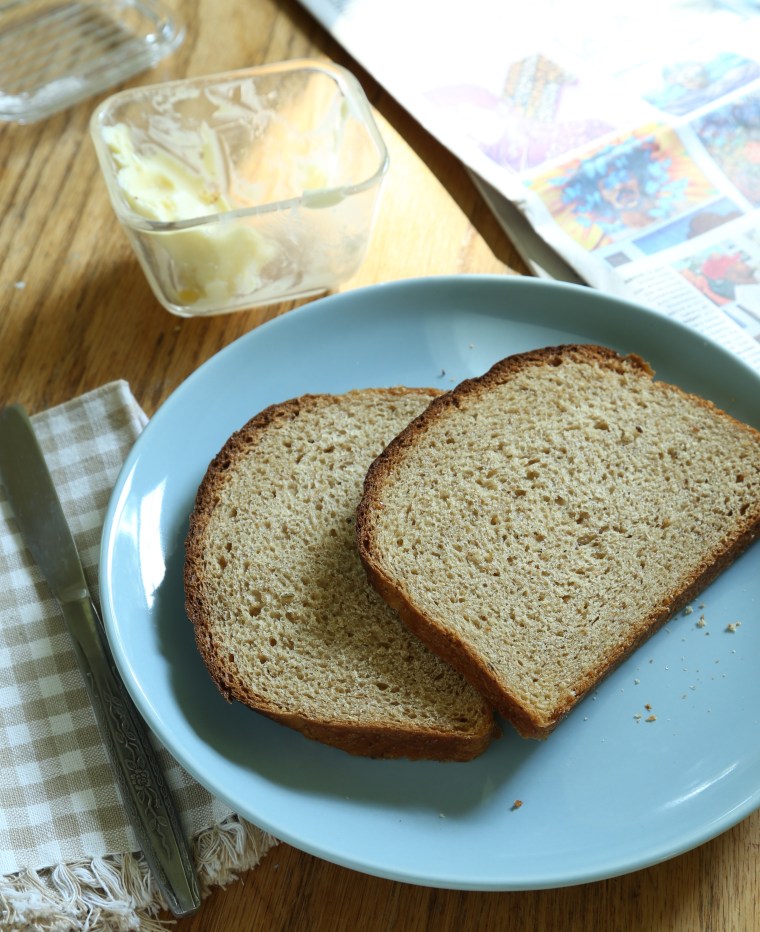 It has been quite a while since I have participated in the Tuesdays with Dorie baking. What can I say, life gets in the way? Partly, the other angle; having a pile of sweets in the house for just two of us means we eat way more than we should! When I saw the choices included a bread recipe this month, I decided to get in gear and give it a go.
 Rather than bake it in the round 9 inch pans the recipe calls for, I used 6 inch square pans. They made the most perfect cube shaped loaves and the slices were just large enough that two thin slices of toast were more than filling.
 My rye flour was stone ground and it added a nice texture to the crumb. Little flecks of rye and seeds, this one is a keeper. Since the recipe made two loaves, I froze one for later.
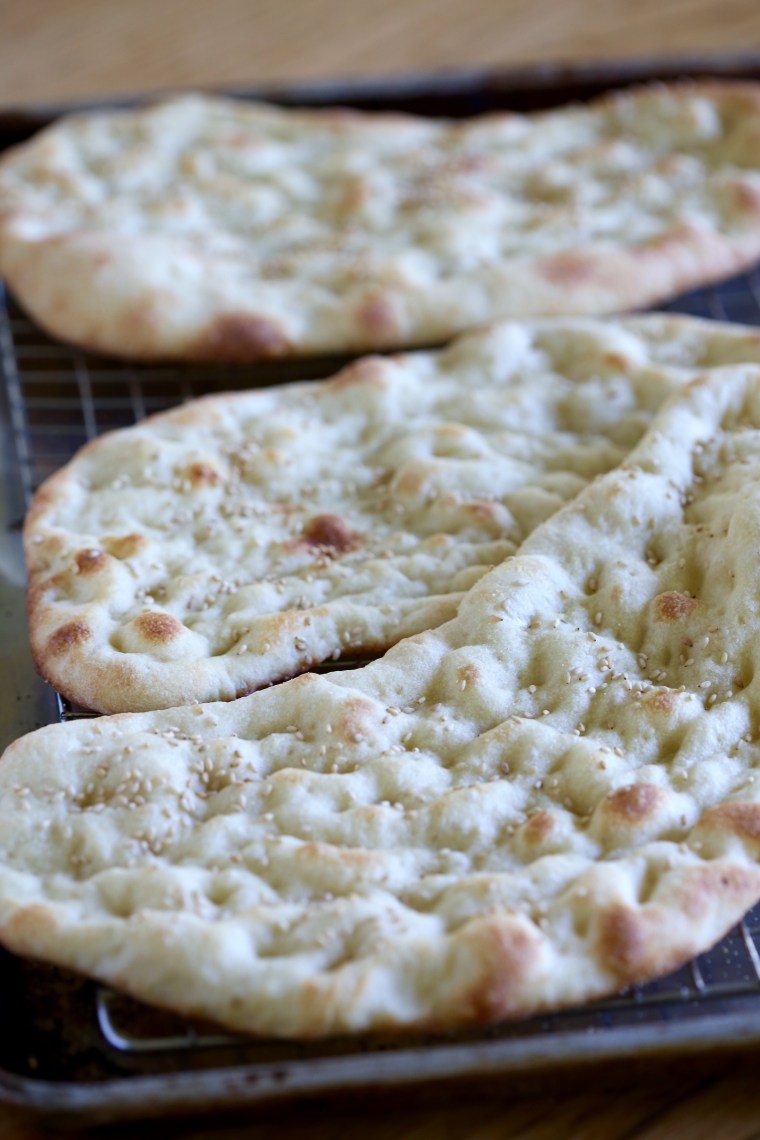 This week, we revisited a recipe we prepared once before because part of baking every recipe in a cookbook means that on occasion, you make a recipe more than once. Sort of. The dough for Persian Naan is also the dough used for Oasis Naan, a flat bread we made way back when I lived in Nashville. The dough is quick and easy to mix and only requires a single rise until doubled before being shaped and baked.
 The bread is not one that holds well and as a result, I made half the recipe. Considering that the loaves are stretched until they are about 18 inches long, halving the recipe really made sense. My loaves were only about 12 inches long which fit my baking stone with room to spare. After dividing, preshaping and resting the dough while the oven heated, the dough was heavily dimpled with wet fingertips before the stretching began.
 My first loaf inflated like a balloon in the oven so I chose to dock the rest of them to prevent them from looking more like a bread pillow than a bread sheet.
 The recipe called for a simple topping of sesame seeds and I stuck to the recipe this time out. It was chewy and pliable with a light crust, perfect for scooping up stuff or wrapping around something while it was warm. My plan is to tear off pieces and eat it with some roasted vegetables for dinner.
 Late last month, I made a loaf of the buttermilk bread from Baking with Julia. It was the challenge for the week chosen by the Tuesdays with Dorie bakers and despite baking it on time, I never posted my photos.
 One of my favorite types of bread is Japanese Hokkaido Milk Bread. The tall loaves are actually made of smaller loaves placed side by side in the pan. Once baked, you can separate them into smaller pieces. Because there is just the two of us here, I chose to make my loaf into three smaller loaves.
 After the loaf cooled, I pulled it apart and froze two pieces for later. The texture was so nice and fluffy and it had wonderful flavor. We ate it all pretty quickly, it made fantastic sandwiches! This is definitely a loaf worth making again and if you haven’t made it yet, I highly recommend giving it a go-just add the flour cautiously, you may not need it all.
 The day I made the loaf was one of those days that I had a list of things to do that was as long as I am tall. Taking a lot of photos was not an option and I had to make do with what was in front of me rather than styling the photo. Rather than drag bounce cards and tripod out, I took an empty box of cereal and clipped a binder page to it to reflect the light.
 A while back, I picked up a little tin of matcha tea so that I could try baking with it. Needless to say, it has been living on the spice rack in the pantry and would probably still be there, unopened, if the Tuesdays with Dorie bakers had not chosen to make matcha financiers this week!
 Since we are trying to lose a little weight here, I only made a third of the recipe which gave me 10 little cakes. My new pan, one I found on my last trip to Pennsylvania, is actually for popovers and for some reason, it only has 7 cups in it which meant I had to use 2 pans. The ones I baked in the muffin pan, a black-nonstick pan, are on the right side of the photo. The look very different from the ones baked in my aluminum popover pan.
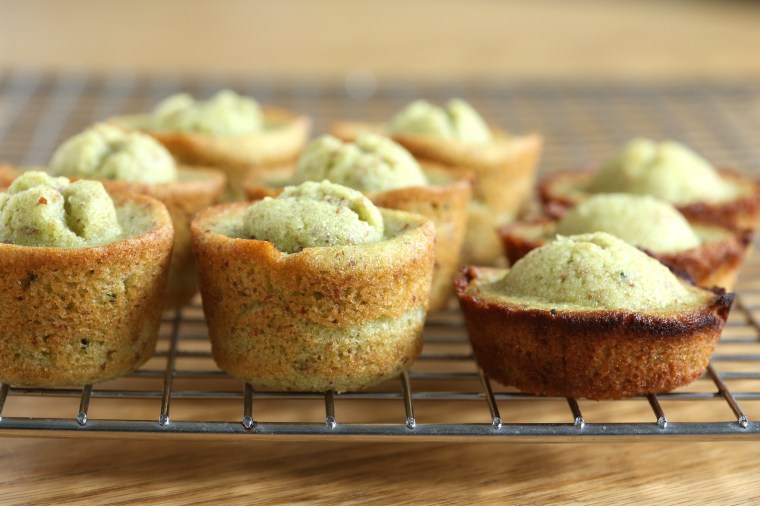 Not only did they look different, they also came out shorter and much darker. Beleive it or not, I used a portion scoop and each one is the same amount of batter-the pans were just so different that it really shows in the baked cakes above.
 Matcha tea is not easy to find and I picked mine up in a
 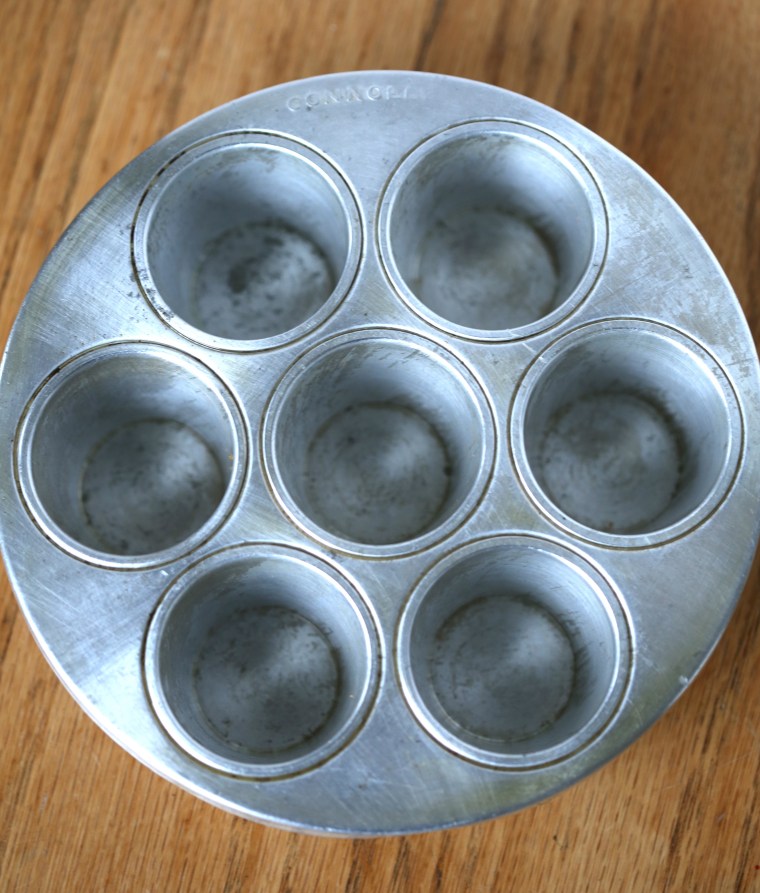 My new, old pan. It is a fairly heavy gauge, aluminum popover pan and the cups are nice and deep. Best part, I think I spent $3.00 for it!
 A side view of the cups-nice and deep
 The photo in the book has very bright green cakes but the recipe tells you that the batter will be a pea green. Mine are definitely pea green which makes me wonder about the photo in the book. The day these were baked, the flavor was a little grassy and I did not care for them but as they aged for a day or two, the flavor improved, a lot. These may make another appearance in our kitchen, but not for a while-we really need to get back on track with the diet!
 This week, the recipe was a true challenge that took two weeks to complete. Now if that doesn’t deter you from trying to mix up a batch of this bread, not much will! To make a traditional Pain de Campagne, you have to save a piece of the dough from your batch to act as a starter for your next loaf which means you are always working with a bit of old dough called a chef. If you find yourself without a chef, you have to start one with whole wheat flour and water and pray the yeast feels like cooperating.
 The rye is on the left, the graham is on the right. What a disappointment it was, I had assumed that since I do a fair amount of bread baking here that there would be plenty of yeast to grab and get the starter going.
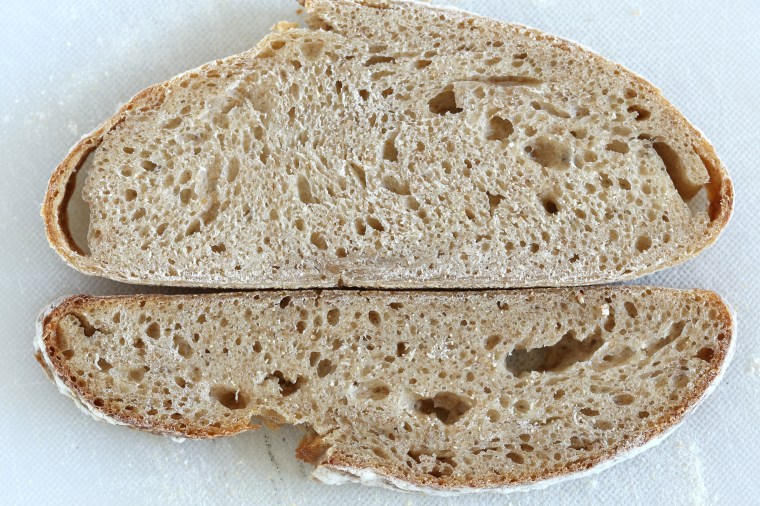 Out of curiosity, I sliced the loaves to see what the interior looked like. It was dense, moist and a bit gummy. Both of them were. It was pretty obvious that there just was not enough yeast in the chef and then the levain to give rise to the bread. Honestly, I was surprised that the graham loaf had a ribbon of raw dough along the bottom crust-it had risen pretty well. The flavor was surprisingly sour, a mild sour but it was there.
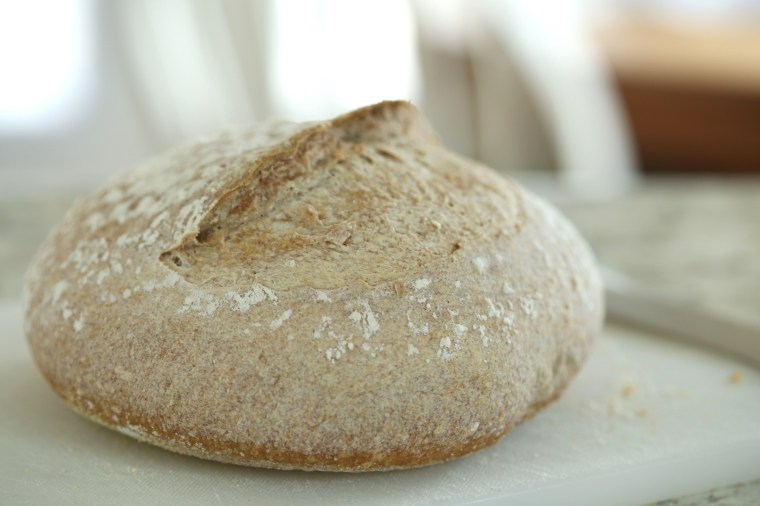 The little ball of dough rose nicely and because I ran out of time, I decided I would put the basket of dough in the fridge to rise overnight. Because I am curious, I pulled off a walnut sized piece and set it aside in the fridge; I was going to use it as a chef for a full batch of dough. The next morning, I pulled the basket out of the fridge and let it sit on the counter to warm up and rise a little more.
 When the time came to bake the loaf, I was excited-this one actually rose! There was oven spring too-it rose more! The only thing I did not understand was the pale color of the crust on the top, it browned nicely on the bottom. The interior looked nice, no stripes and no gummy crumb. It also had a nice sour flavor. As for that piece I set aside, I used it to start a new loaf but this time, I made a full batch.
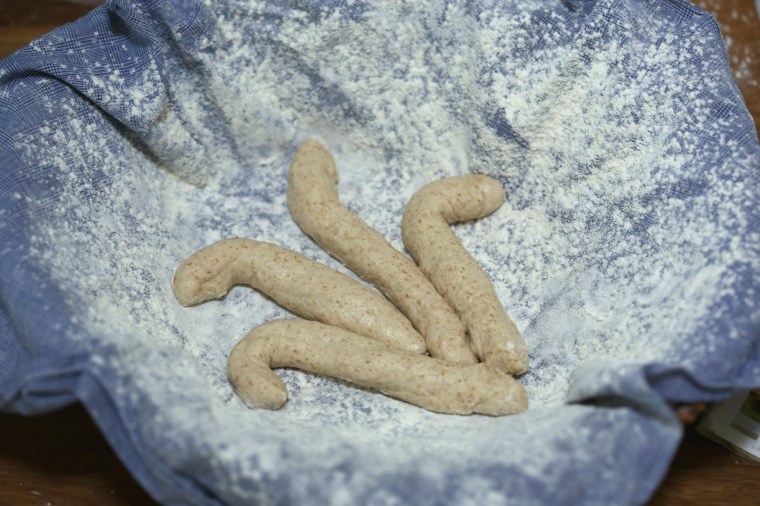 The shaping was easy to do and I cannot remember when I did this type of baking last-perhaps at school…My wheat stalks in the bottom of the basket.
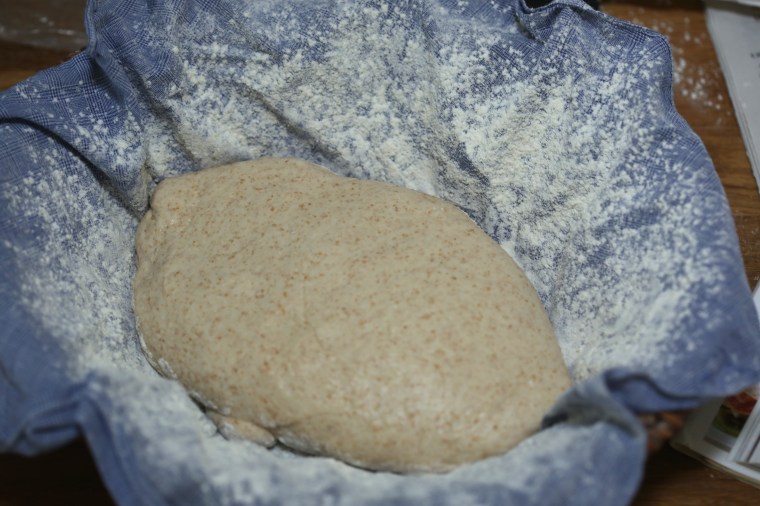 The loaf was placed over the wheat stalks.
 The loaf gets wrapped with a braid of dough and then it is left to rise in the basket. Two hours later, I turned it out onto the peel and let it rise some more. Just before baking, I brushed the loaf with a wash of egg whites and snipped the wheat stalks.
 Fresh out of the oven, my wheat stalks look more like paws.
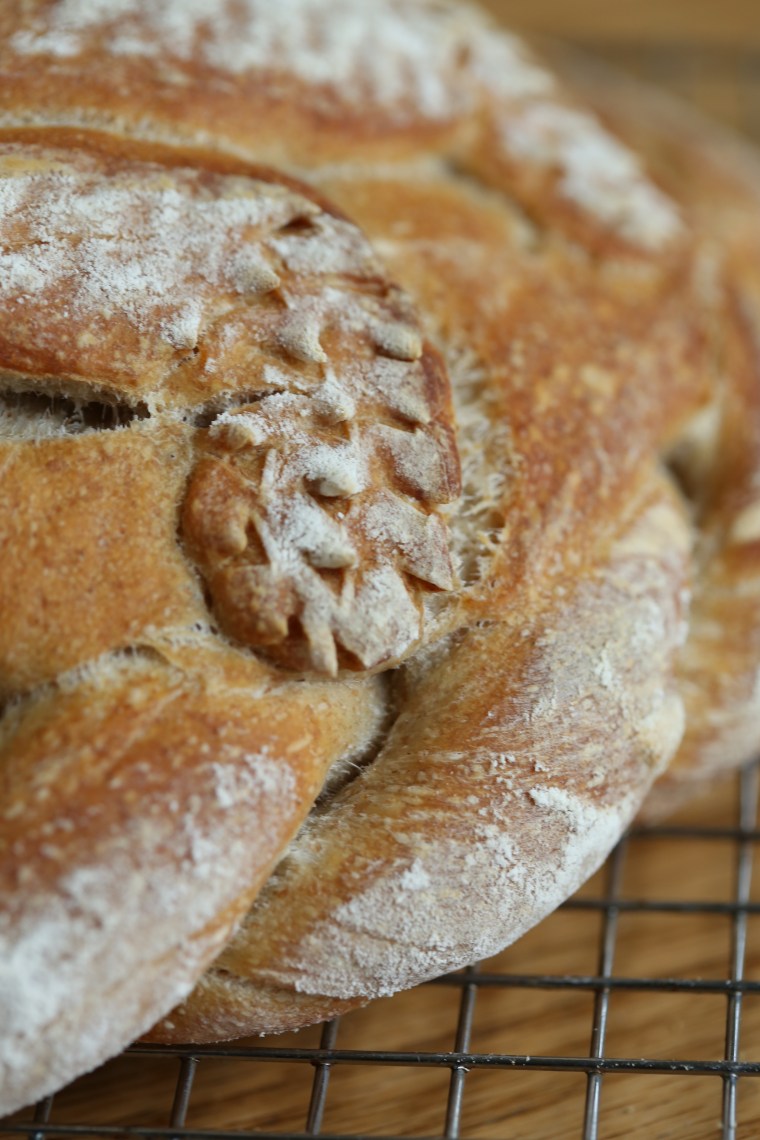 The scissors did a nice job on the stalks. It was fun to make this loaf and now it is sitting on the counter taunting me…
 May have to make another one just so I can make those wheat stalks again! Be sure to visit the
  It has been a while since I have participated in the Tuesdays with Dorie baking and I decided to get back to it this week by baking Odile’s Fresh Orange Cake. Luckily for me, I happened to have a bowl of Sky Valley heirloom oranges from Trader Joe’s camping out on the kitchen counter and this gave me a way to use them before they went bad.
 will garden for cake