milk and honey bread; a food52.com community pick

IMG_3252

It’s no secret that maintaining a food blog means doing some serious time in the kitchen.  Whether you create your own recipes or just use recipes you find, if you want to be considered a credible source, you have to spend time in the kitchen preparing food.  And everybody knows that a blog post about food without photos is pointless so do not forget about the time it takes to style the photo and get the shot.  On a typical blogwork day, I can easily spend 2-3 hours from start to finish and if you count the time I spend just perfecting a recipe, it can easily be spread out over several days with as much as 10 hours spent just on the recipe.  We won’t even mention the cost of ingredients or the fact that I have not monetized my blog and earn nothing for my efforts.  Seems like a pointless activity, doesn’t it?

So why would someone pursue blogging as a pastime?  Personally, I enjoy the process of creating recipes and then photographing them.  Keeping a blog also makes sharing these recipes so much easier too.  When I get a request, I can simply send a link via email.  But the biggest plus, the sense of community that comes from sharing recipes.  How can that be?  It is a fact that using computers and the internet tends to isolate us but they also give us the opportunity to communicate with others around the world.  Of course, you do need to have readers to truly get that sense of belonging and luckily, there are many online groups and websites that bloggers and even non-bloggers can join.  While some websites that allow users to post recipes freely cannot always be trusted, there are plenty of them that can.

One of my favorite websites to search for recipes and information as well as post my own recipes to is food52.com.  Many of the articles posted on the website are written by well-known cookbook authors and chefs.  By creating an account, anyone can upload recipes to the website and create personal collections of recipes found on the site.  For a person with little interest in blogging but a desire to get their recipes online, this is a great way to gain exposure.  The website features a theme based contest regularly and anyone with an account can participate, something I have done on numerous occasions.  The theme changes each time and you never know what it will be; canned fish, beer, Thanksgiving pies and honey are a few past themes that come to mind.

IMG_3259

After the submission period ends, the editors of the website cull through the recipes and select a group of recipes that they title “Community Picks” and give the members a chance to test them.  On a recent afternoon, I signed up to test a bread recipe that had been chosen as a Community Pick from the “Best recipe with honey” contest.  While the website does offer a prize for the two finalists of each contest, the testing does not but if you follow through and send in your testing notes, they may get included in the  for the recipe.

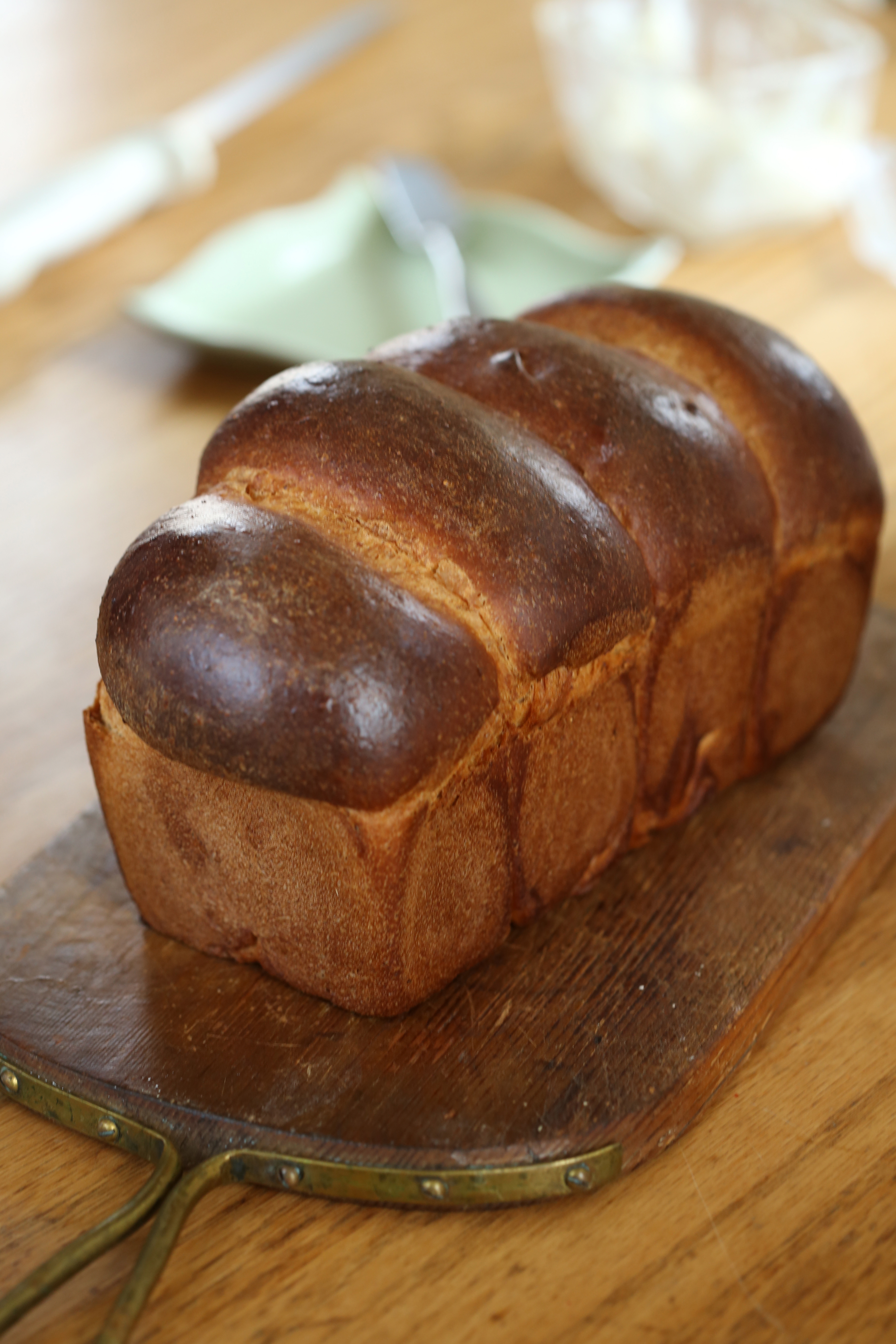
Since I am a member of the website, I chose to make the Milk and Honey bread.  When I saw the photo, I immediately thought of Hokkaido Milk bread and was reminded of all of my trips to the Korean Bakeries in Atlanta that sell a similar bread.  Tall, narrow loaves with fluffy interiors that make divine toast.  However, this bread was actually more like a loaf of brioche; tighter crumb, richer flavor but delicious toasted.
IMG_3275

My notes went off to the editors and while they did not use them, I am including them here:
A quick glance at the ingredient list for this recipe might have you questioning the seemingly random numbers but to an experienced baker, it means that the amounts are exact and precise.  The truth is the art of baking is steeped in math and science and serious bakers know that a scale is a necessity, not a luxury and when weighing in grams, there is little room for surprises.
The shape of the resulting loaf reminds me of Hokkaido Milk bread but that is where the similarity ends and it is actually produced in a manner more like a brioche dough.  It yields a rich bread with a tight crumb, lightly scented with honey and perfectly suited for any number of uses.  Toasted with marmalade or drenched with custard for French toast, this bread is a wonderful addition to your baking arsenal.
For those of you that do not have access to a scale that weighs in grams, here are a few conversions for you.  The 278 grams of milk is slightly less than 1 1/4 cup while the rye flour and the toasted wheat germ are 3 tablespoons each.  The 420 grams of bread flour translates to nearly 3 cups but do yourself a favor and hold back 1/4 cup, you may not need it, I didn’t.   Keep an eye on the oven, I dropped the temperature to 375 and the loaf baked in 40-45 minutes but I had to use a foil tent after 20 minutes.


IMG_3276

My results with the recipe were a little mixed and I actually prepared the bread twice.  Does this mean the recipe is not good?  Absolutely NOT; my second batch of bread was spot on and quickly devoured by my coworkers.  There are so many things that can cause different results that I would say this recipe is worth preparing and to get the proper results, follow these two suggestions; hold back some of the flour and lower the oven temperature.  Flour is one of those ingredients that can vary from region to region and I don’t mean just by the growing region, the area you bought it in can matter too.  Here in the south, we tend to use softer wheats while up north, hard wheats are more common so knowing what your favorite brand is milled from helps.  And as always, oven temperatures can vary greatly because of calibration or due to elevation and just because my oven set to 350 works for me does not mean yours will work for you.  My suggestion to home bakers is to always use an oven thermometer and a timer and if you live in a higher elevation, knowing the needed adjustments is crucial for success.
IMG_3285As I mentioned, I have entered contests on the site.  A couple of my recipes have reached the finalist stage:

Masala Spiced Pear Pie, Best Thanksgiving Pie

Blackberry Cornbread Buckle, Best Buckle, Slump, Grunt, Crumble, Cobbler, Crisp, Sonker, Pandowdy, and/or Betty

Some of my recipes have also been chosen as Community Picks and to see that list, here is a link.  But the best news of all, I actually won the Best recipe with Beer contest, and of course, it was with a bundt cake recipe!  Yes, you can have your beer and cake it too…

Gingerbread Beer Bundt Cake with Chocolate Glaze

Now for those of you who are wondering, no I did not get paid to write this post, I also did not receive a shipment of kitchen gadgets or ingredients for posting it.  In the past, I have received some lovely gifts of Oxo kitchen gadgets for making it to the finalist stage.  However, I am just grateful for the chance to belong to a “community” of food lovers who enjoy sharing recipes and information as well as a little friendly competition.

crispy topped brown sugar bars (aka legal crack); a tuesdays with dorie post

IMG_3360

It is no secret that I love cookies and bars, especially when chocolate is involved.  For some time now, I have known that chocolate is and always be my downfall.  But when you add caramel to the mix… Let’s just say that I will be bingeing along with the rest of the addicts.

So far, very few of the recipes that we have prepared since I started baking along with the Tuesdays with Dorie group have been earmarked as “must make again” recipes.  While some may think I am crazy, I am not; I am a professional pastry chef and I spend my days baking sweet stuff.  My palate is well-developed and I love many of the things I bake.  However, if I ate them as frequently as I baked them, I would weigh about 750 pounds.  When you spend as much time working with sugar as a typical pastry chef does, you often find yourself craving things that aren’t sweet.  For me, popcorn and pretzels are generally what I reach for.  Even so, something sweet will make an appearance and ice cream, cookies or even a coffee cake are typical choices in my home.  These bars however, are something that I really would consider making again.


IMG_3303

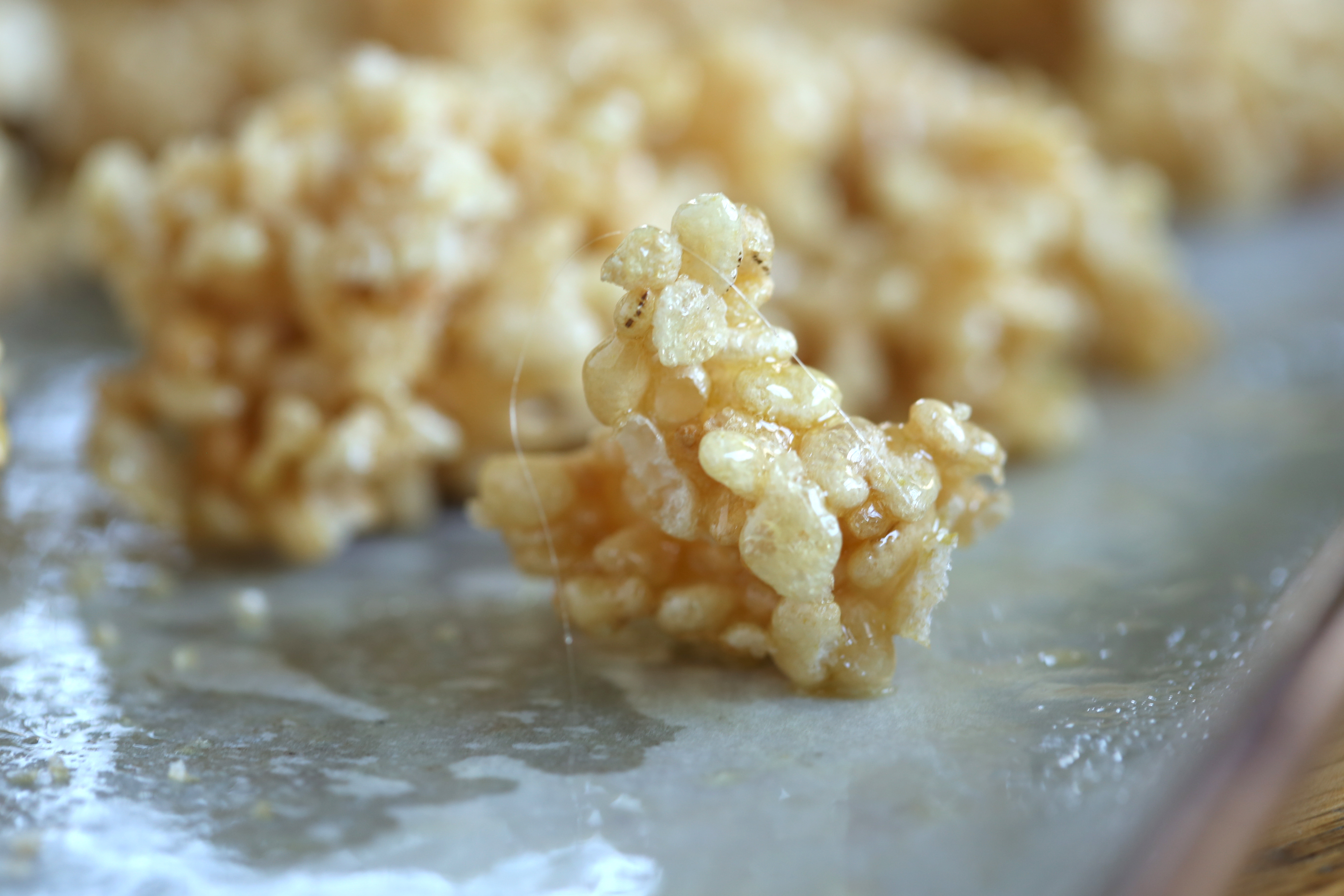
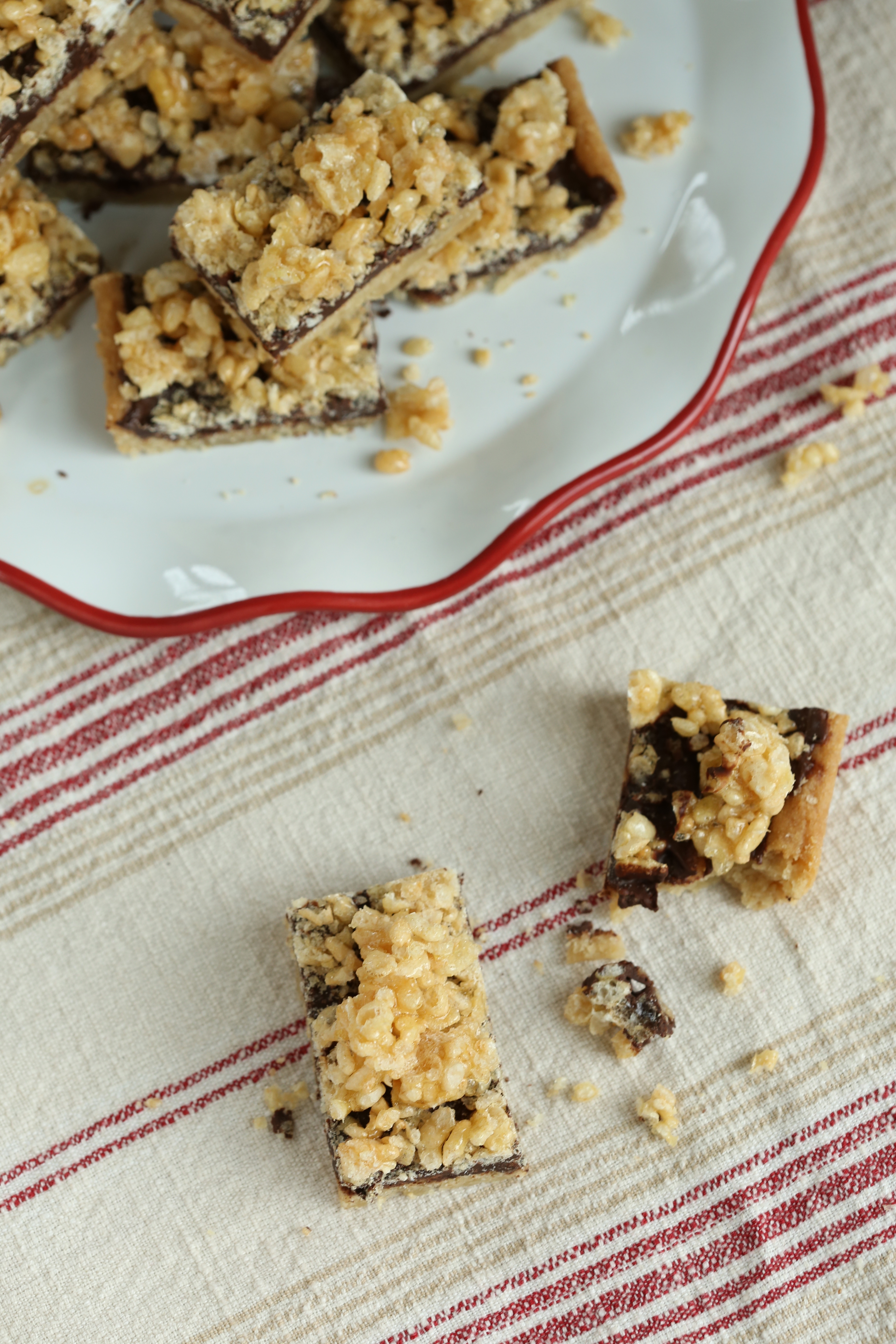
This.  The reason I would make these again; the crispy topping.  Simple enough, burn sugar, stir in crispy rice cereal and then break it up and press it into a melted chocolate topped brown sugar cookie bar.  They should be called legal crack bars because like potato chips, you will not be able to stop yourself.

Cooking sugar to the caramel stage is trickier than you think.  It is easy to over cook it and before you know it, black smoke is billowing out of the pan and a horrible bitter smell will fill the air.  Never walk away, trust me, you will regret it.  This time around, I stood there and waited and watched and waited and watched.  When I could see the color developing, I gave the pan a few swirls and when it reached a nice light amber color, I stirred in the cereal.  Sure, I could have gone a little darker but I am not liking my glass-topped stove and the way it holds onto heat so I stopped a little sooner than I would have liked to.  Even so, I am glad I made a larger batch than called for; it made up for the half cup I ate as it cooled…
IMG_3309

Look at the sugar hairs.  Now you know how cotton candy is made.  Sugar cooked to the hard crack stage and spun into fine hairs.  Yes, hard crack, the stage before caramel, a fitting name if you ask me.


IMG_3351Now like any other addict, I will have to hide my stash.  Actually, I will do one better and walk away.  Thinking I need to send these away, quickly.  If you are smart, you will make these and if you do, be sure to give them away as fast as you can.  Powerful stuff.  You will find yourself making all sorts of deals and promises for just one more bite.

Join us if you can, we bake and post each Tuesday.  The only requirement, a copy of the book since we do not post recipes out of respect for the author.  This recipe can be found in Baking Chez Moi by Dorie Greenspan.  To see how the other bakers fared, visit the website and check out the LYL page.  Be sure to join us as we alternate between this book and Baking with Julia and post about our experiences each Tuesday.

IMG_3362

how does my garden grow?

IMG_3226

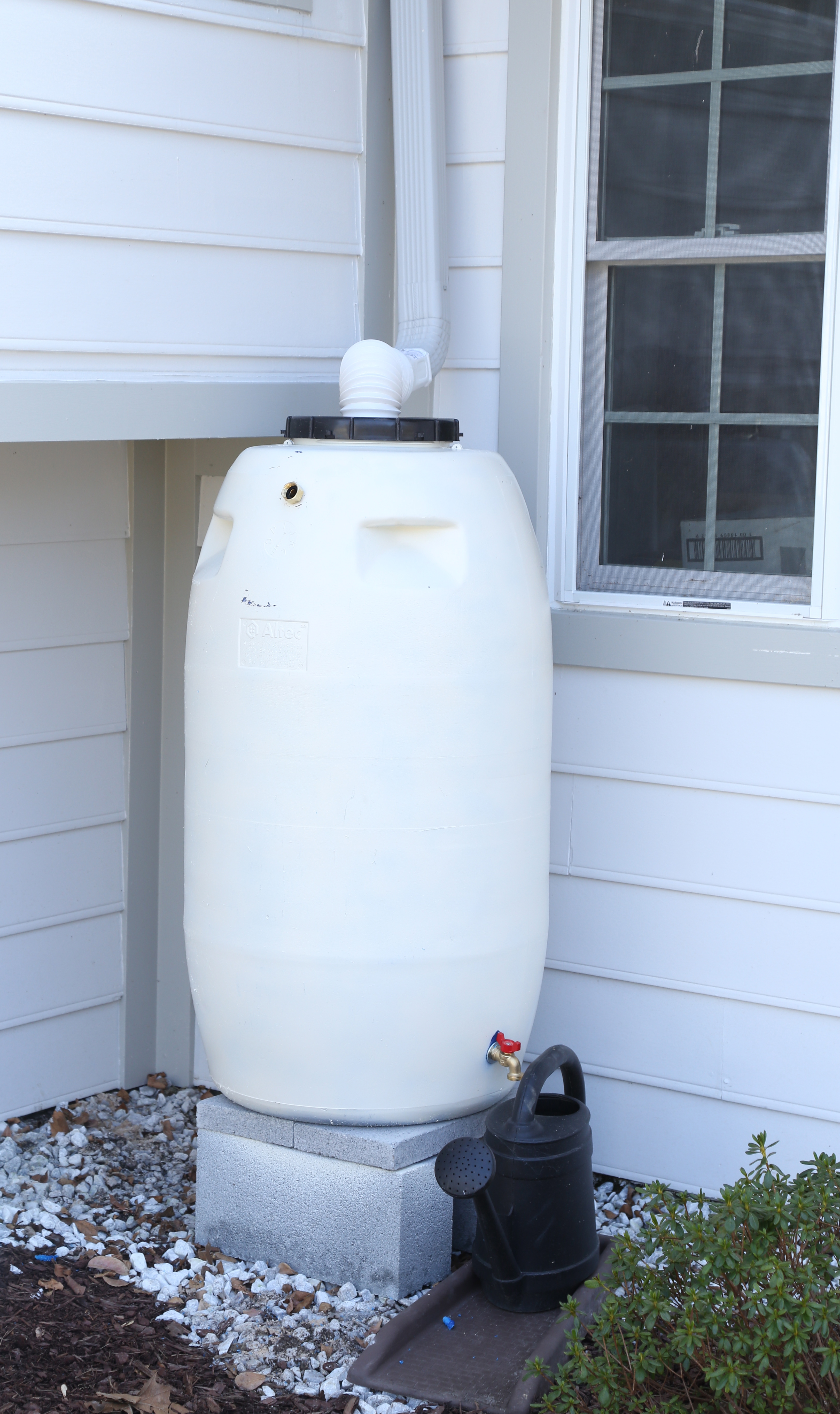
The big news in our garden this week is our new rain barrel.  Months ago, I purchased a used barrel from the Habitat store.  It was bright blue and made of food grade plastic which made it safe for use in the garden.  We just needed to install the spigot and an overflow valve then attach it to the gutter pipe.  Having a bright blue barrel in the garden isn’t so bad if the garden is in the back yard but our garden is in the front yard and bright blue was not an option for me.  It was just a little too blue for my liking and without shrubs to hide it, I painted it white.  It now blends in pretty well.  The best part about this barrel was the screw on top.  We wouldn’t need to make a screen cover to keep mosquitoes out.  The hose is attached to the lid and the gutter so that the mosquitoes shouldn’t be able to get in and breed.


IMG_3225

Darry sealed the hose in place with outdoor grade silicon caulk and it held up during the 1 1/2 inches of rain we had last week.


IMG_3220

Here is the barrel up on blocks in the corner of our front yard.  It is so exciting to have water available; water that is not only chlorine free but free of charge!


IMG_3191

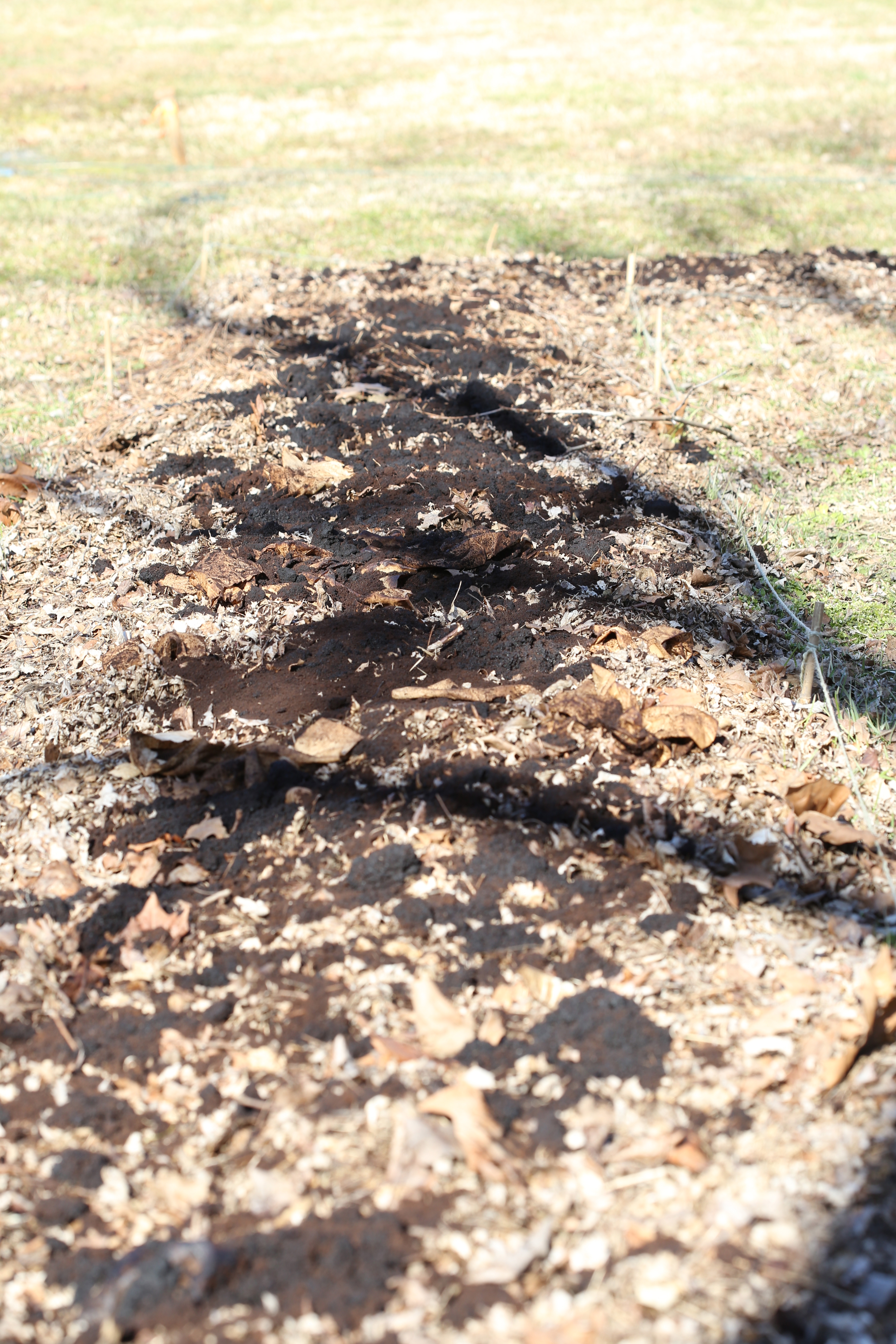
When I ordered 24 straw bales, I thought it would fill most of the beds.  How wrong I was!  Until I can get another load of bales, I am hoping to get some of the leaf filled beds moving along and on this one, I added a bunch of coffee grinds to give it a boost.


IMG_3194The process of straw bale gardening starts off with curing the bales by fertilizing them with a nitrogen supplement.  The feeding is alternated with watering for 10 days.  Once this part of the process is completed, a rest period of a week is given to the bales before they are planted with seedlings or a shallow soil mixture can be spread over the bales to plant seeds.  These bales hold a lot of water which means the plants will have a better chance of surviving dry spells.

IMG_3197Bales actually have a top and a bottom in the world of straw bale gardening.  The cut side is considered the top while the folded side is placed on the bottom.  The cut straw stalks are hollow and when placed right side up, they can fill with water.  The other advantage of placing them with the cut side up, it is easier to insert the plants into the bale on this side.  For more information on this method of gardening, visit the website.

In the meantime, visit here to see the progress of the bales in our garden as well as the arrival of our bees and hens.

pebble bread; a tuesdays with dorie post

IMG_3245

Middle Eastern bread recipes have long since been an interest of mine and living in Nashville made it easy to learn about them.  Our former home was located within the largest Kurdish community in the US and I had an opportunity to visit a small local bakery and watch as the women prepared fresh naan and then baked it in a tandoori oven.  It was unsettling to watch as they threw the bread against the sides of the oven using bare hands knowing full well that the temperature was about 700 degrees.  The bread cooked so quickly in the high heat that as fast as one loaf was thrown in, it was taken out in what seemed to be less than a minute and it probably was.  Slightly spongy and chewy, fresh-baked naan quickly became a favorite of ours and we frequently returned to the shop to buy more.  The most amazing thing about that bread was the cost.  While you might expect to pay several dollars a piece for the 14″ rounds of bread, you would be shocked to learn that a bag of 3-4 rounds cost less than $3.  Sadly, we left Nashville for Williamsburg and our love of fresh-baked naan has become a memory.

IMG_3244Every now and then, I pull my copy of Flatbreads and Flavors by Jeffrey Alford and Naomi Duguid off the shelf and make a batch of Middle Eastern flat bread in the hope of experiencing the same texture as the naan that we miss.  So far, it has been hit or miss, mostly miss but I do not think it is the book’s fault.  My kitchen does not have the types of ovens called for in the traditional baking methods and I am usually attempting to utilize various kitchen implements to do the job.  While the authors give great suggestions on how to get the described results, I have not had the time to make multiple batches in an effort to find my groove…

IMG_3237

This week, the Tuesdays with Dorie group chose to make the Moroccan Pebble Bread from Baking with Julia and it just so happens to have been contributed to the book by the authors of Flatbreads and Flavors.  Feeling as though I had a little experience with this sort of bread and a familiarity with their recipes, I went ahead and mixed up half a batch-more than enough for the two of us.

You are instructed to use a blend of barley and bread flours and I was surprised to find Bob’s Big Red Mill barley flour in my local grocery store; they sold it with the natural foods.  With that first hurdle cleared, I went about figuring out how I would bake the loaves.  Our gas range is still in storage awaiting the installation of gas service from the street out front to the house and I have had to learn to cook on a glass-topped electric range.  While they may be easy to clean, the glass is easy to scratch and even break so you must know how cautious I was with my cast iron skillet on the stove top.  The directions call for an oven safe skillet that you will be moving from the stove top to the broiler for each loaf and I was worried that moving a cast iron skillet around on the stove was a recipe for disaster-pun intended.  To preserve my sanity, as well as the glass cooktop, I parked the skillet on the burner and set my baking stone about 7″ below the broiler and gave it a solid preheating.  Rather than move the skillet, I moved the loaves from the stove top to the stone using a pair of tongs.  It seemed to work fairly well and if I were to make this bread again, I would use this method.  The only other note I will make, my dough needed a lot less bread flour than the recipe suggested.  Since I was making half a batch, it called for 2 cups of bread flour but my ball of dough used about 1 1/4 cups and since it was so stiff and hard to roll out, I would suggest using a little less next time.
IMG_3233

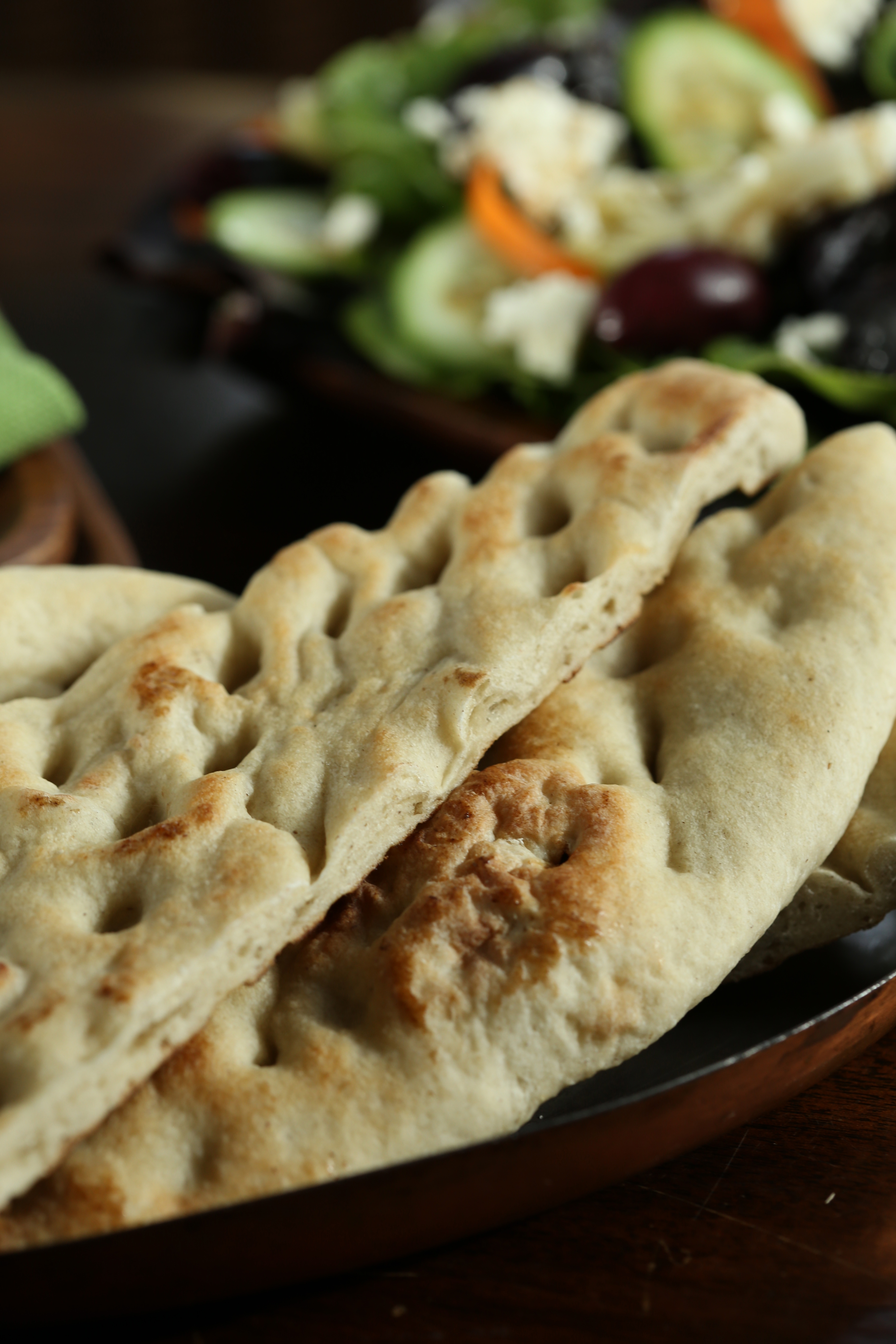
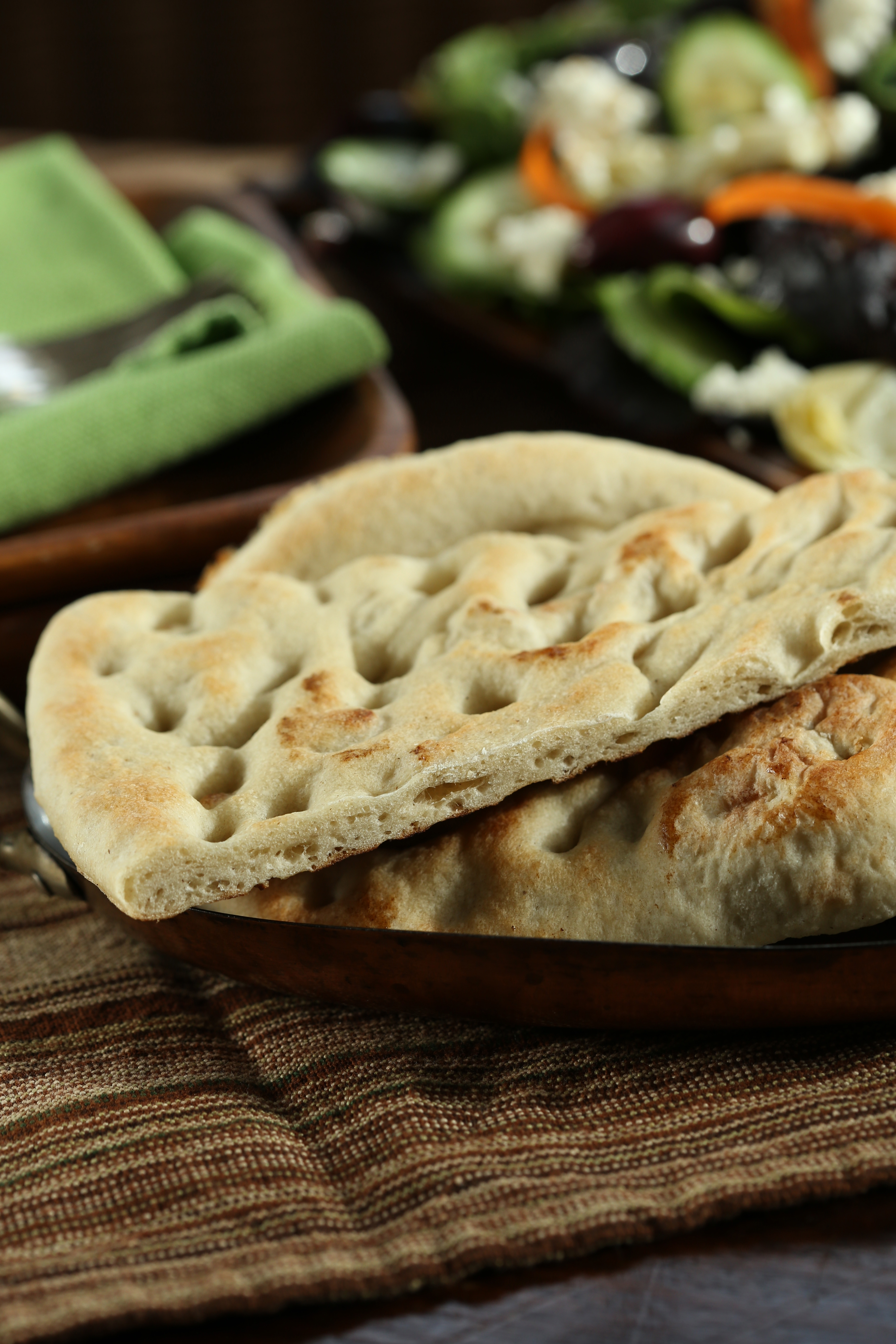
The only thing I did differently, and quite by accident I will add, was that I did not oil the skillet before adding the loaf and since my cast iron skillet is well seasoned, it did not make a difference.  As the bread sizzled and steam rose, the bottom cooked quickly and after pressing the surface to make more dimples, in a few minutes I was able to lift the loaf using my tongs and put it on the stone where the broiler could cook the top of the loaf.  It went quickly and for the most part, the loaves baked evenly although there were a few spots here and there that the bread was slightly underdone, something that rolling it out the dough thinner will eliminate.  Even so, this was the closest I have gotten to achieving a good loaf of Naan-like bread. The texture was slightly spongy and just a little chewy with the dark spots from the skillet and the broiler giving it a wonderful toasted flavor.  It won my husbands approval and honestly, mine too.

With summer approaching, I may have to try this one outside on the grill because there isn’t much better than a salad with fresh bread on a summer day!  To see what the other bakers came up with, be sure to visit the Tuesdays with Dorie website and look for the LYL page.
IMG_3231

lemon madeleines: a tuesdays with dorie post

IMG_3206

Over the years, I have tried making madeleines.  Each recipe gave me a glimmer of hope; maybe this batch will have the coveted hump…  Face it, the madeleines themselves aren’t much to get excited about.  Spongy little cakes, not so sweet and a little to dry to eat without a cup of tea or coffee.  But like any other recipe, it is all about achieving the expected results.  Baking this batch of madeleines wasn’t any different from the others in that respect.  It was all about the hump.


IMG_3211

The only factor that differentiates it from the majority of recipes is the two chilling periods.  First the completed batter is chilled for an hour and then the filled pans are chilled for an additional hour.  Getting the batter cold and keeping it cold until the moment it goes into the oven is crucial in as far as the hump is concerned.  Cold batter in a cold pan put in a hot oven will react differently than warm batter in a room temperature pan would.  By the time the center most portion of batter heats up, the outer edges have baked and the structure is set.  The only place for that bit of batter to do is out the top which is what causes the hump.

The final touch, a lemon glaze, which each madeleine is dipped into before returning them to the oven for a minute or two to heat up so it can sink into the surface.  Most recipes just call for brushing a syrup over the warm madeleines but this recipe allows them to cool completely.  They are then dipped, hump sides only, placed on a rack and returned to a piping hot oven just long enough for the glaze to melt and turn clear.  The instructions say to remove them at the first sign of a bubble.  Obviously, I fell asleep at the wheel on that one.  My glaze bubbled a bit and formed a sweet, crusty edge on the hump sides.  
IMG_3215

Close up, you can see the crusty glaze.  The moisture in the madeleines has kept it from being crunchy and it is flaky like a glazed donut.


IMG_3212

Because I know how much my husband likes to have something to dunk in his coffee or tea, I made a double batch.  The recipe suggests that it will make 12, doubled that is 24 but I either under filled my pans or the yield is off because I ended up with 30.  My first batch, the ones on the right, came out a little flat and without pronounced humps.  My guess is that placing the madeleine pan onto a hot sheet pan insulated them and allowed for even baking.  For the second batch, I removed the sheet pans from the oven and placed the madeleine pan directly on the rack.  The madeleines on the left have a more pronounced hump.


IMG_3218

Honestly, my husband does not care about the hump.  For him, it is all about dunkability.  As you can see, he did not waste any time testing them out.


IMG_3219And as far as he is concerned, these will do.  Dunk away dear, dunk away…

To see what the other bakers came up with, visit the Tuesdays with Dorie website and check out the LYL page.  Want to give it a try?  Pick up a copy of the book, Baking Chez Moi, and bake along with us; we do not post recipes so you will need to have a copy of the book.