cooking the books: breads from the la brea bakery

IMG_3111Fans of sourdough bread baking will most likely be familiar with Nancy Silverton’s book, Breads from the La Brea Bakery.  Some folks would agree that it is one of the necessary “textbooks” on home baking of sourdough bread.  When I found a copy of it at a local antique mall, I did not hesitate in making the purchase; this book has been on my “must buy” wish list for a long time.  As a matter of fact, when I grew my own grape starter from the grapes growing in the Demonstration Garden at Ellington Ag Center in Nashville back in 2009, it was a method attributed to Ms. Silverton and now that I have the book to refer to, I can say it is her method but I only had half of the directions.  The chapter on growing the starter, maintaining/replenishing it and using it is lengthy and a definite must read for anyone attempting one of the many recipes in the book.

Recently, I made a batch of sourdough English muffins from the final chapter in the book.  For those of you who have never looked at the book, the final chapter is a collection of recipes that give you a way to use excess starter that comes from the portion of starter that is discarded during feedings rather than the larger amounts grown in the majority of recipes throughout the book.  A word of warning, most of the recipes in the book, including the last chapter, take a full two days to execute and this does not include the time necessary for a normal feeding of the starter.  The English muffin recipe is a little different in that it is a single day recipe and also one that calls for both fresh yeast and starter.

IMG_3083This recipe is the second bread recipe I have tried from the book, the first being the Country White loaves from the chapter on growing a starter, and it was a true learning experience.  As with many of the recipes I have glanced at so far in this book, there is an ingredient list that is longer than you would expect and an equipment list that calls for specialized baking tools.  Anyone who has ever been to my home knows that I do not generally shy away from purchasing tools and equipment.   On occasion, I will try to use something similar rather than adding to the clutter unless it is a bundt pan or a cookie cutter; a baker can never have too many shapes to choose from.  However, a long list of tools and ingredients that I must shop in several stores to find is always a little off putting, even for a dedicated baker like myself.

Besides the starter, this recipe called for milk, bread flour, dark rye flour, fresh yeast, wheat bran, wheat germ, flax seeds, rye chops or flakes, sunflower seeds, barley malt syrup, vegetable oil, sea salt, rice flour (just for dusting the dough), butter (for greasing the rings) and finally, semolina flour, also for dusting the dough but it was labeled as optional.  That’s a lot of ingredients, a lot of ingredients that can be tricky to find in one store here, at least until Whole Foods opens in the summer.  So with this in mind, please note my concern when I began mixing the dough and realized that I truly had a bowl of what looked a lot like lumpy porridge.  After an extended shopping trip to find the ingredients and fermenting the sponge for about 2 hours, I was truly discouraged.  Although I closely followed the recipe and made only on substitution-whole grain cooked cereal blend for the rye chops, I was at a loss for what I could have done wrong.  In the end, I doubled the amount of flour in the dough from 8 ounces to a pound and finally had a dough that seemed to be what is called for in the recipe.  Honestly, a book as technical as this one really should have more photos especially since so many steps in the recipes call for specific results and without photos, you have to rely on your interpretation of the wording.
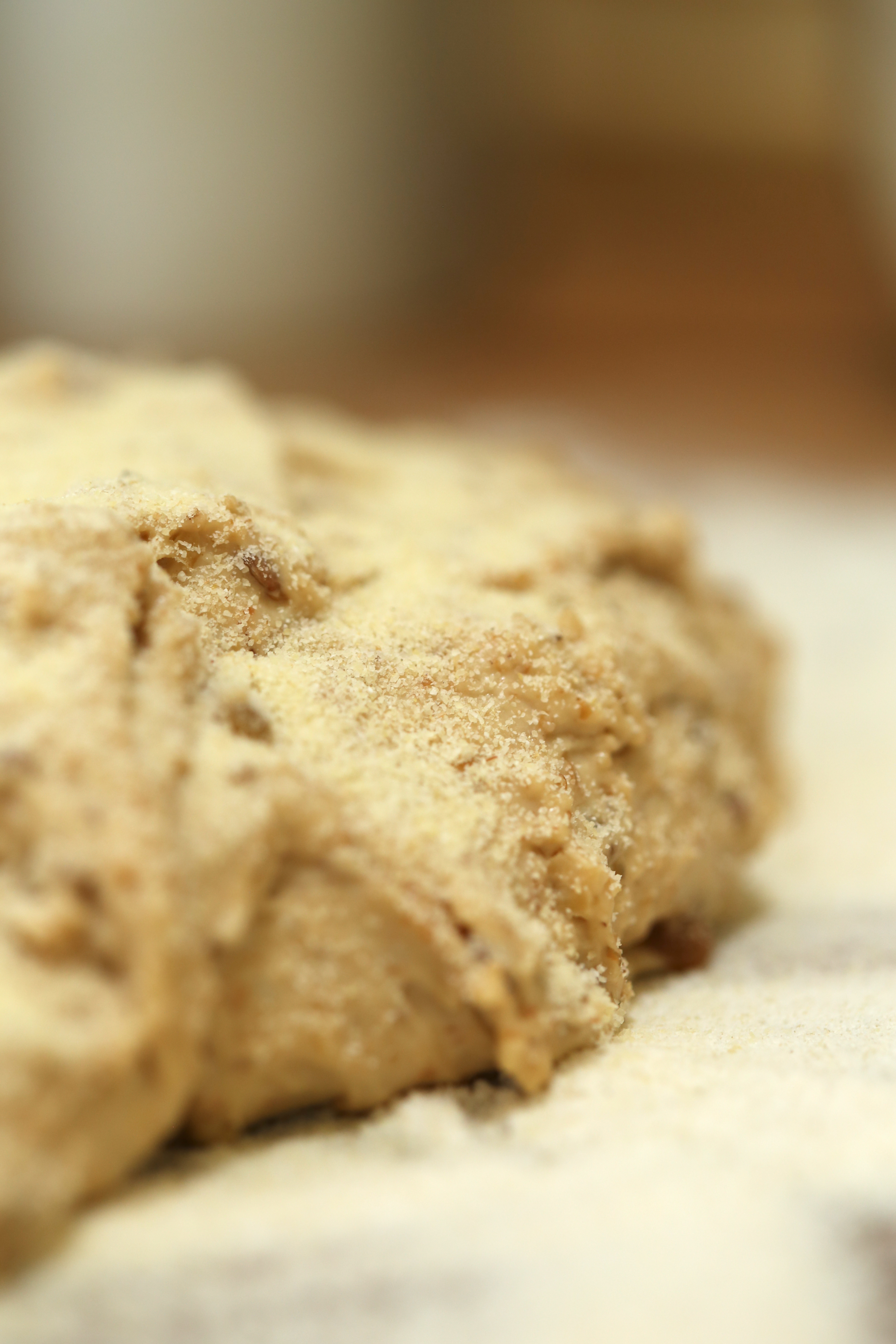
IMG_3085The recipe states that you should have a dough that is wet and sticky and may not hold its shape and I am pretty sure I nailed that part.  It is dumped out onto a dusting of rice flour and covered with a dusting of rice or semolina flour and allowed to rest for 20 minutes before shaping.

IMG_3087

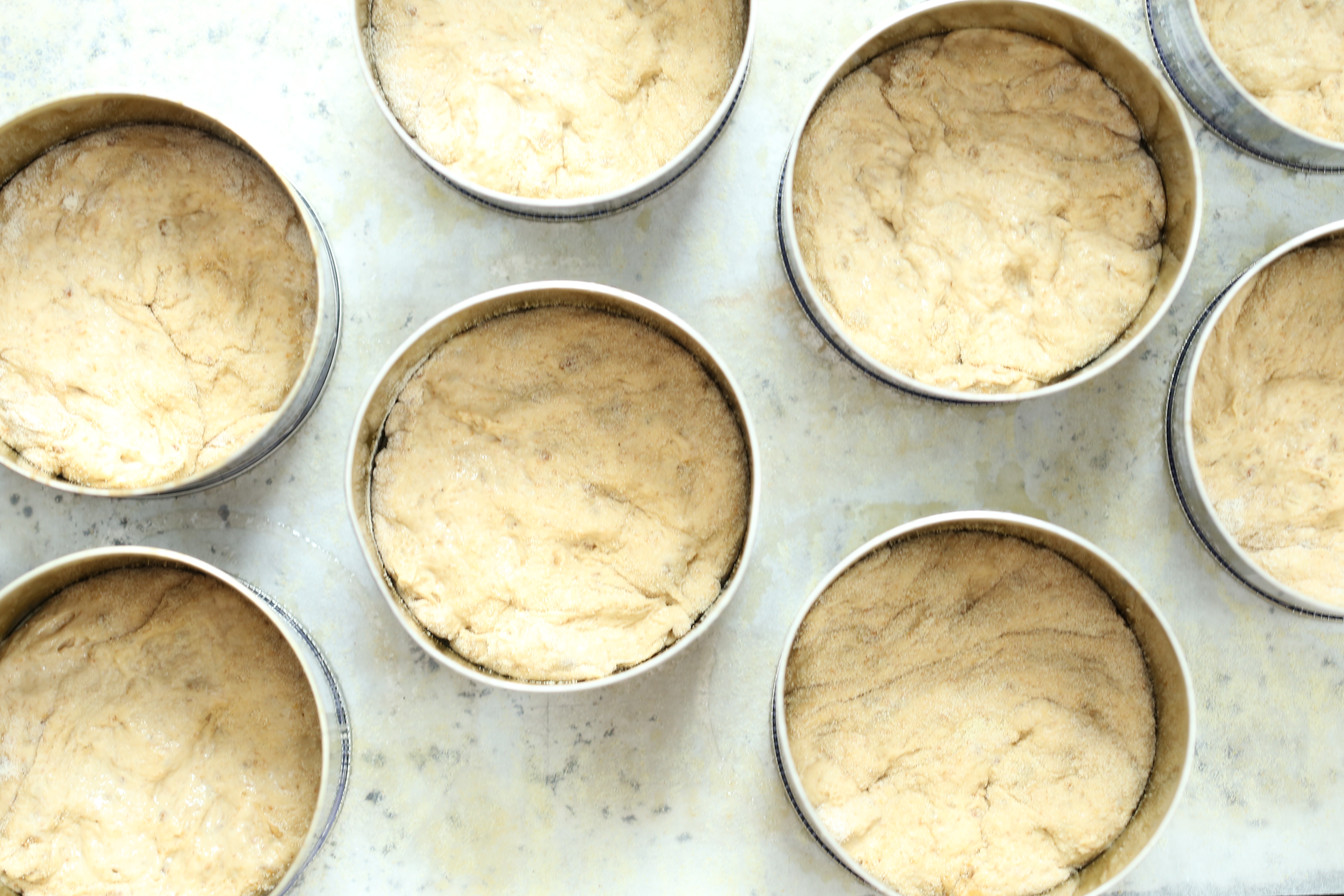
Remember my mention of specialized equipment?  Well, I was hesitant to purchase English muffin rings because I did not want to have to find a place to store them.  A suggestion in the recipe is to save tuna cans and cut the bottoms out to make your own rings.  We do not eat that much tuna and if you have looked at a can of tuna lately, you have probably noticed that they no longer have a bottom that can be cut out, they are pressed from a single sheet and only the tops are removable which eliminated the cans as an alternative.  Then while at work one morning, I spied cans from the crabmeat being used for crabcakes and thought they might work, they are a little tall, but the bottoms were removeable.  There were 8 cans and that meant I could make either half a batch or do two bakes; I chose to do two bakes.  In the future, I would attempt to get a weight on the entire batch of dough so that the muffins are of an equal size.

IMG_3090

Here is the first batch rising in the crabby cans.  Using the cans was okay, the strip of metal left from the top and bottom after removal was jagged and despite having used a pair of pliers to flatten the edges, the dough still stuck in the tiny crevices.  The rough texture of the metal made getting the muffins out a bit of a chore.  For the second bake, I buttered the cans and then dipped them in semolina and they definitely did not stick to the cans.  The down side to the extra semolina, the muffins were coated in semolina which made them a bit messy to handle.  Looks like I may make the plunge and buy rings or just start hoarding biscuit cutters!


IMG_3108For a first attempt, they were pretty good.  Not enough nooks and crannies when sliced with a knife but fork splitting them leaves bigger holes for the butter to collect in.  Until next time, these are already gone!

marquise au chocolat and salsa quitza; a tuesdays with dorie post

IMG_3055

After a weeks absence, I am back in the kitchen, completely.  Let’s just say that if you have the chance to avoid the flu-do it.  It has been more than 10 years since I was that sick and honestly, I hope it doesn’t happen again for a long time!  The simplicity of this recipe was the perfect way to ease back into the kitchen.

The recipe for Marquise au Chocolat makes a large, rich loaf of frozen chocolate mousse which is meant to be served in slices.  Since there are just two of us, I cut the recipe and made only a quarter of the batch and since it was so small, I made the decision to press the filling into a six-inch round cake pan that I had lined with lady fingers.  This will be the perfect little pick-me-up since I also spiked it with some single barrel Kentucky Bourbon.  Finally, a drizzle of blackberry syrup and a few plump berries and dessert is served!  Something tells me my husband will not think twice about eating this one!


IMG_3046

As I mentioned earlier, I was sick last week, came down with it all so that I was too sick to make the Salsa Quitza which was my plan for Superbowl Sunday.  We were supposed to go to a friends house to watch the game but since we were both miserable, we sprawled out on the couch and did not move all day.  Needless to say, my plan of making the quitza to bring to the party was cancelled.  If you ask me, that wasn’t such a bad thing.  Honestly, I was doubting the results as stated in the recipe and after reading the comments from plenty of the other bakers last Tuesday, I am glad I had a chance to follow my personal instincts.

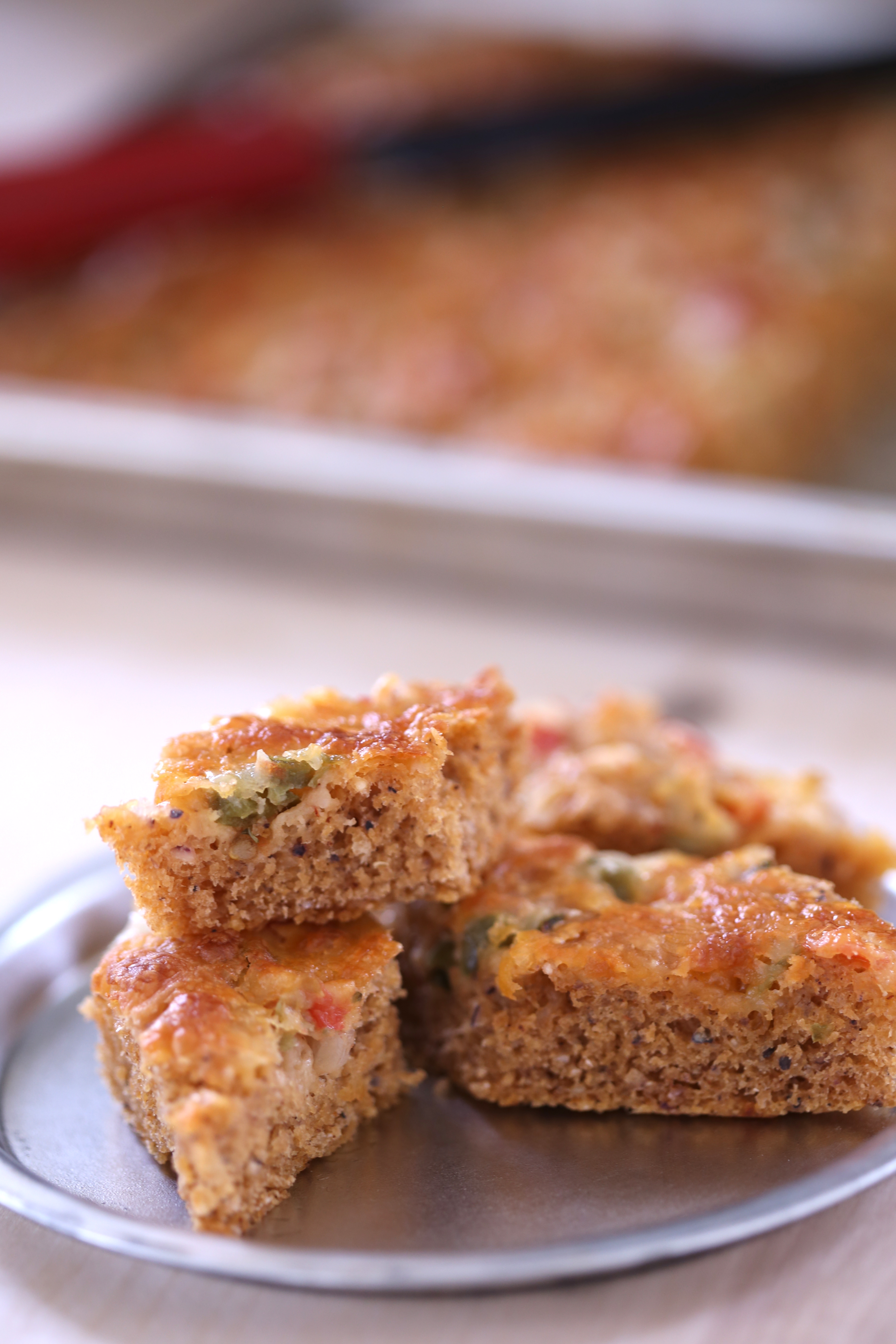
The idea of spreading the dough out into a large cake pan and topping it with cream cheese had me thinking it would be messy to eat and for the two of us, just too cheesey.  My bakers sense (kinda like Spiderman’s “spidey” sense…) had me thinking it would make a nice focaccia.  Guess what-it did!  With just half a batch of dough, I made a quarter sheet pan sized piece of focaccia that was the perfect side dish for our dinner of grilled swordfish and salad.

IMG_3042If you want to make this the way I did, use blue corn meal.  Believe it or not, it doesn’t lend any color to the dough but it does add a nice nutty flavor along with dark flecks and crunch.  Several bakers commented on the salsa being really wet and I honestly think that the recipe probably should call for “pico de gallo” and not chunky salsa.  If you aren’t familiar with pico de gallo, it is a fresh mixture of finely chopped tomatoes, peppers, onions and cilantro with lemon juice.  I measured out nearly a cup and let it sit in a strainer for about an hour to drip dry and then sprinkled it over the top of the dough after shaping.  A generous topping of shredded Mexican cheeses over the salsa and then into the oven it went.  It baked up fast, just 20 minutes and it was done.  After cooling for a while, I sliced off strips and cut them into diamonds; two-bite pieces to pair with dinner.

The dough itself was fairly easy to make with a mixer if you do not have a bread machine.  It was a bit soft and sticky but after mixing it for about 2 minutes, I turned the mixer off and let the dough sit in the bowl for 10 minutes.  This rest, autolyse is the technical term, let the dough absorb all of moisture and as a result, it was not quite as sticky as it could have been.  This is definitely a dough recipe worth having in my repertoire.  It just might make another appearance in my kitchen.

To see what the other bakers came up with, visit the Tuesdays with Dorie website and look for the LYL (leave your links) page.  If this seems interesting to you, consider baking along with us as we prepare each of the recipes in Baking with Julia and Baking Chez Moi.  You will have to purchase or borrow the books if you do not already have them; out of respect for the author, we do not publish the recipes!

Country White bread; the learning curve

IMG_2641

Recently, I picked up a copy of Nancy Silverton’s Breads from the La Brea Bakery.  If you aren’t familiar with the book or the bakery, it is a Los Angeles area landmark and a the breads are the type that most home bakers only dream of making.  The focus of the book is to start and maintain your own sourdough culture and to use it to make bread using the recipes that follow.  Sounds simple but I will warn you, there is not much room for creativity; the procedures and recipes need to be followed closely if you want the loaf to resemble those sold in the bakery.

Another note, this book is not for the beginner and to get the most out of it, you really should have some idea of bread baking.  That said, I will suggest that if you have had some experience (at home, in a restaurant or a bakery) and you want to take it a step further, pick up a copy of this book and start at the very beginning.  This is one of the few books that I feel you really must read all the information that comes before the recipes and then, read it again a few more times.  Yes folks, this is more like a textbook and a workbook rolled into a collection of recipes.

Personally, making artisan breads leavened with a natural yeast culture is another of those skills I have always wanted to develop but even though I am a pastry chef and I bake for a living, I have never pursued bread baking as a career.  Having had some time to spend in my new kitchen, I decided to take my own sourdough culture out of the fridge and try it in one of the recipes.  Because there is a need for exact measurements and conditions, I took a cup of my starter and began the process of feeding it as the book instructs.   And to test it, I started with the Country White bread, the very first recipe in the book. 
IMG_2646

Nancy instructs you “not to do a thing until you read the recipe carefully and calculate the times involved” and that is just the beginning.  This recipe is 14 pages long.  Suddenly, I was intimidated and the reasons I have never sought out a job baking bread for a living were staring me in the face.  Never the less, I did as told and read, reread and then read the recipe again.  Once I had written out my bread schedule, I got to work on making my first loaf, a two-day bread baking experience.


IMG_2650

There are so many steps, resting periods and so forth that I would be in danger of plagiarizing the book if I typed it out here so let me suggest that if you want to try making a loaf, get a copy of the book.  Truly this book is a worthwhile reference on bread making and it deserves a space on the shelf of serious bread bakers.  For a first attempt, I think the bread turned out pretty good and if I judge it by the amount my husband ate that first day, I would say it was a successful attempt.  Was it perfect?  Absolutely not.  Somehow, I added too much flour to the dough and I will say that the way the instructions for mixing by machine are written, they tell you to add the flour, meaning all(measured with a scale-not by the cup) of it at once.  It isn’t until several sentences later that it suggests holding some back to adjust the consistency.  Too late.  My dough was a little stiffer than it should have been and it made the machine kneading process impossible-I could hear my 6 quart Kitchen Aid struggling and switched to kneading by hand.  This was not an easy task and I kneaded the dough quite a bit longer than called for.

Just as the instructions are involved, so are the ingredients called for throughout the book.  A quick glance at a few recipes had me wondering where I could find rye chops and food grade lye near my home.  Then I looked at the equipment needed, I really need to find some english muffin rings or tuna cans that can be opened on both ends…This will be a learning experience, a slow one and one I plan to enjoy, one loaf at a time.
IMG_2888

european rye bread; a tuesdays with dorie post

IMG_2470

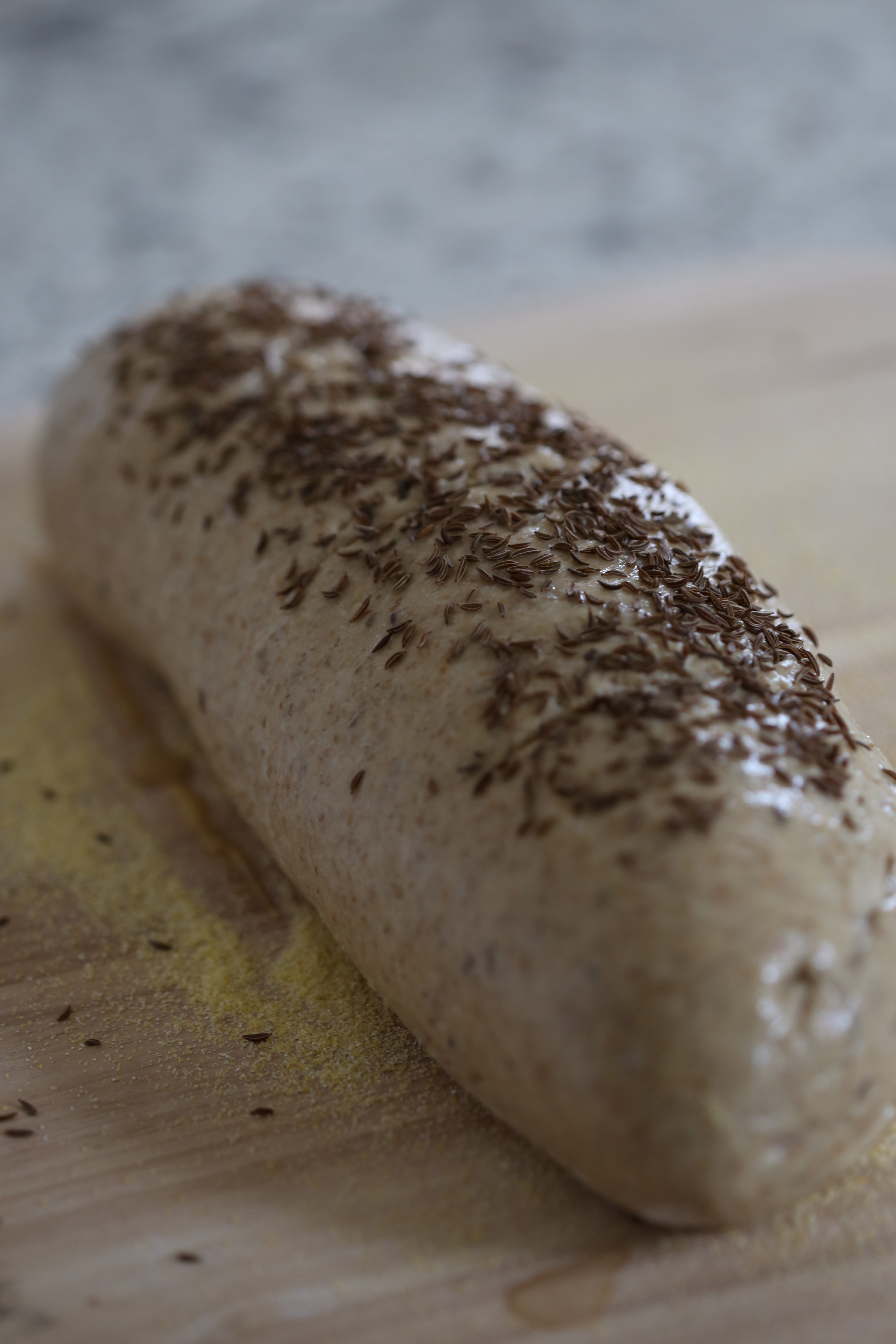
Rye bread is one of those things people either love or hate.  In my opinion, I think it is more likely related to whether or not you like caraway seeds.  Most of it would probably be better off labeled caraway bread since the distinct flavor of the seeds is all you can taste in commercially prepared rye bread.  However, as a lover of toast, rye bread, loaded with caraway and slathered in salted butter, is one of my favorite breakfasts.

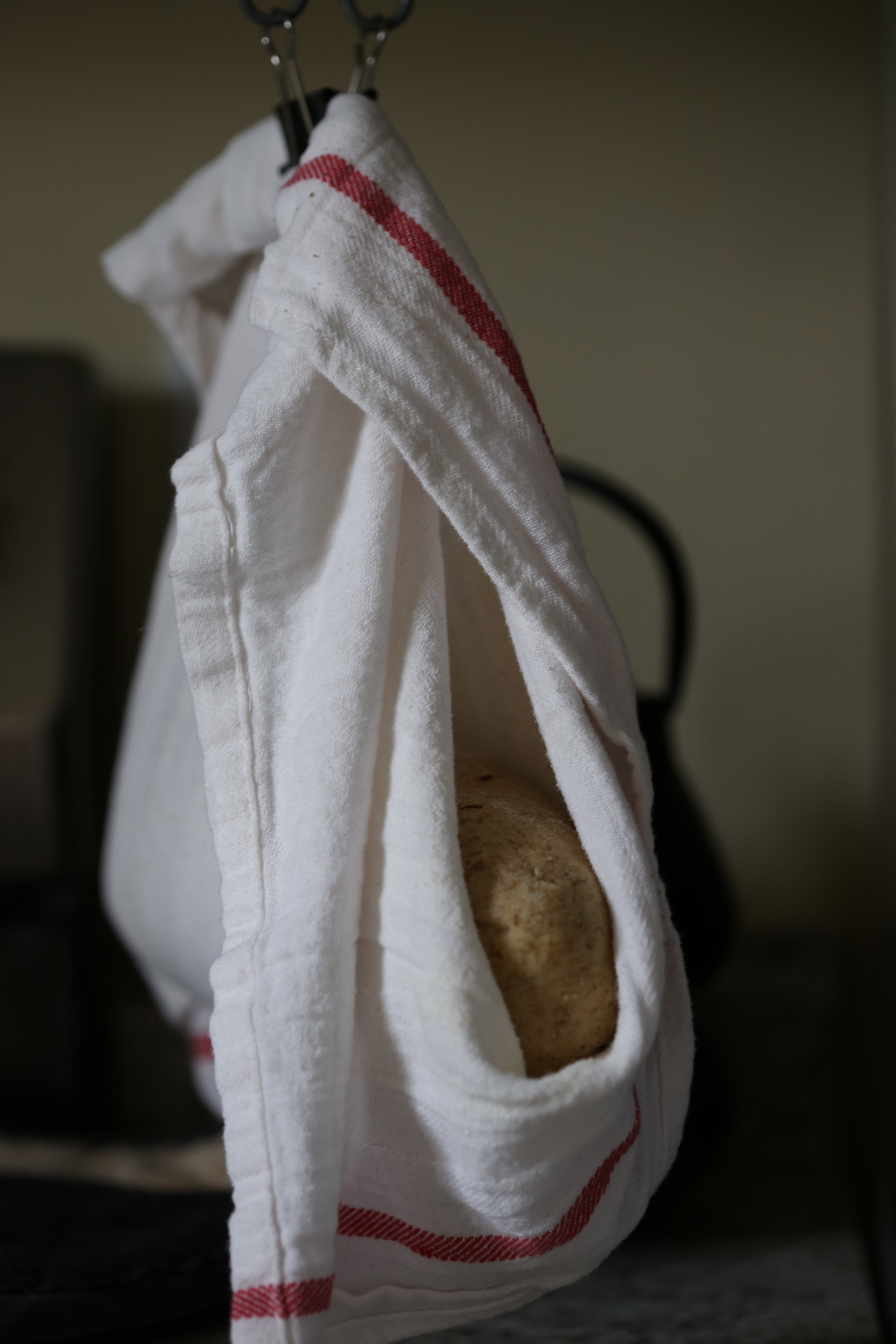
This week, the Tuesdays with Dorie bakers are sharing their experiences with European Rye Bread from Baking with Julia.  If you recall, we made a similar recipe from the book, Pumpernickel loaves, a while back.  Both recipes were contributed by Lauren Groveman and they each call for the unusual step of hanging the loaf in a sling for the final rise of the shaped loaf.

IMG_2874The bread is fairly easy to mix and since it is a rye bread, the ingredient list is simple.  The only confusing part about it, finding the proper rye flour.  Allow me to wish you well with this endeavor.  Every rye bread recipe I read calls for a specific type of rye flour and not all millers produce them equally.  Essentially, the amount of whole grain used in the flour is the difference and if you would like a better understanding of what each type of rye flour is, this chart from the Whole Grains Council may help you understand it all.   While the chart does explain things, they also make it a point to mention, repeatedly, that not all millers produce equal products; the chart is more of a suggestion than a standard.  As for my bread, I have only been able to find Hodgson Mill 100% stone ground rye flour which according to the chart makes it a dark rye flour.

IMG_2451The whole grain flour gives the dough a lot of texture and it also makes it a bit denser than I like.  Working with a half batch of dough, I made just one loaf and I stuck to the recipe pretty closely.  Bread baking is not really my strong point and I really wanted to make a loaf as described by the head note of the recipe, with a brittle crust that snaps into small flakes and a soft, slightly moist and a little springy inside.

IMG_2455

Just as the recipe instructed, I hung the shaped loaf in a towel sling and heated the oven.  As the bread hung in kitchen, it continued to rise and I could see it splitting and I knew it would not get any better in the oven.  Rather than get mad, I decided to take this as a lesson and make another half batch.  This time though, I would make a few changes.

First thing I did was to cut back on the amount of rye flour.  Since I was using whole grain, I knew it would be denser and I figured a little less would have to do.  Second change I made, a lot more kneading but not all at once.  After adding the majority of the flour to the yeast and water, I mixed the dough until it came together and formed a ball which took about 2-3 minutes and then I simply turned off the machine and let it sit there for about 10 minutes.  Once the dough was allowed to sit and rest, I resumed kneading on medium-low speed for about 12-14 minutes.  To be sure I had kneaded it enough, I attempted a window pane test and while it wasn’t perfect, I could see a huge improvement from the first loaf.

IMG_2459

After hanging this loaf in the sling, here it is on the peel just before I put it in the oven.  This time, I gave it a wash of straight egg whites-no water and plenty of caraway seeds.  Just before I slid it into the oven, I gave it a few slashes and crossed my fingers; it couldn’t hurt…

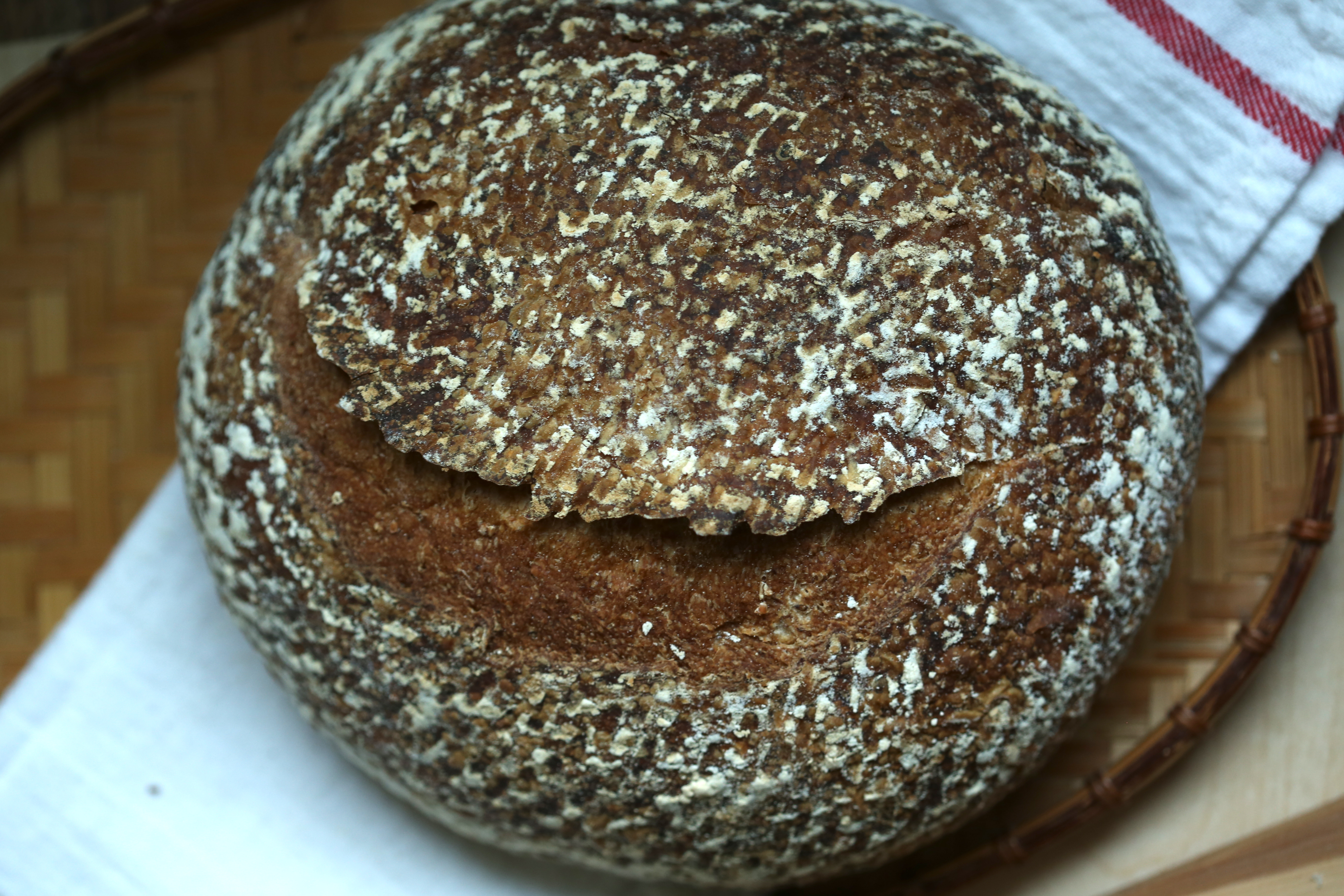
IMG_2466As you can see from the photo, the top loaf is little more than a train wreck.  It split all over and really wasn’t very pretty.  The second loaf is on the bottom and while it is not perfect, it is easy to see that it worked out much better.  This is destined to be one of those recipes I return to multiple times in the hope of getting it right.

IMG_2463The last thing about the recipe that I found difficult to follow from reading it, the shaping method.  Rolling, stand it on the side, pinch, poke, and so on.  Hospital corners-we are talking about bread, right?  For my second loaf, on the left, I just ignored all the fussy instructions and tried to use a little common sense instead.  Looks like it worked out okay, it seems to have held the shape better.  To see the inside of the loaf, refer to the very first photo above, the second loaf is on the left and I think I like the color of that bread better than the first loaf which is on the right.

To see what the other bakers came up with, be sure to visit the Tuesdays with Dorie website and look for the LYL (leave your links) page.

cooking the books: pain de mie from Beard on Bread

IMG_1894

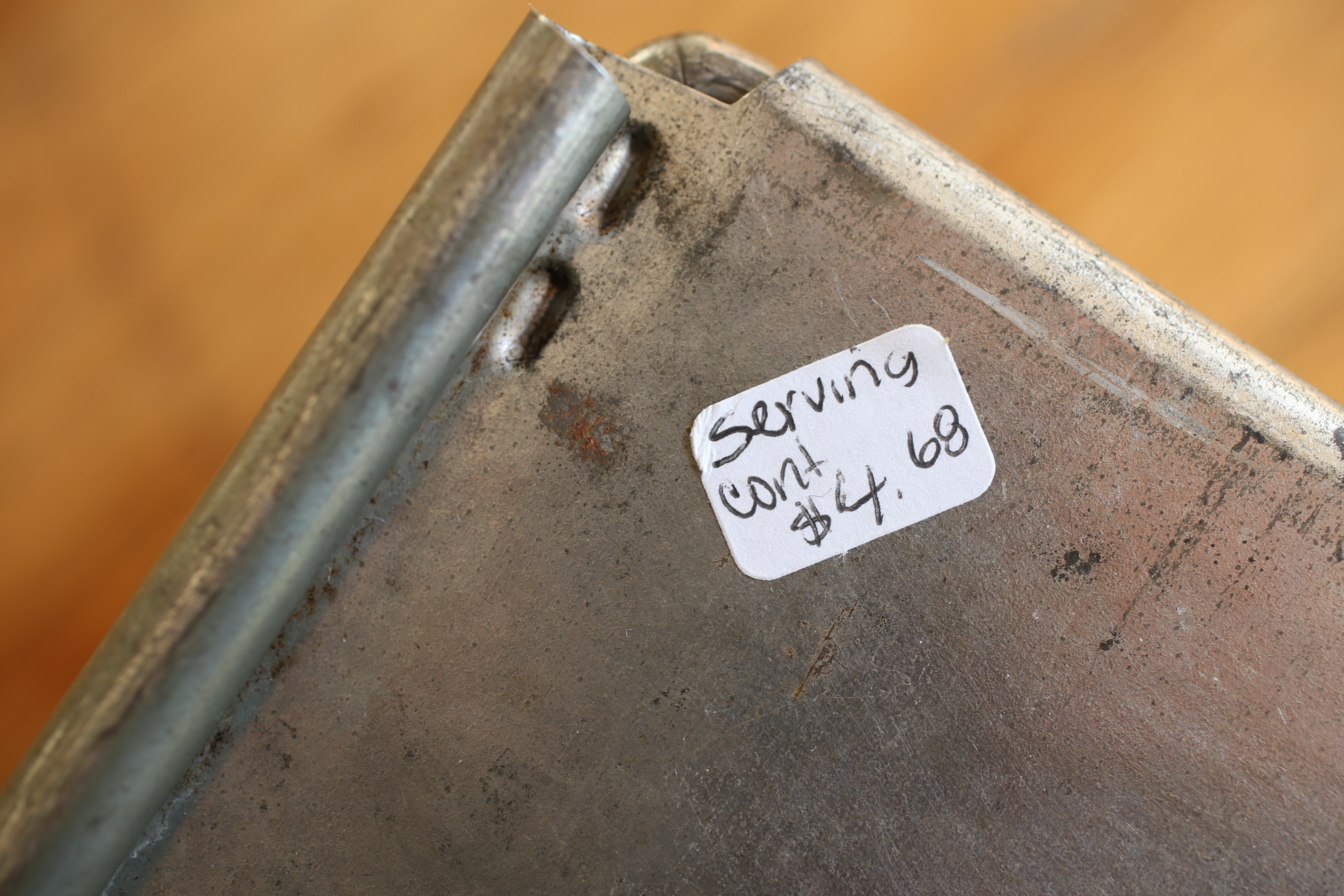
My love of thrift store shopping is well documented.  When I mention that I stopped by the thrift store to my husband, he generally rolls his eyes.  At times, he is so bold as to ask my “why” as if I really need a reason. Truth be told, it is a bit of a game, a treasure hunt for needful things and at times, a source of inspiration.  It is also the way I find a lot of my props and baking equipment and on one such trip, I hit the jackpot; I found a pullman loaf pan for less than $5.


IMG_1887

Pullman loaf pans are not that common and finding one in a neighborhood thrift store typically stocked with clothing and housewares is unusual.  Actually, the folks running the shop had no idea what it was and they assumed it was some sort of serving container.  When I brought it up to the counter, I struck up a conversation with the woman at the register and she told me how they had just put that pan out for sale along with a similar serving container.  Because I knew what it was, I cheerfully explained how it was actually a bread pan, one I had been hoping to find for a while.  As I removed the lid, I explained how it worked and why one would want to use it.  Then I explained that the other “serving container” on the display was in fact a pan for poaching whole fish.  To say that she was stunned by the information is an understatement.  As I paid for my purchase, I thanked her and she then thanked me for taking the time to teach her something about the equipment-they are all volunteers and sometimes, they have no idea what the donated items are.  Then she went off in search of the poaching pan so that she could give it a proper label.


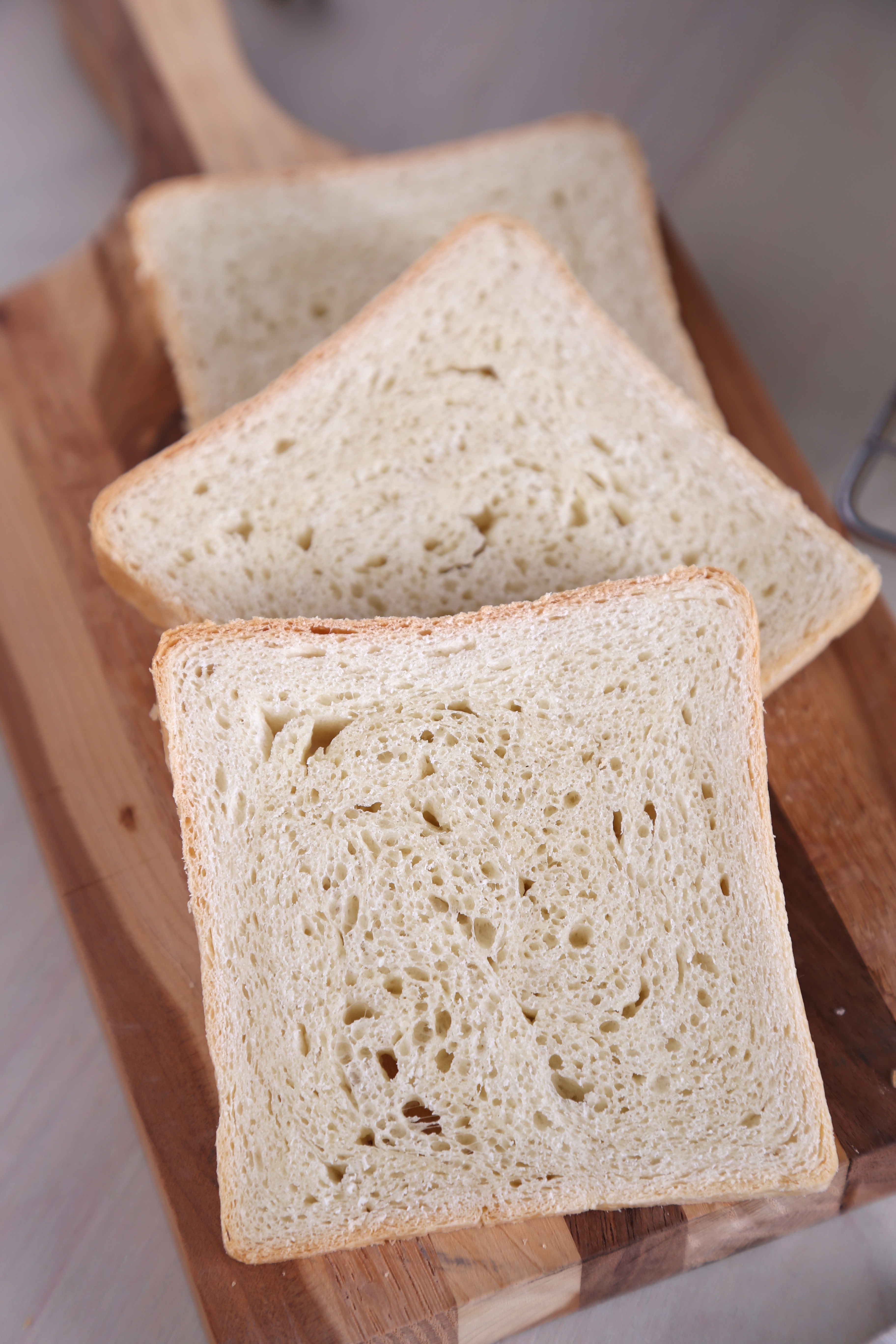
IMG_1906So what is so special about this pan?  The shape, of course!  The straight sides and the bottom width, as well as the top width are all the same, about 4 inches which gives a loaf of bread baked in the pan perfectly square slices.  That is providing you bake it with the lid on.  The lid prevents the dough from rising out of the pan and forces it to fill all the corners of the pan.  It can also prevent large bubbles from forming in the bread therefore the texture is a little denser than typical sandwich loaves.

Since my large collection of kitchen paraphernalia also includes a wall of cookbooks, I have decided that I need to use them more often.  Call this post the first of my “cooking the books” series and today’s recipe is from the classic baking book, Beard on Bread.  Actually, finding a pain de mie recipe in my collection of baking books was difficult; only two books had a recipe.  After reading them both, I went with the recipe from Beard on Bread because it was the simpler recipe of the two.

IMG_1912The first thing I noticed about the recipe, it had a lot of yeast in it.  So much that when I set the yeast into the water and sugar to proof, it foamed up like crazy.

IMG_1914

Then when I began to add the other ingredients and started mixing, I nearly panicked.  The mixture seemed so dry and crumbly that I was sure I did something wrong.  In the future, I would probably add a little less flour to get a slightly softer dough.


IMG_1915Luckily, as the dough mixed, it came together and the longer it kneaded, the smoother it became.

IMG_1916

The ball of dough after the first knead is ready for the first rise.  That is correct, the first knead, this dough is unique because it is kneaded at each of the three rises and then shaped and allowed to proof in the pan.


IMG_1921

While the repeated rising and kneading does not make for a quick loaf of bread, the fact that it is so perfectly square gives it a great yield in slices making this the perfect loaf for a picnics worth of sandwiches!  It not only freezes well, makes glorious toast and grilled cheese sandwiches the square shape lends itself to picture perfect croutons.  There really are very few reasons not to make this bread so get yourself a pullman pan and get to kneading!

Pain de Mie
IMG_1965adapted from Beard on Bread by James Beard

Alfred A. Knopf, 1973

yields 1 pullman loaf, 13″x4″x4″ loaf

2 packages active dry yeast-4 1/2 teaspoons

1 1/2 cups warm water, 100-115 degrees F

2 teaspoons sugar

5 1/2-6 cups all purpose flour

5 teaspoons kosher salt

4 ounces unsalted butter, soft

Proof the yeast in a half cup of the water with the sugar until it foams.  Place 5 cups of the flour in a large bowl and stir in the salt.  Using a pastry blender, two knives or your fingers, cut in the butter so that the mixture resembles a coarse meal.  Stir the remaining water into the yeast and then pour the mixture into the flour.  Using a wooden spoon or your hand, mix the dough to form a stiff but slightly sticky dough.  Begin kneading by hand or in the bowl of a stand mixer for at least 10 minutes.  When smooth and somewhat elastic, allow it to rest for a few minutes.  Shape the dough into a ball, coat it in oil and place it in a greased bowl to rise until doubled, about 1 1/2 hours.

Punch the dough down, let it rise again for a few minutes and then turn it out onto the work space and knead it again for 3-4 minutes.  Shape it into a ball and return it to the greased bowl, oil the top of the dough and let it rise again until doubled, about 1 hour.  Once again, punch the dough down, let it rest and then knead it for 3-4 minutes.  Grease the pan and the inside of the lid, shape the dough into a loaf that fits the pan in length and place the dough into the pan but set the lid aside for now.  Allow the dough to rise until doubled, preheat the oven to 400F.

Slide the lid over the top of the pan and place the bread in the hot oven.  Immediately turn the oven down to 375F.  Bake for 30 minutes and then turn the pan over onto its side and bake for 5 minutes.  Once again, turn the pan over and bake on the other side for 5 minutes.  Turn the pan upright, remove the lid and continue to bake until it is golden brown, about 12-15 minutes.  Take the bread out of the pan and put it directly on the rack in the oven and bake for 5 minutes until the sides are nicely browned and the internal temperature is 200F.  Remove the bread from the oven and cool completely on a rack before slicing.

IMG_1966

off the shelf: quick crescent rolls from the fannie farmer baking book

IMG_2059

My name is Alisa and I have a lot of cookbooks.  When I go to thrift stores and antique shops, I buy more cookbooks.  In my house, I have a wall of shelves dedicated to just cookbooks…This is how I imagine a 12 step program for cookbook addicts might start.  First admitting that I have a lot, perhaps too many cookbooks.  And yes, I could say that I have too many, but when you start collecting a specific item, quickly amassing large quantities is what generally happens.  Truth be told, of all the things I could get involved with, collecting cookbooks is pretty tame and if I take them off the shelf and use them, delicious things happen.  One of the cookbooks I have had the longest, and judging by the condition, used often is a copy of the Fannie Farmer Baking Book.  It is also one that I highly recommend to new bakers looking for a starting point because the recipes are simple, easy to follow and pretty foolproof.

What many people do not realize is that Fannie Farmer really was a trained cook as well as an author of several cookbooks.  She studied at the Boston Cooking School in the late 19th century and eventually took the role of school principal before venturing out on her own by opening a school, Miss Farmer’s School of Cooking.  Although her main interest was proper nutrition and how it affected the health and well-being of the ill, what she hoped she would be most remembered for, it is the The Fanny Farmer Cookbook that most people today associate with her.   There are two books featuring her name, The Boston Cooking-School Cookbook, which she actually wrote and was revised, updated and renamed The Fannie Farmer Cookbook by the late Marion Cunningham and The Fannie Farmer Baking Book, also written by Marion Cunningham.  While Fannie’s name may be in the title of the baking book, she never actually wrote a book dedicated to baking or desserts.   Ms. Cunningham is solely responsible for making the book what it is; a master collection of baking recipes that every baker should own.  As hard as it is to believe, when I am developing recipes, I will pull this book off the shelf and read or make a recipe in it because I know it will work.  Other times, when I just want a recipe that is foolproof and guaranteed to please a crowd, this is my “go to-I don’t need to think about it” book.

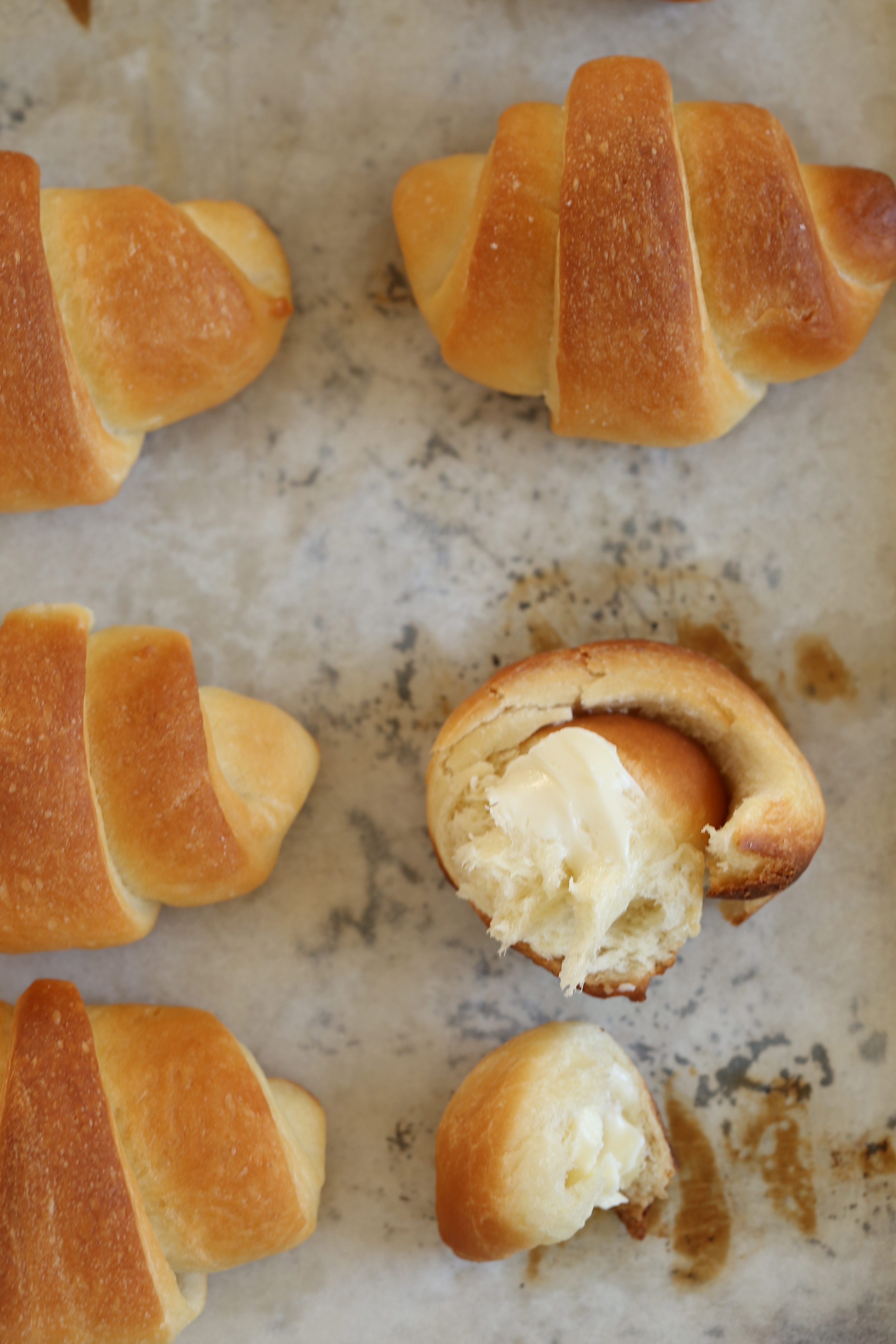
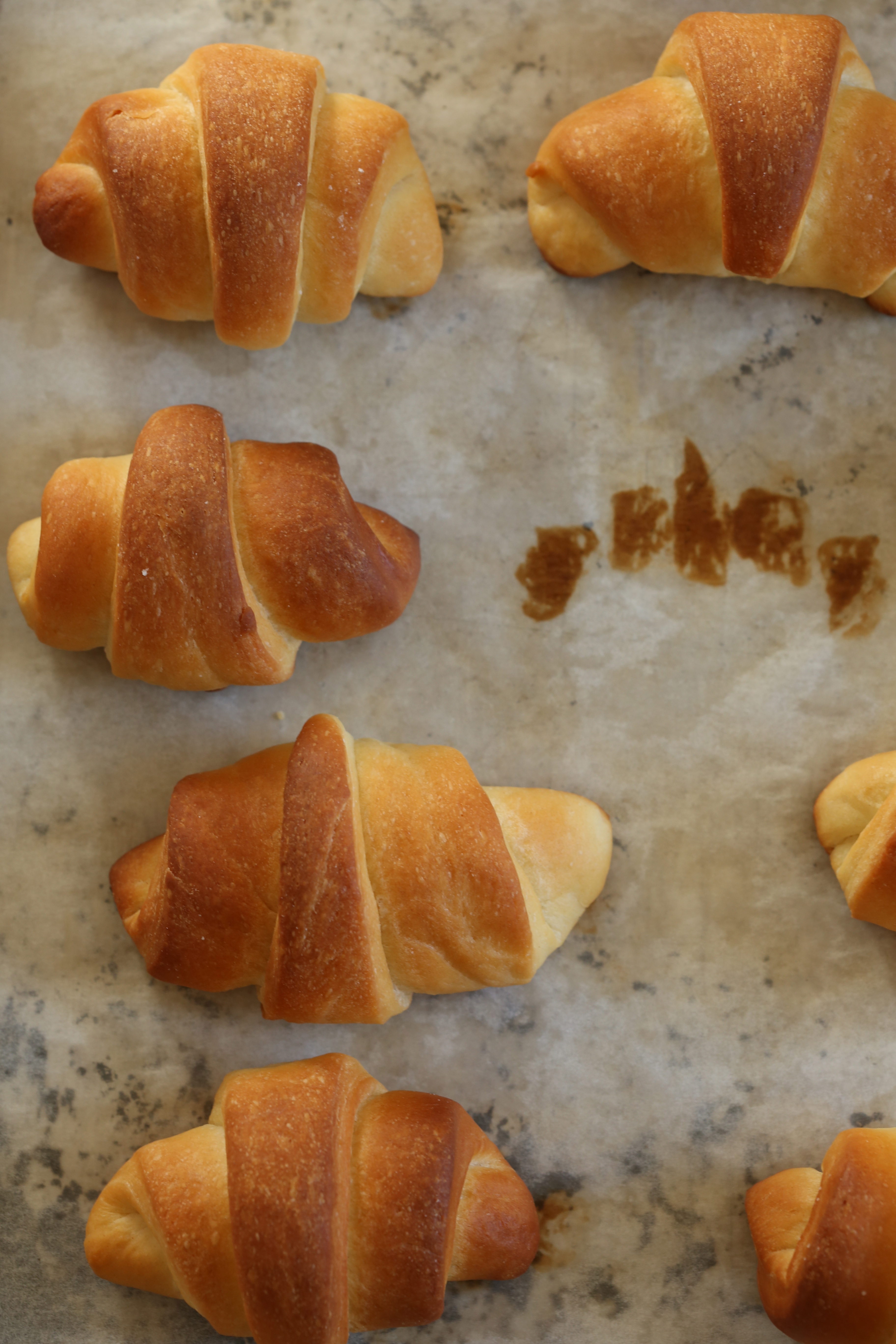
With this in mind, I pulled the book off the shelf with the idea of making some dinner rolls.  There is nothing worse than messing around with a bread recipe, spending a day or even two to make a batch of dough, only to have it completely flop.  Since I was short on time, I went with a recipe I knew would work perfectly, the simply titled Dinner Rolls.  Ms. Cunningham describes them as her “favorite dinner rolls, soft and barely sweet” and I couldn’t agree more.  They were quick to mix, easy to shape and baked up beautifully.  The recipe includes many options for shaping the rolls; pan rolls, crescents, clover-leaf, fan-tan or mini rolls.  Crescents were what I wanted, and I was quite pleased with the results.  If you do not have a copy of this book, get one; this recipe is one of the reasons why I keep this book on my shelf.

Dinner Rolls
IMG_2071 makes about 24 rolls

1 1/4 cup milk, warmed

1/3 cup sugar

2 teaspoons salt

4 tablespoons unsalted butter, softened

1 package or 2 1/4 teaspoons dry yeast

1 egg, slightly beaten

3 1/2 to 4 1/2 cups unbleached all-purpose flour

In a bowl, stir together the milk, sugar, salt and butter.  Sprinkle the yeast over the mixture and let stand to dissolve and become active.  Add the egg and 2 cups of flour and beat it vigorously for a minute or two.  Add enough flour to make a manageable dough.  Knead the dough in the mixer or by hand on a well floured surface until smooth or elastic.  Place in an oiled bowl, cover and let it rise until doubled.  Punch the dough down and shape as desired.  Place the shaped rolls onto a baking pan and let rise until double.  Preheat the oven to 400 and bake the rolls for 12-15 minutes until lightly browned.  Cool on a rack for a few minutes before serving.

To shape crescents:

Melt 6 tablespoons butter.  Divide the dough in half and set half aside, covered.  Roll the other piece into a circle that is about 12″ in diameter and 1/8″ thick.  Brush the dough with some of the melted butter.  Cut the dough into 12 equal wedges.  Take one wedge of dough, starting with the wide end, roll it up and pinch the tail to the roll to keep it from opening during baking.  Place 12 rolls on a pan lined with parchment paper or silpats, tail side down.  Space the rolls at least 1″ apart, brush them with butter, cover the pan loosely with plastic wrap.  Repeat the process with the other ball of dough.  Let the rolls rise until double and bake as directed in the recipe above.

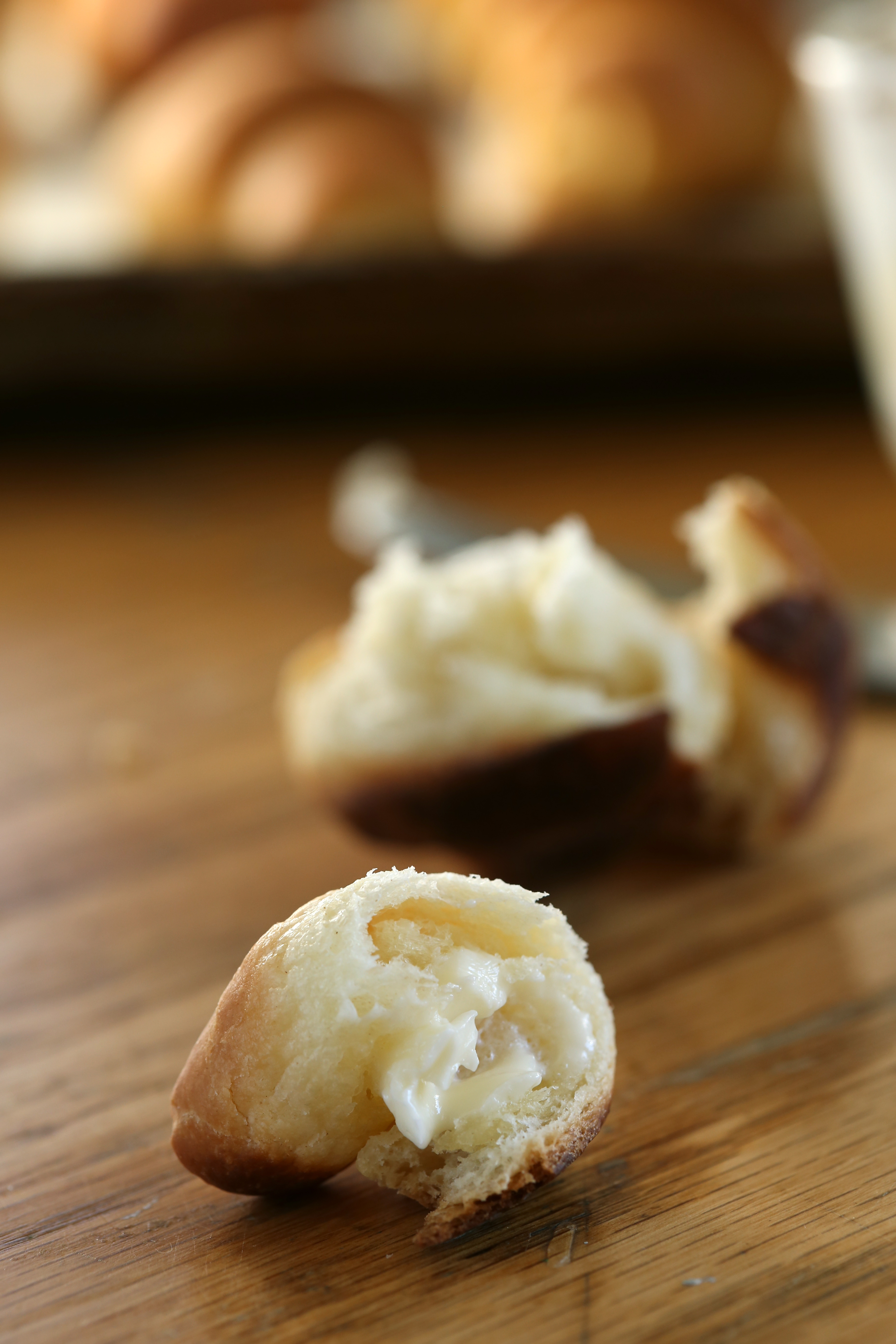
Serve the rolls fresh from the oven with butter or jam or butter and jam…They reheat nicely too and also make lovely rolls for little sandwiches!

IMG_2066off the shelf posts feature cookbooks from my personal collection.

mixed starter bread; a tuesdays with dorie post

IMG_2112This is the Tuesdays with Dorie/Baking with Julia tale of two breads; the train wreck version and the fingers crossed I hope it works version.

Bread baking has always been one aspect of my career that I completely lack confidence in.  There are so many variables and so many ways for it to go wrong and yes, baking in general is often a disaster waiting to happen, but bread is where I have had so many more failures.  As you know, baking is science oriented and when you add a living creature, yeast specifically, there are just so many more rules that must be followed.  In my world, a baguette has always fallen into the buy it not bake it category because I have never achieved good results when baking one at home.

So it was with the greatest of expectations and hopes that I set off to bake this bread.  When I read the instructions, I saw that I could actually make four different shapes if I followed the recipe, and I was determined to make at least three of the shapes.  But, as the Steinbeck wrote, “even the best laid schemes of mice and men, often go awry.”

First mistake; no bread dough to make the starter with.  Not a problem, I subbed a small amount (1/4 cup) of my homemade starter.  While this sounds good in theory, it made the starter very wet and it set the stage for more problems as I followed the recipe.  In the final rise stage, my dough was simply too soft and probably could have used another half cup of flour to make up for the added moisture in the starter I used.  However, the mistakes are not all mine.  Did anyone else notice the rather large discrepancy between the photo tutorial on page 116 and the directions in the recipe on page 117?

Give me a moment to vent and then I shall stumble down off my soapbox.  First let me state that I admire Dorie greatly.  She has helped put women bakers up in front of the crowd and to show the world that yes, women can be pastry chefs too.  She has in a lot of ways done for baking what women like Alice Waters and Julia Child did for cooking as far as convincing the world that women can do this and do it just as well if not better than men.  But editing is editing and as a published cookbook author, I can say that if the words under the photo do not match the words in the recipe, we’ve got a problem.  While this may have been fixed in later editions, my $3 flea market find is actually a first edition and I had a major mishap as a result.

My complaint is simple, step 3 of the photo tutorial instructs you to fold the dough down again (the folding process starts in step 2) and to seal the seam…it then goes on to tell you to repeat this process once or twice to form a short log shape with a tight skin.  That right there is it, one of the largest factors that my bread dough simply spread out rather than rise up and why it was not possible to get it off the floured towel without deflating it.  If you read the recipe, it only tells you to complete the folding and rolling once.  The tight skin is crucial not only to the success of a crispy, flaky skin but to the shape and the height of the loaf as well.

After having nurtured this dough along for 2 days, arranging our day around the baking schedule and then having such a flop that I had to go out and buy bread for dinner, I was truly annoyed with myself for not succeeding.  As I dumped half of the batch in the trash, I made the decision to save a piece of the dough and start again.  Then, while standing there in my kitchen peeling the rest of the dough off of a floured towel, I could not bring myself to tossing it in the trash.  Stubborn determination had me grabbing my basket and shaping the remaining dough.  The dough was soft and a little sticky at first but as I worked at shaping it into a smooth ball, I saw a change in the texture, it was no longer soft and shapeless and it was now tight and structured.  It rose beautifully in the basket and when it had doubled, I dumped it out on to the baking peel, slashed the top, slid it onto the heated stone in the oven and poured the water into the pan in the bottom of the oven.  Voila!  Picture perfect bread, and a lesson learned!

IMG_2125

The crust was thin and crispy, just like a good baguette and despite the many missteps and the extra rise time, it has absolutely no sour taste.

IMG_2141Just look at the interior of the loaf, all of the open bubbles you would expect after reading the recipe, but not the photo tutorial as it does not advise you to retain the open structure and air bubbles by handling it gently and not to deflate or mash it.  In the end, I am better prepared to make a baguette and my second batch is nearing the final rise.  Stay tuned fellow bakers, I will post additional photos when I get a decent loaf!

To see what the other Tuesdays with Dorie bakers came up with, visit the website.