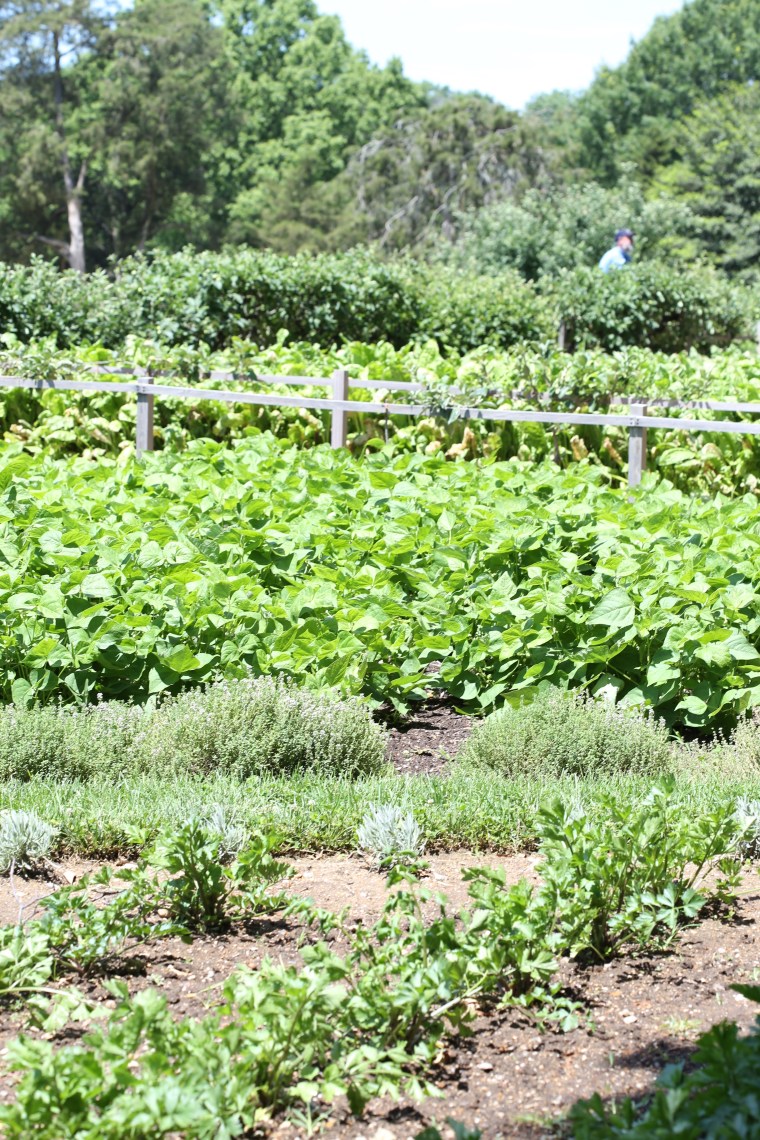
 Mount Vernon is about 140 miles from our home in Williamsburg and that may seem like a bit of a drive to walk through a bunch of gardens, but to two gardeners, this was the perfect way to spend a beautiful sunny day. If you plan on taking the trip, do yourself a favor and purchase your tickets online at least 3-4 days in advance. Not only will you save $3 per adult, you will have the option of choosing a time for your visit to the mansion and if you are willing to spend a little extra, you can also purchase tickets for the special tours. We booked our entry tickets online and purchased tickets for the Gardens and Groves tour and started our visit with a guided tour of the upper and lower gardens.
The sun was pretty harsh and it made taking photos tricky but I managed to get a few! The photo above is of the lower garden. George Washington was very meticulous in many aspects of his life but unfortunately, he did not keep good records of his garden and for the people in charge of keeping them, they have had to do a lot of digging for clues and a lot of guessing based on what was available at that time.
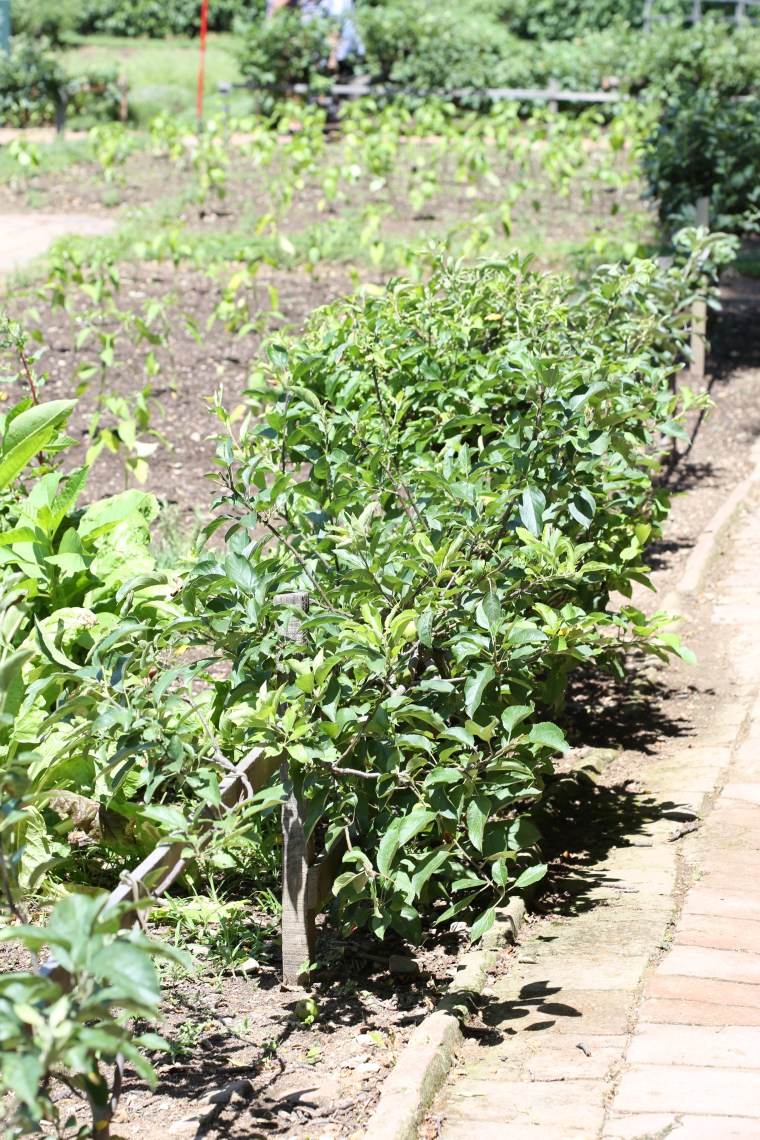 In the lower garden, most of the beds included fruit trees grown in the espalier style. Some were trained to grow up against walls and others, like these apples, were grown as a living fence for the garden.
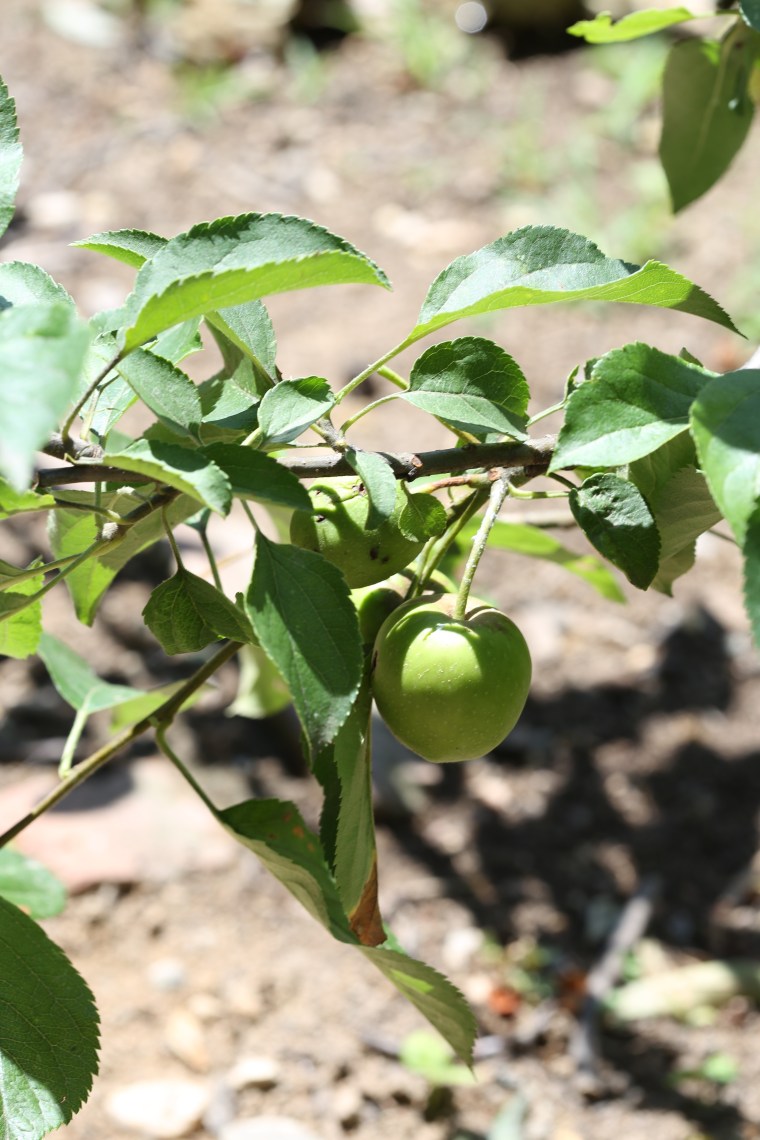 There were so many apple trees-I was truly jealous!
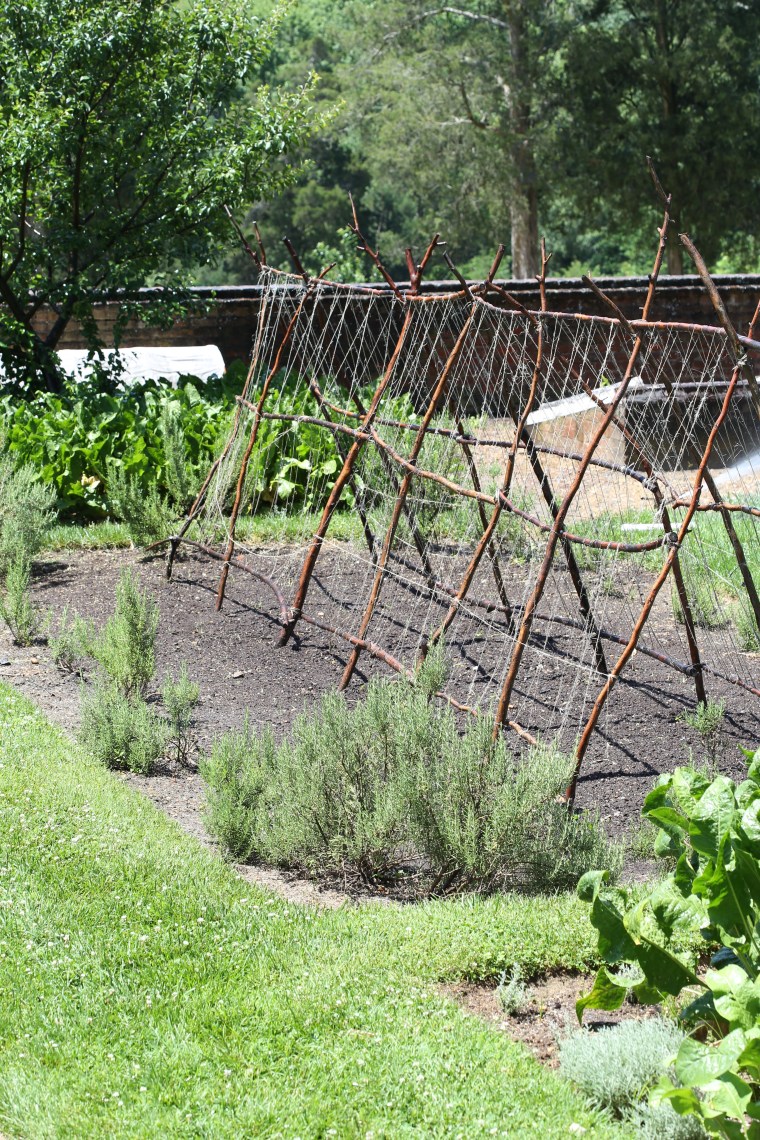 This trellis looks a little intimidating but it is easier to construct than you might think. There weren’t any plants growing near it so I wonder what it will be supporting.
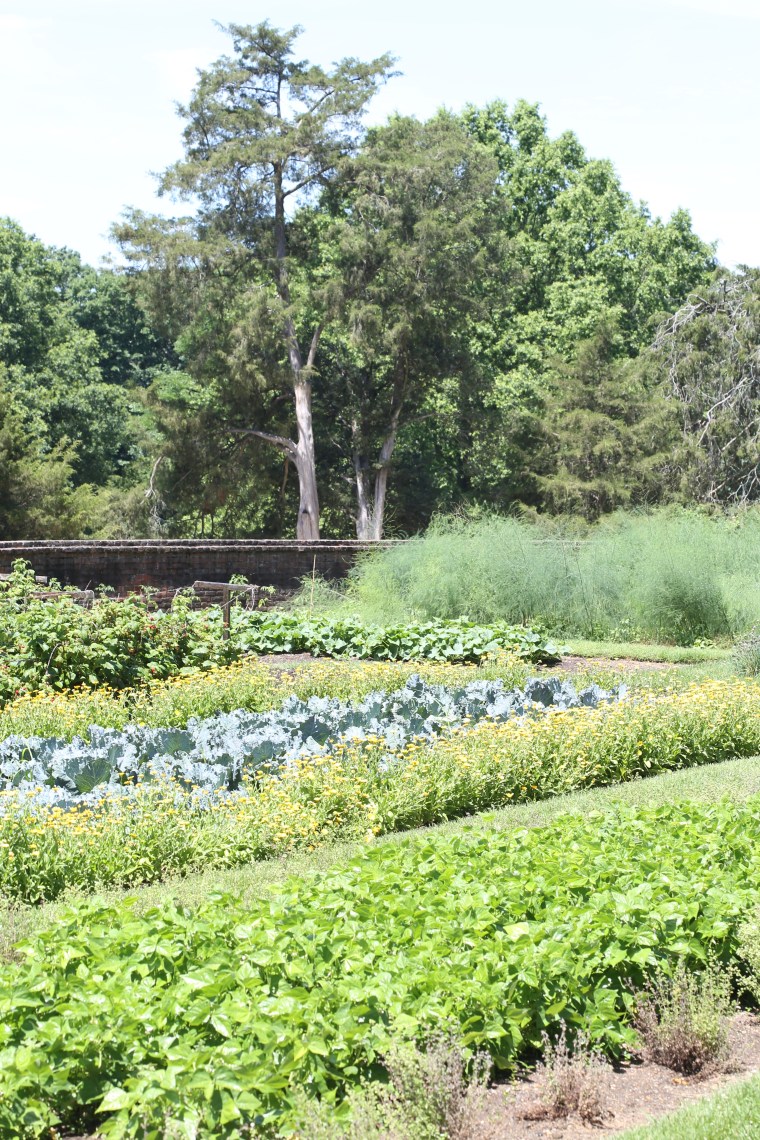 The high walls surrounding the garden created a micro climate that helped keep the temperatures up to give the plants an early start in spring.
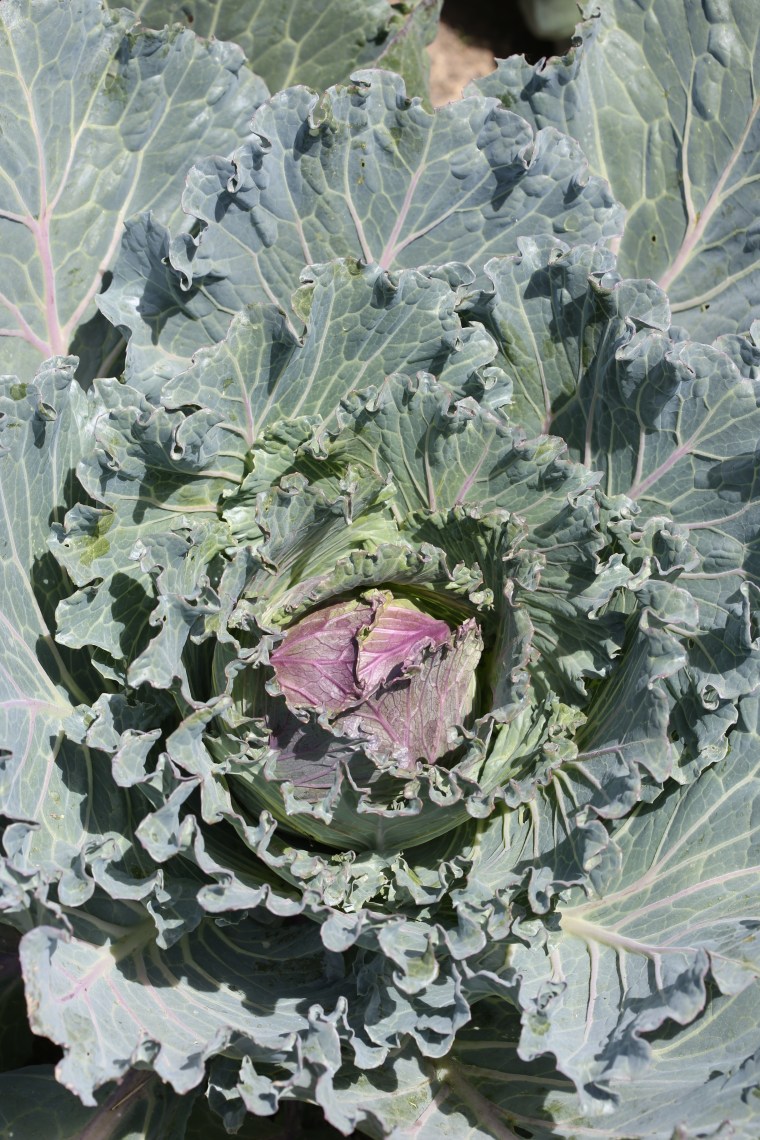 Have you ever heard of cabbage envy? No? Well, you have now. Down by the river, there is another small garden area near the 16 sided barn. We literally stood there and stared at the cabbages. Someday, when I grow up, I’m gonna grow cabbages like these…
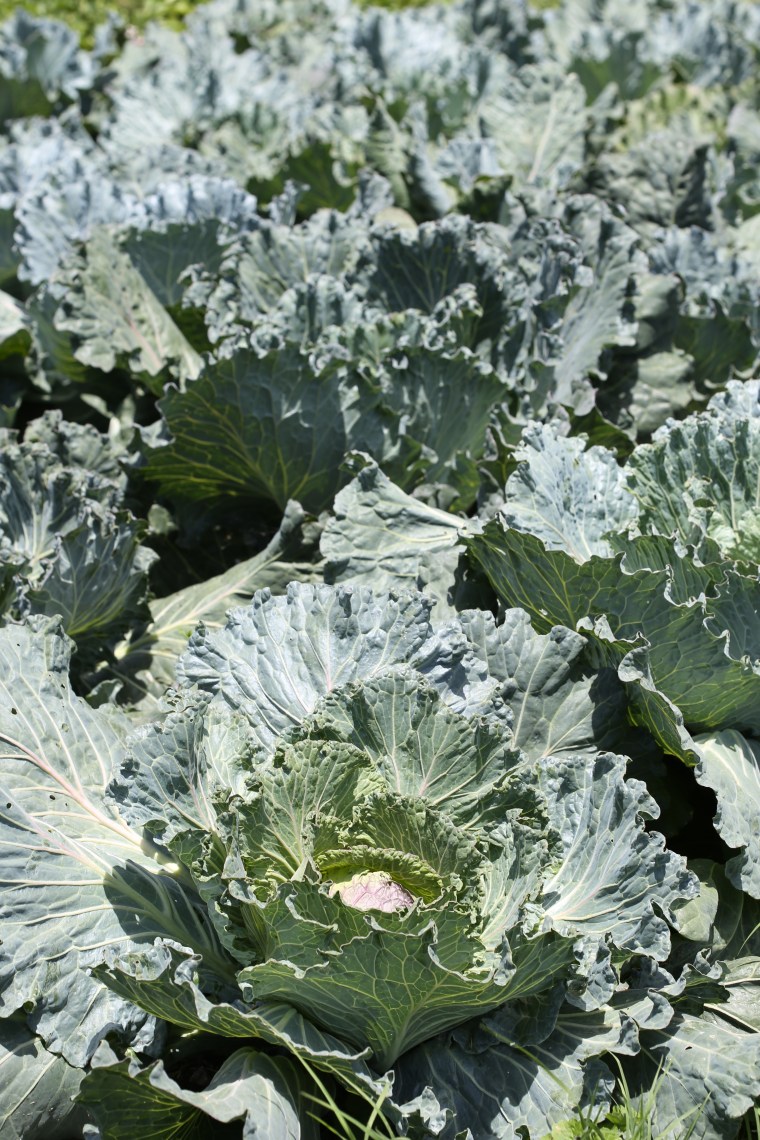 And not a cabbage worm in sight. Then we stood there and wondered what chemicals they were using on them to keep the caterpillars at bay…
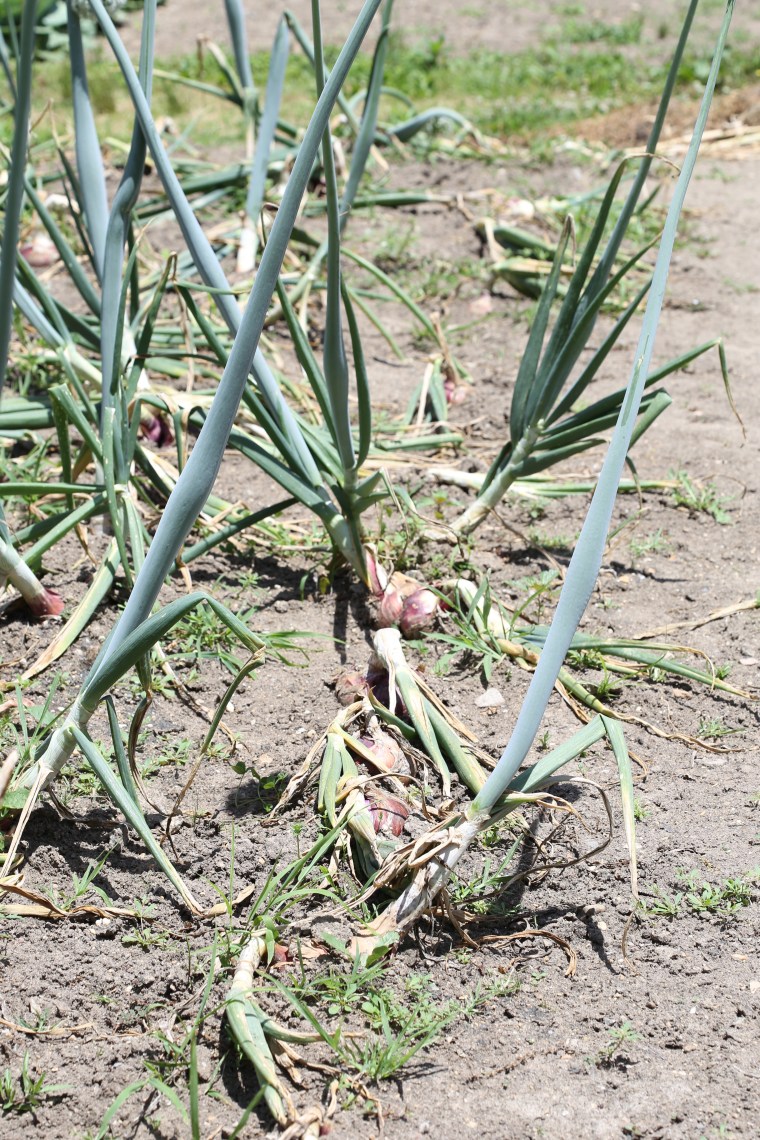 These onions were at in bloom and they must have been near 5 feet tall and as big as a softball. Again, some day…
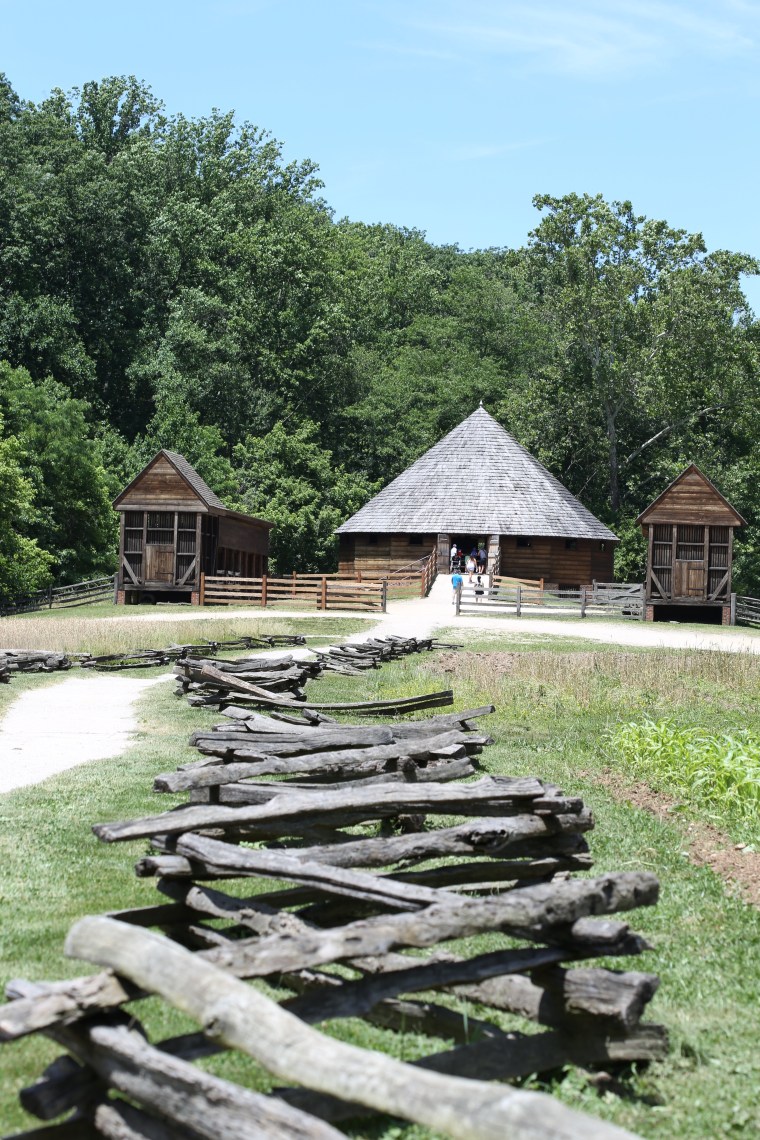 As we ponder the possibilities of fencing for our own garden, I admired this one because of its simple construction. Then I remembered that I do not live in a forest and my husband is not a lumberjack; this might not be our solution.
The 16 sided barn sits on a small slope and was interesting to see. On weekends, they must have livestock here, but not on our trip.
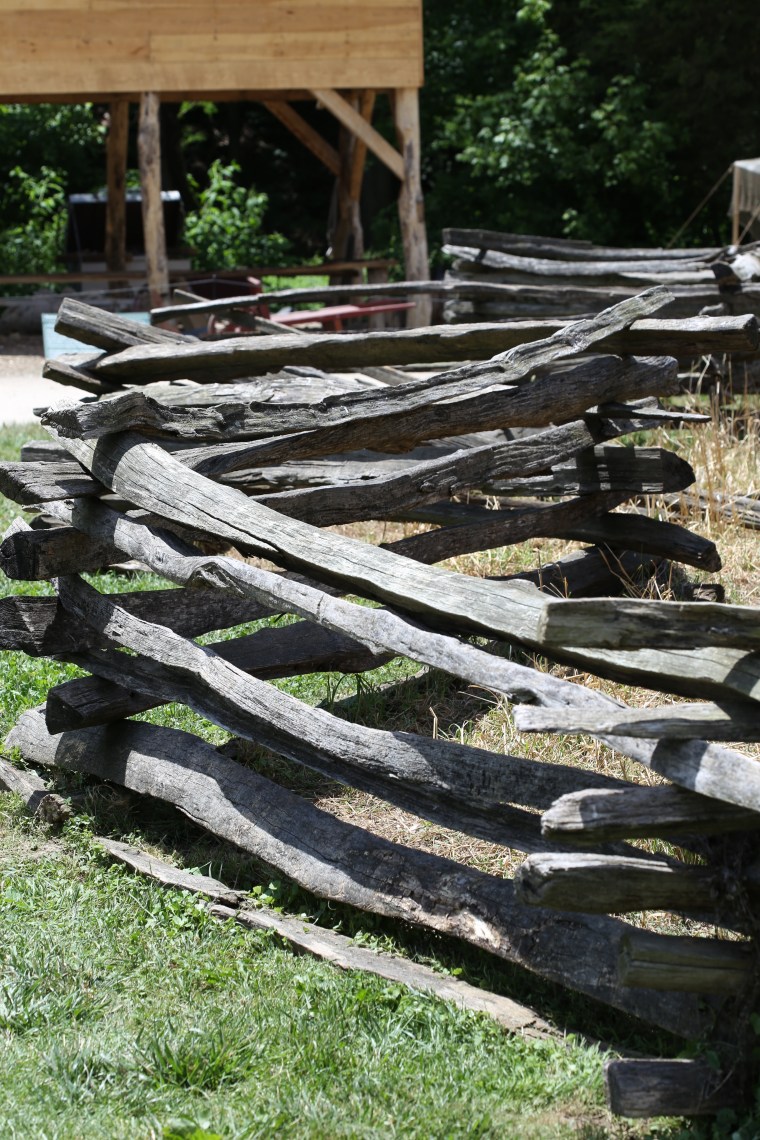 Really loving the fencing
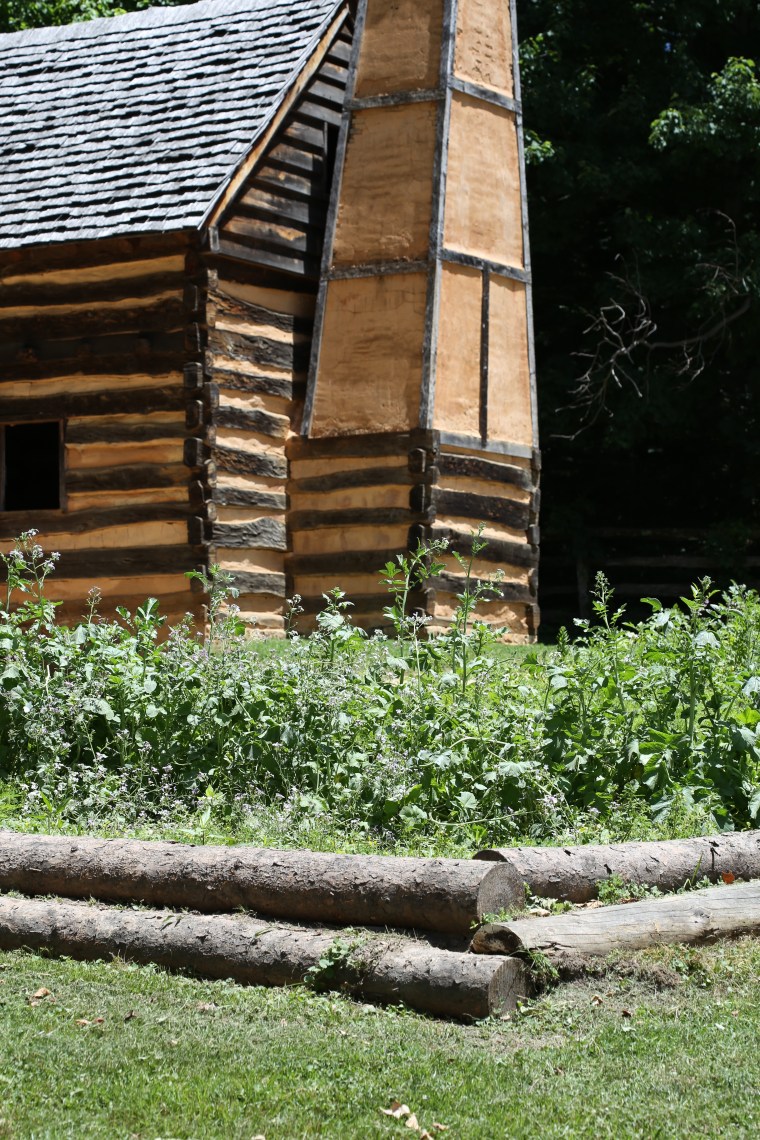 This house is a recreation of a cabin that belonged to one of the more prominent slaves and his family.
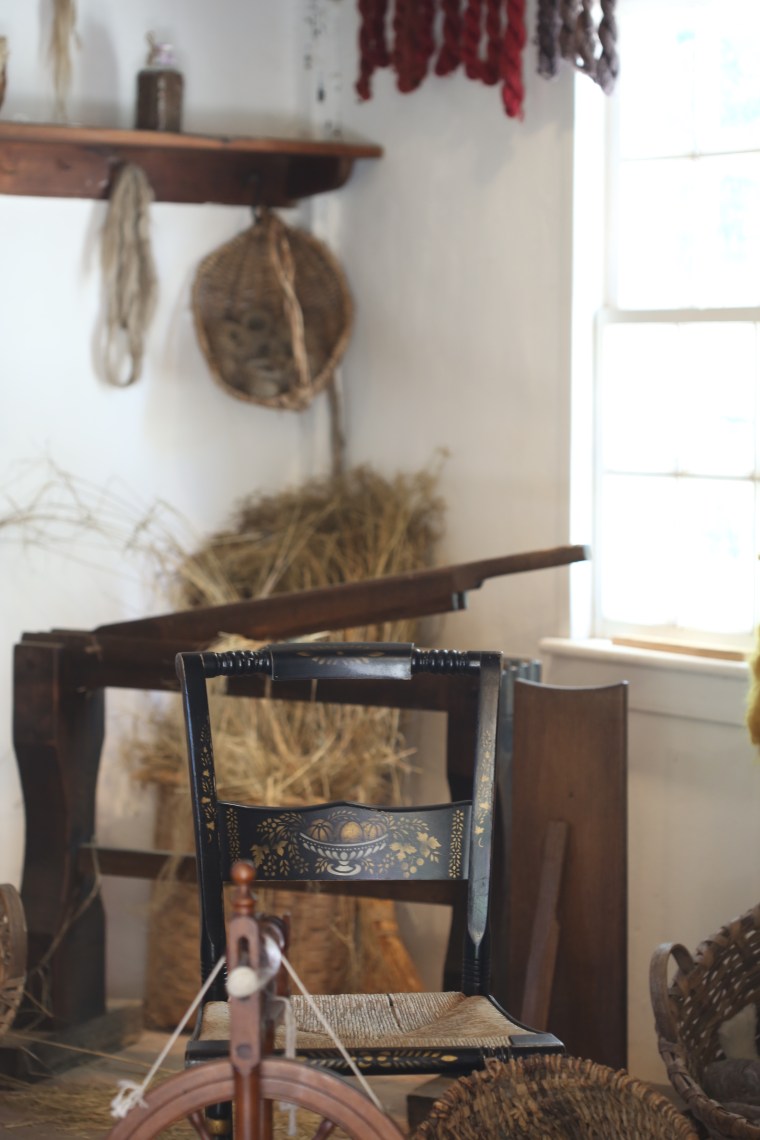 Just out of view from the mansion is a row of buildings. Many had a specific purpose; salt house, smokehouse and so on. This was the knitter/weaver house and as a knitter, I had to stop in and take a few photos. George Washington led a very ordered life. His primary goal was to be as self-sufficient as possible and while he had the advantage of wealth, the slaves working on his estate were able to produce most of what they needed. The things produced here would most likely have been used on the property.
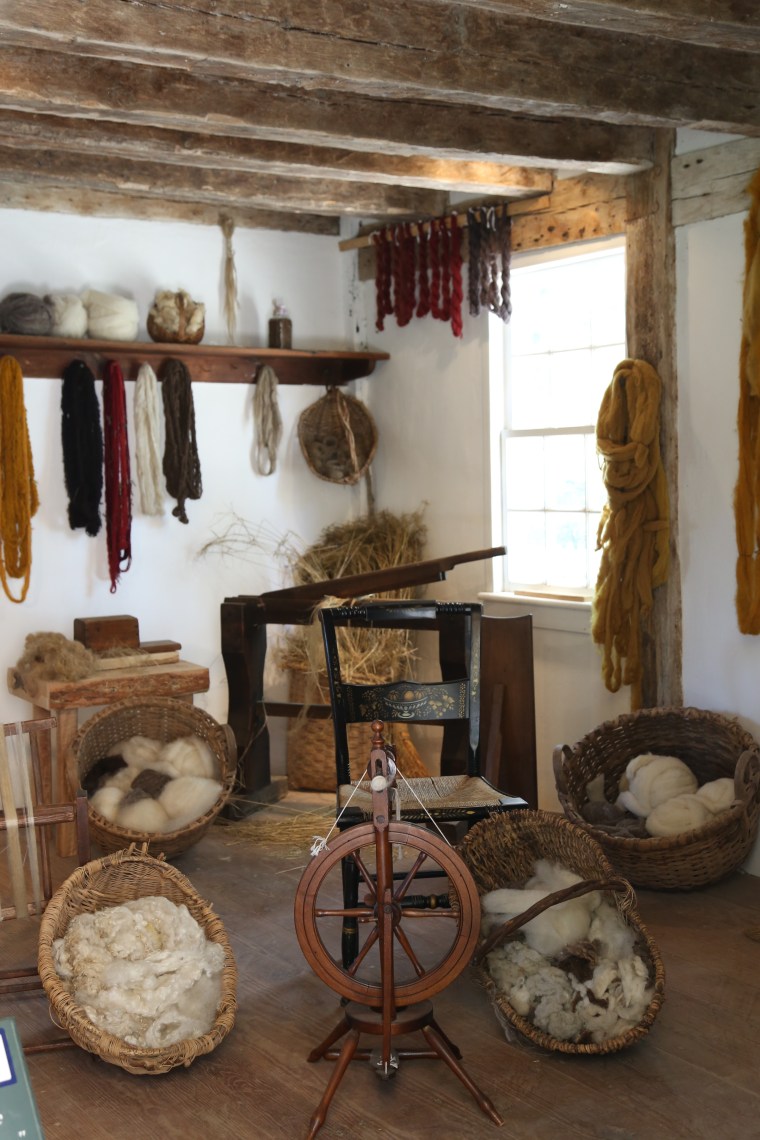 The wool would have come from livestock on the estate and it would have been processed by slaves who would have also used it for weaving and knitting.
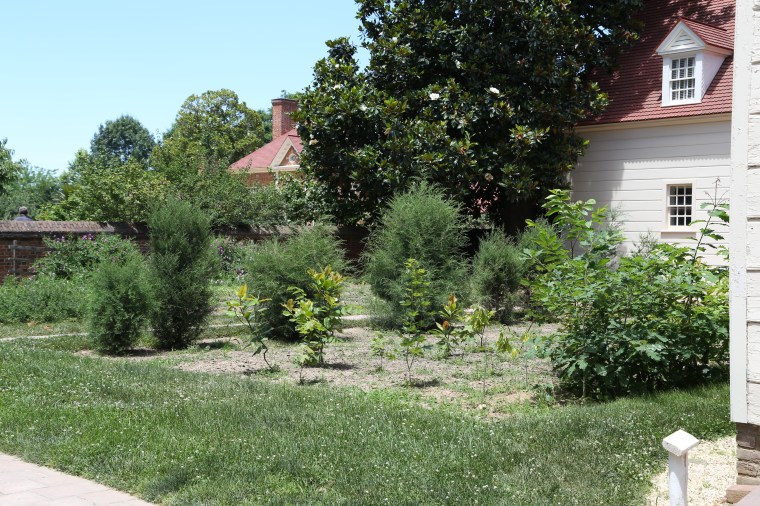 Along side the weaving house was a small plot that was called the botanical garden. In this small space, Mr. Washington would experiment with new varieties of seeds and plants. If they were successful, they would have been added to one of the gardens or groves to produce food.
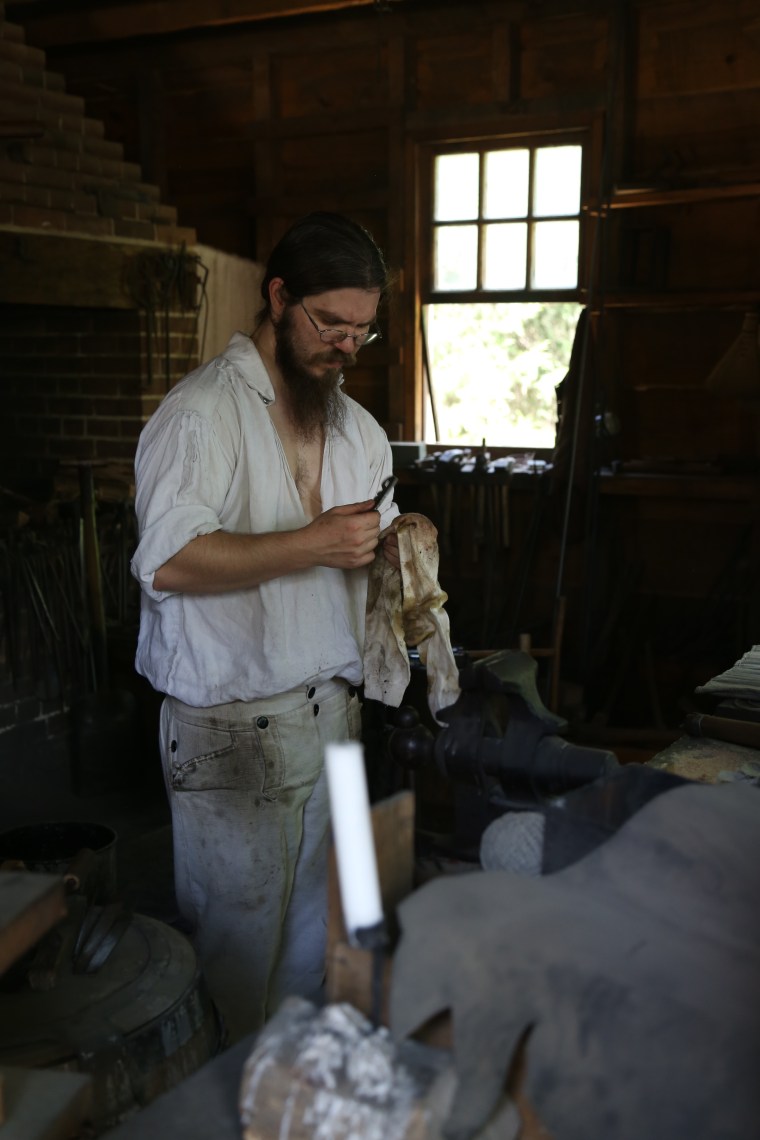 There is a recreated blacksmith shop along the path as well. In this shop, tools are produced using the same methods that were employed over 200 years ago. Most of the tools they make now get used around the estate.
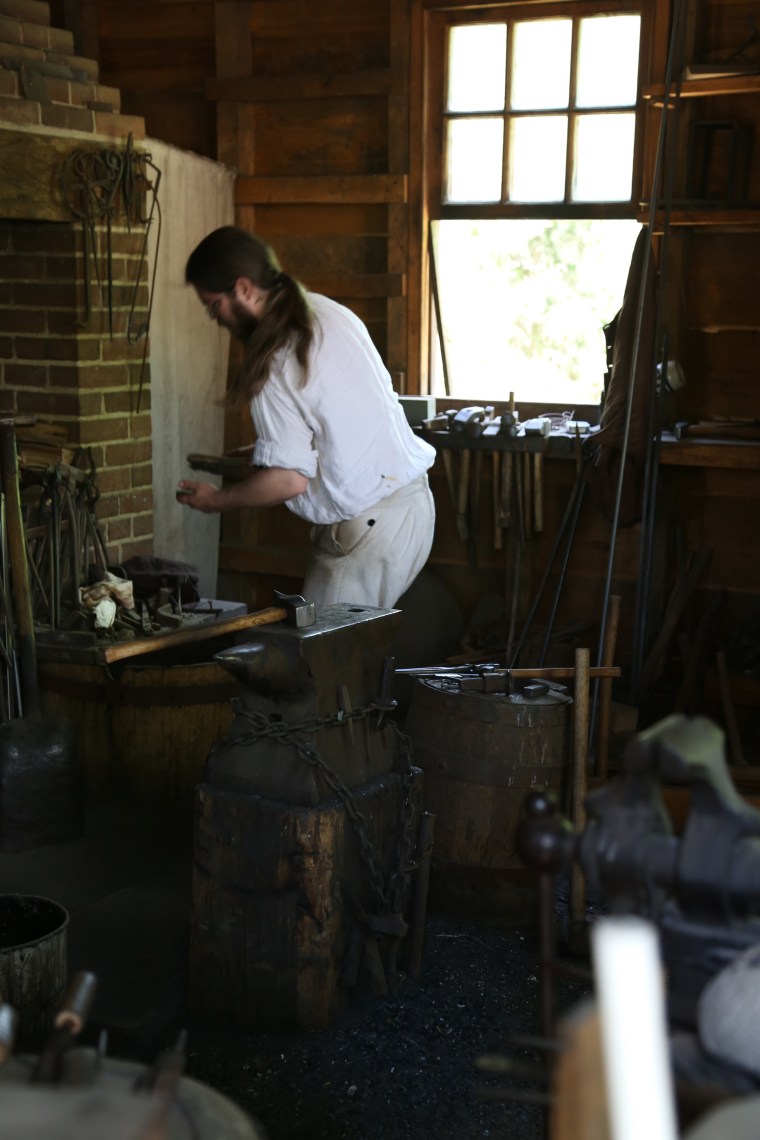 As we looked on, this gentleman was working on a project. They may have a lot of stuff in there for visual impact but this really is a working blacksmith shop and he went back and forth between the table/anvil and the fire as he worked on the piece in his hand.
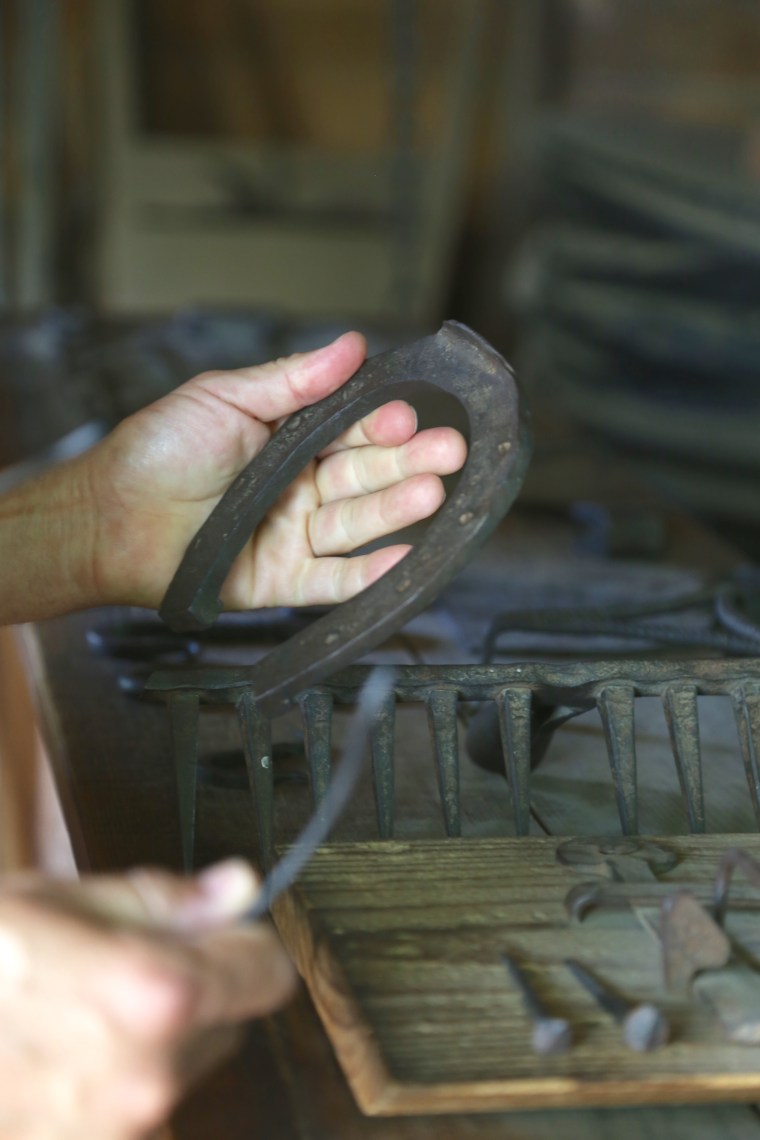 There were horses present back then but there wasn’t a farrier to produce shoes for them. Because Mr. Washington was not one to spend money unnecessarily, he made sure that a few of the blacksmiths were properly trained to produce shoes and tend to a horse’s feet.
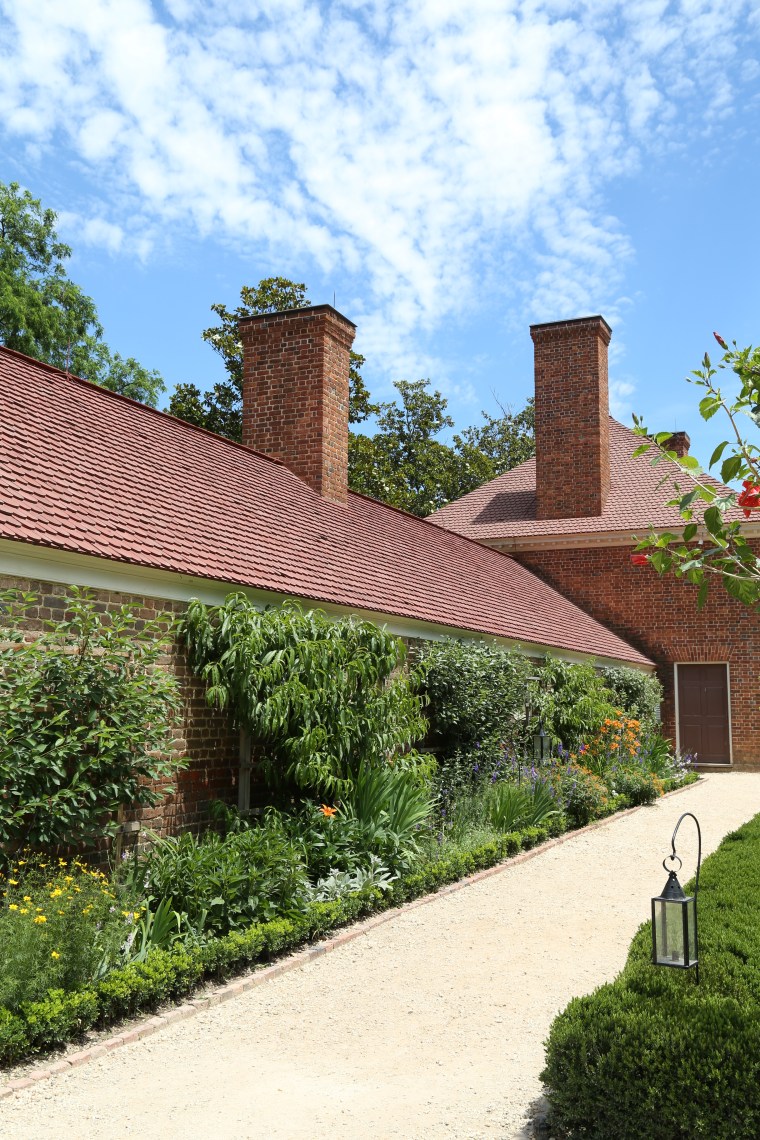 One of the most interesting parts of our Gardens and Groves tour was the greenhouse. While we were not permitted inside, it was interesting to know that back then, they would grow citrus trees and other tropical plants in the greenhouse during winter and move them outside in summer. There was a room in the back of the building where a fire was tended around the clock to keep it warm for the plants. The men in charge of keeping the fire lit would sleep in that room .
 The larkspur is one plant that they know was growing on the property when Mr. Washington lived there. They actually sell packages of seeds and when my mother in law visited here last year, she brought me one. So far, I haven’t had any luck getting them to germinate but I will try again this fall.
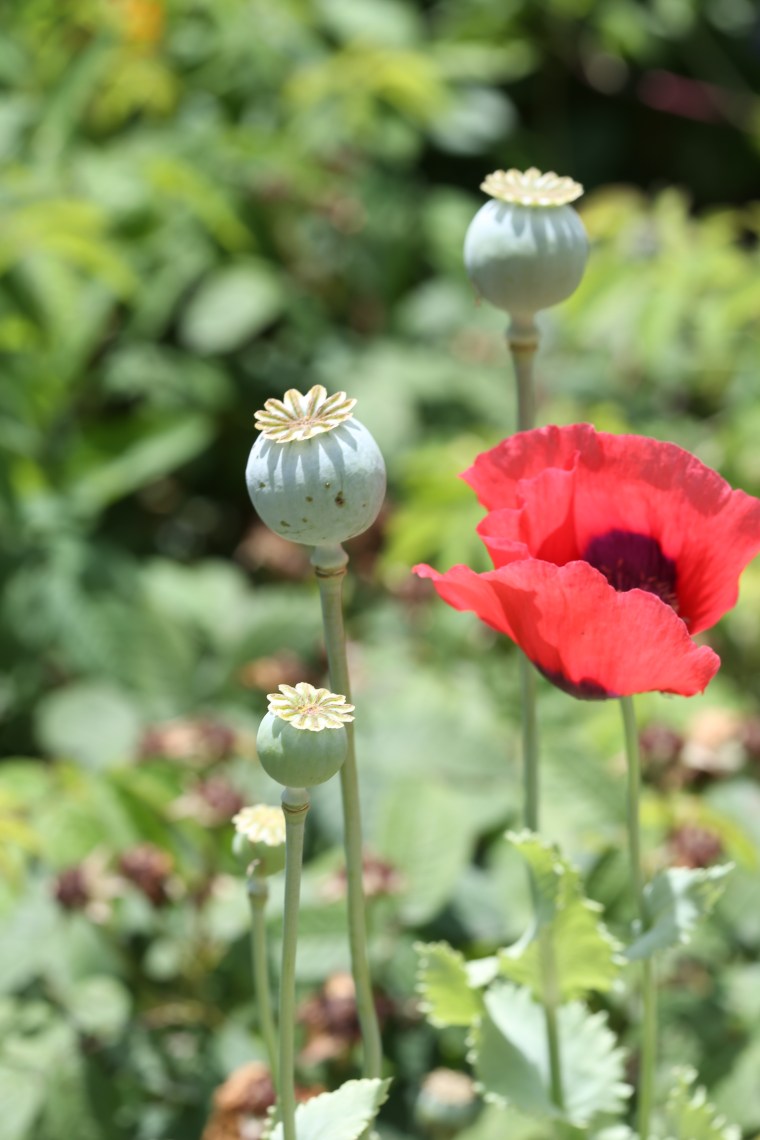 After seeing these poppies, I have a new admiration for them! Beautiful when in bloom and then come the seed pods, which I think are just as pretty as the flowers.
 In the upper garden, flowers are everywhere but if you look closely, there is a vegetable garden hidden in there too!
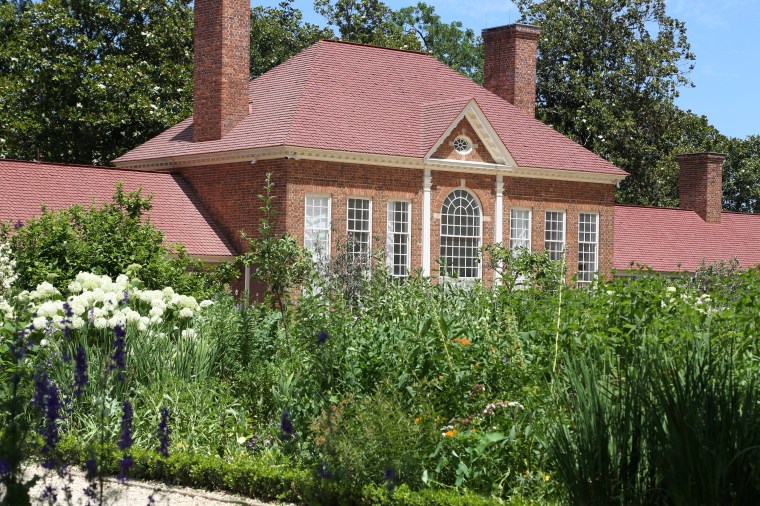 We toured the mansion (a quickly guided walk through with little time to stop and truly take it all in-and no photos allowed), walked the grounds, saw the tomb and trees that George Washington himself planted (two tulip poplars and a hemlock-absolutely huge) and then wandered through the museum. The museum is a trip in itself, honestly. There are several videos to watch and plenty of historical displays with lots of text to read. He was such a fascinating man and it was a bit overwhelming after all the walking in full sun for two hours on the grounds. Then we arrived at the end of the tour and the final display; his teeth.
Mr. Washington did not wear wooden teeth. He also did not neglect his teeth, actually, he did what he could to save them and actually visited the dentist! Back then, when teeth would fall out, they would use wire to hold in replacements. When he was inaugurated for his second term, he only had one single tooth left and made the decision to have it pulled and just use dentures. Those dentures now rest in a glass case for all the world to see. They consist of a mixture of human and cow teeth and they are set into hinged, metal plates and they look unbelievably uncomfortable-it is no wonder he was not smiling in his portrait!
Bottom line, go if you can! Buy your tickets in advance and go in the middle of the week before school lets out for the year to avoid the crowds. And one other suggestion, if you want to see all three floors of the mansion, visit in January or February. The number of visitors is so small then that they open the third floor up to the public; currently, the crowds are too large and the structure is not stable enough to withstand the traffic.
 Just as there are many types of plants, there are many types of gardens. Some gardeners work with shade, some with flowers or succulents and others with just vegetables. Potagers, cottage gardens, rain gardens and so on. Personally, I have an herb garden, a shade garden and a sunny area planted with perennial flowers in addition to the very large potager style vegetable garden that takes up much of our front yard.
 Gardening with deer is a challenge. Especially when the community you live in is surrounded by state owned forest land. At times, there can be a dozen or more deer grazing around the yard. The landscape provides areas for them to sleep and rest and even when you think the small herd may have left the yard, it is entirely possible that some are still there but out of view. As if the deer weren’t enough, black bears also live in the area and have come through yard and more than one raccoon has raised a litter of kits in a tree near the shed. If you think deer can do damage, mischievous raccoons and squirrels can also cause problems.
 As a result, my mother is a gardener of things. All around the yard, you will find statues and knick-knacks, baskets of silk flowers and plants, gazing balls. She finds things in stores and yard sales and has them all over the yard. Bird houses hang from low branches all over the yard. Every where you look, little pops of color are present and it truly makes for a restful place to spend the afternoon outdoors.
 The deer really do eat just about everything and it was surprising that these little bluets were present since they are usually eaten to the ground.
 A constant theme in the garden is a smiling sunface. Actually, sun and moon faces are all over. That may be partly my fault since I often send them to her!
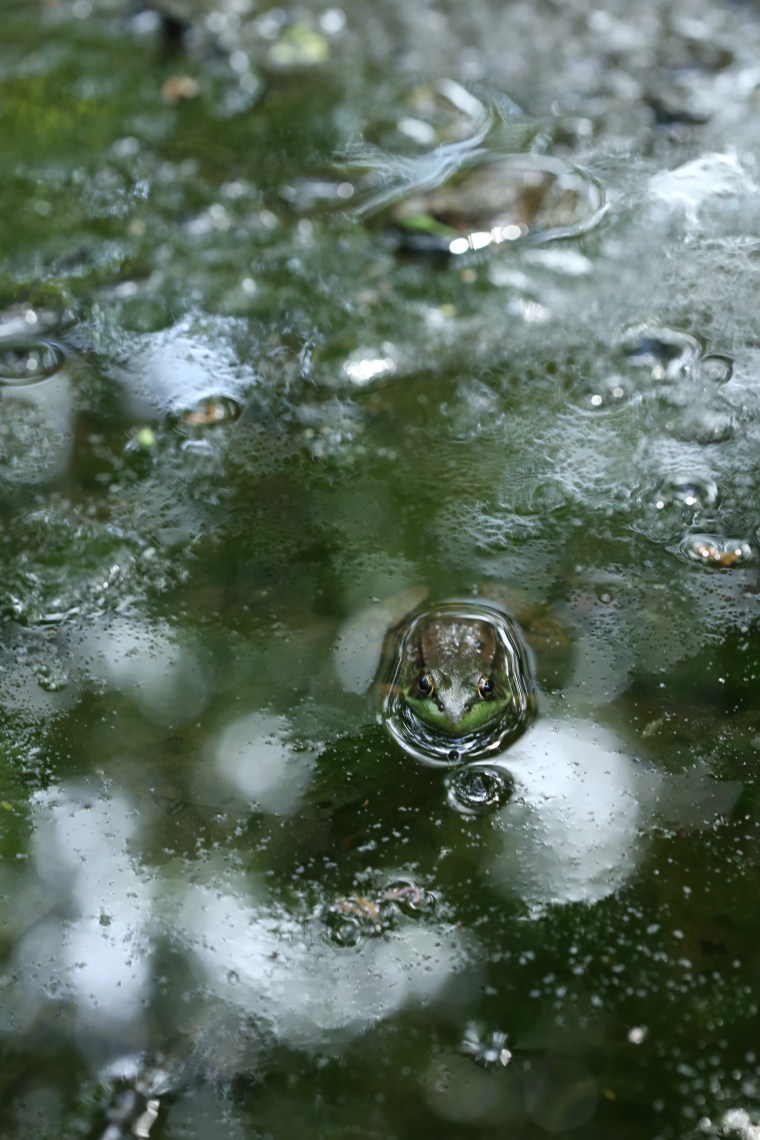 In a small hillside drainage pond, frogs rule. They are loud and you can hear them all over the yard. On this afternoon, I saw four of them in the water and on the rocks around it.
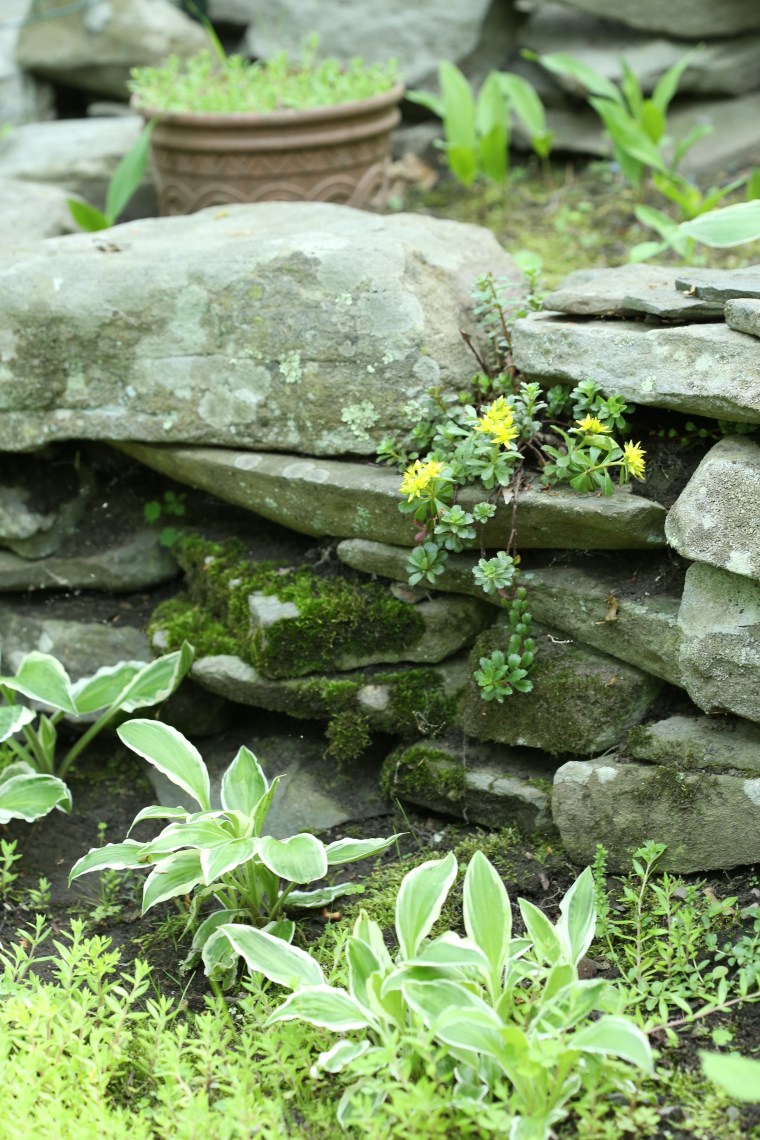 This is one of the few parts of the yard that actually has plants. The previous owners of the yard placed fencing around plants and shrubs to protect them from the deer. It was an unattractive sight and my mother has removed most of it. Although that meant the plants within met a nibbled to the ground death, it greatly improved the appearance of the yard. One place she left the fencing was around the pond and in this small area, she has a few hostas, several sedums and lily of the valley along with statues and knick-knacks.
 Lichens and moss cover all of the rocks in the yard.
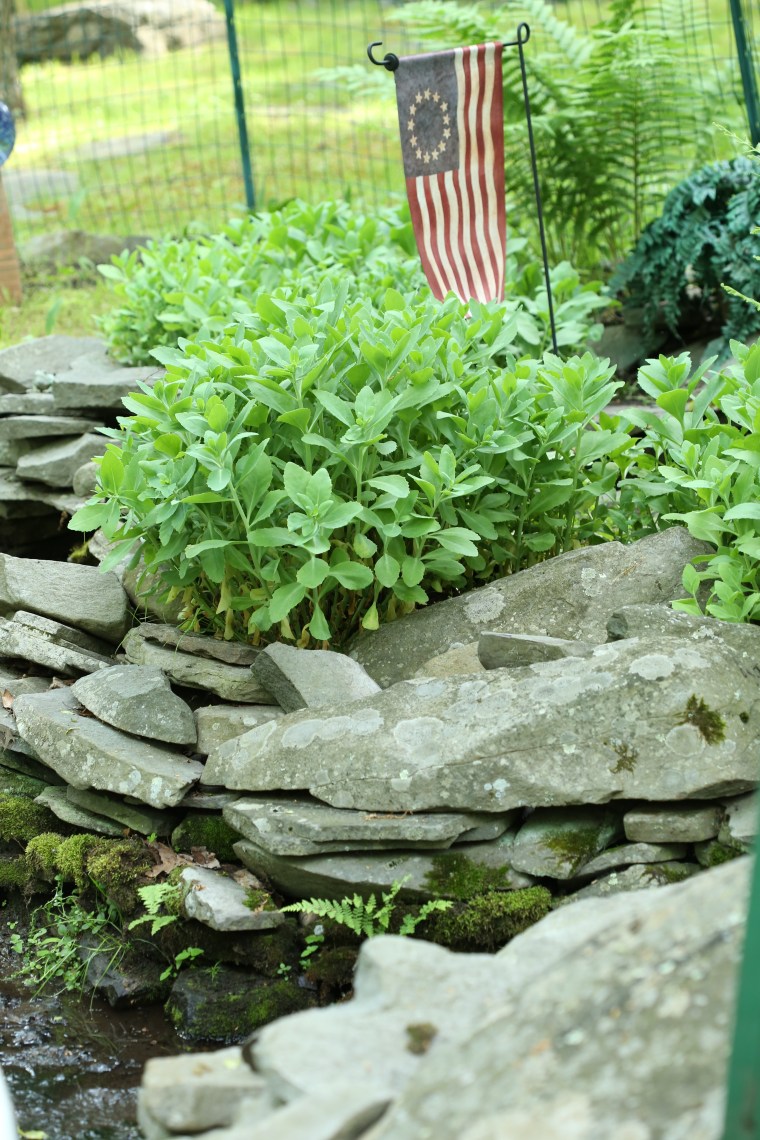 The pond is truly the focal point in this part of the yard. The Autumn Joy sedum has filled in the crevices above and moss and ferns are filling the areas near the water.
 Gazing balls are one of her favorite ways to add color to the yard. She will tell you that they must be colored and not silvered. Twice, my mother has placed silvered gazing balls in the yard and twice, a woodpecker tried to kill his reflection. Both of those gazing balls were shattered.
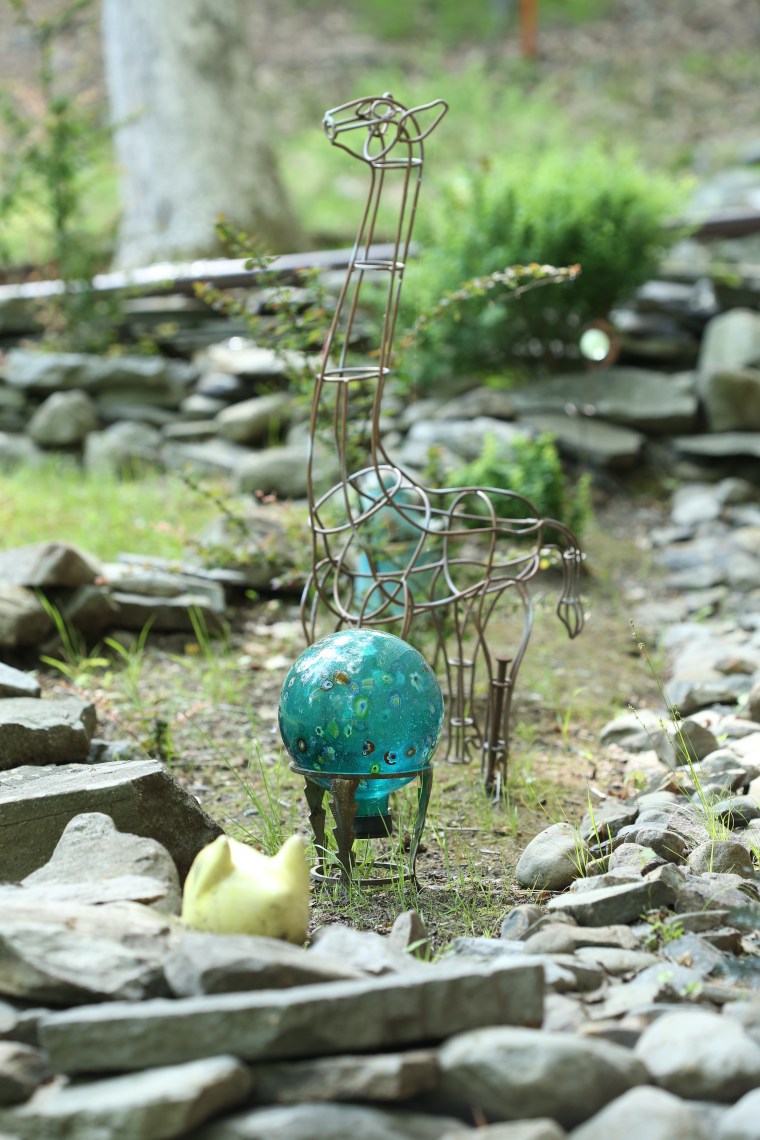 You must walk around the yard to see it all because it is everywhere.
 Along the back of the house, she has a simple row of silk plants with pottery and glass accents.
 In that row, tucked in a corner, is what remains of a deer skull. It seems that this buck died on the property and after the vultures cleaned it, my mother placed the skull in her garden along the back of the house. Squirrels continually gnaw on the bones to keep their teeth in shape and have chewed up quite a bit of the skull and antlers.
 Have you ever heard the phrase referring to “bones knitting,” especially if you have broken a bone? It is easy to see why they say that when you look at the fuse line going up the skull. This was one of the most fascinating things to look at in the garden!
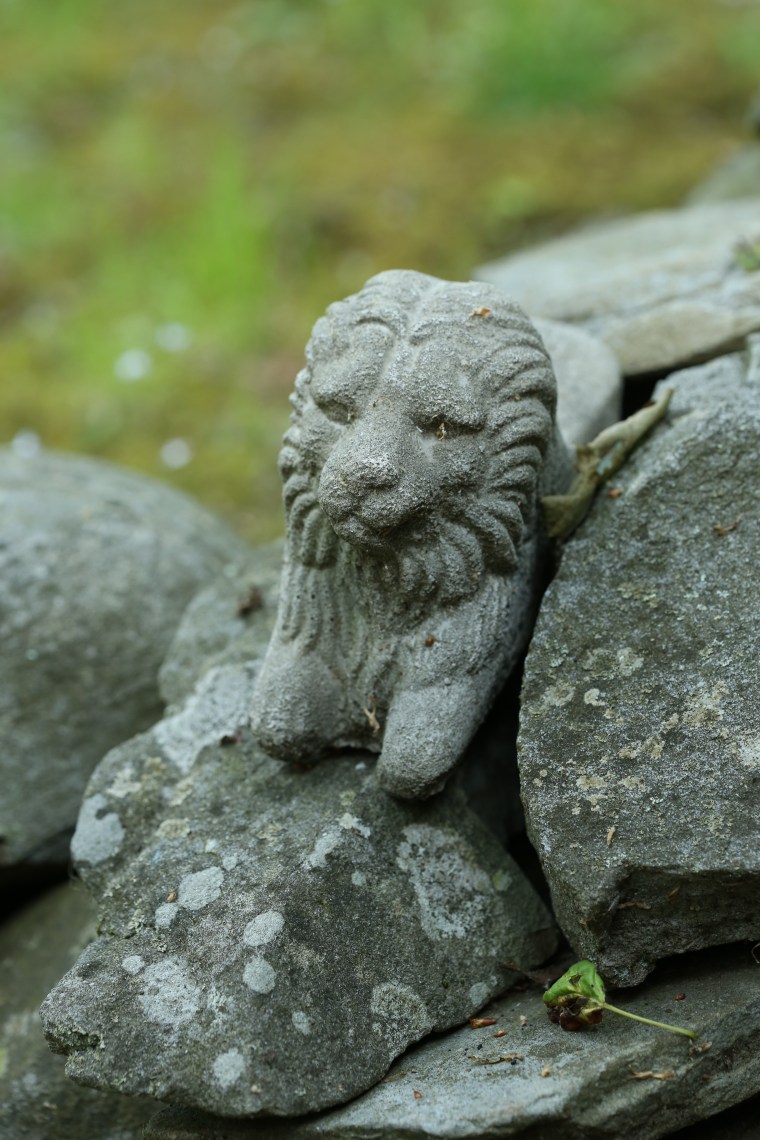 You really must look carefully or you might miss something.
 And look everywhere, despite being colorblind, my mother has a talent for choosing colors so that they either blend in seemlessly or jump out.
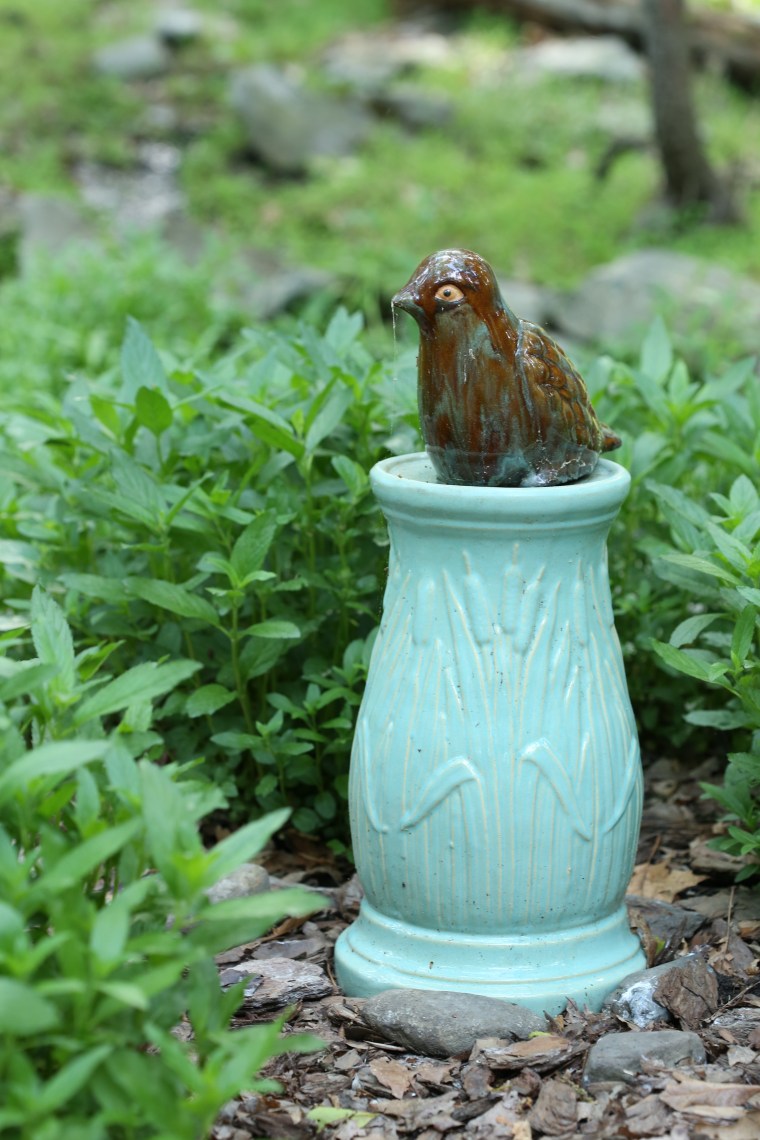 She also has a talent for finding unusual pieces like this pottery base to a planter.
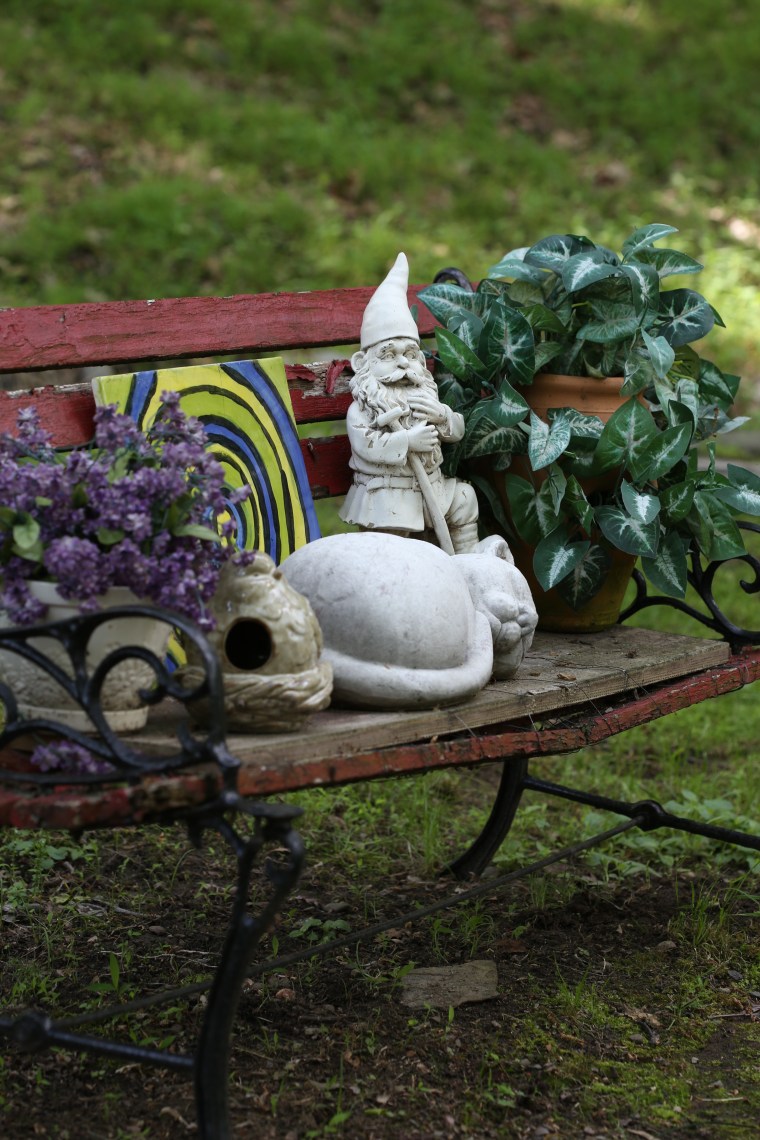
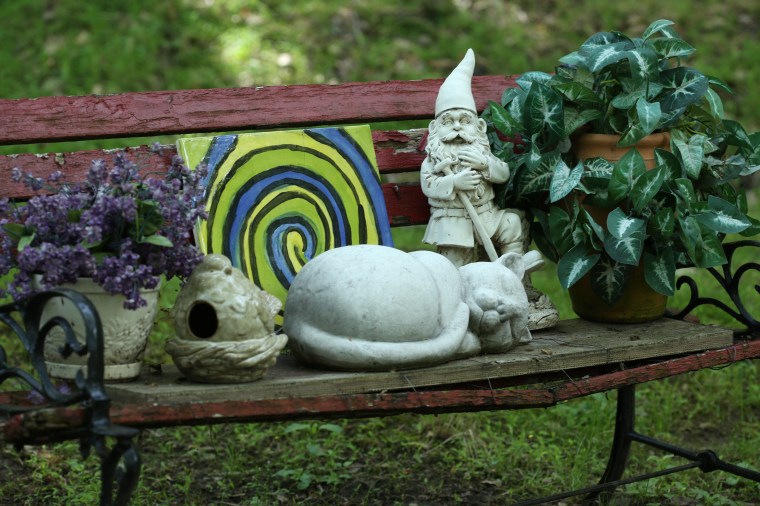 This old bench is so worn out that she has added a board to hold the objects on it. That gnome looks familiar-he lived in our house in Nashville for years and when we moved, I sent him to live with my mother. One of the girls, I think Alix, painted the tile and yes, the plants are silk. At least the deer won’t eat them! But beware, the raccoons love to move things and you never know what they will do.
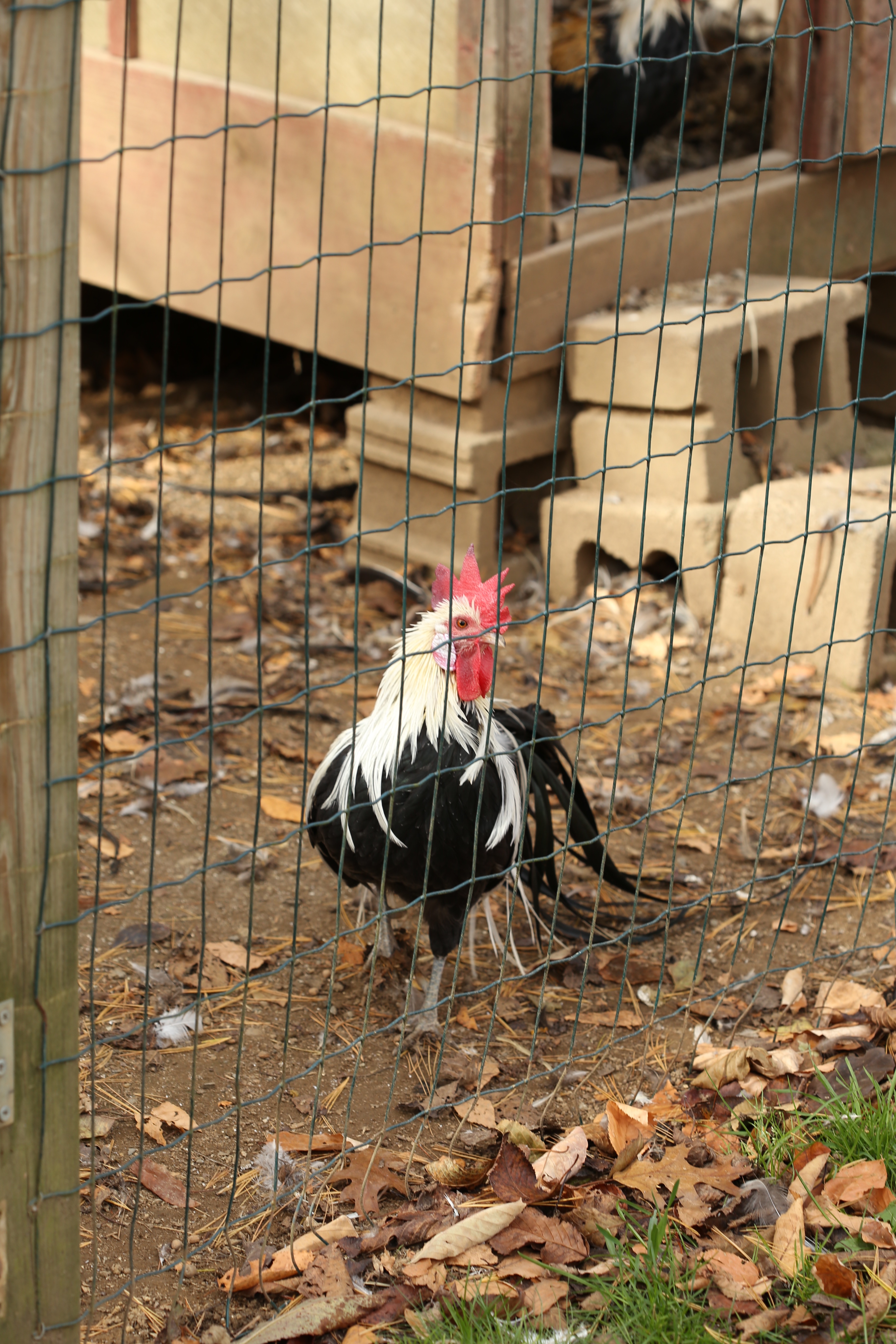
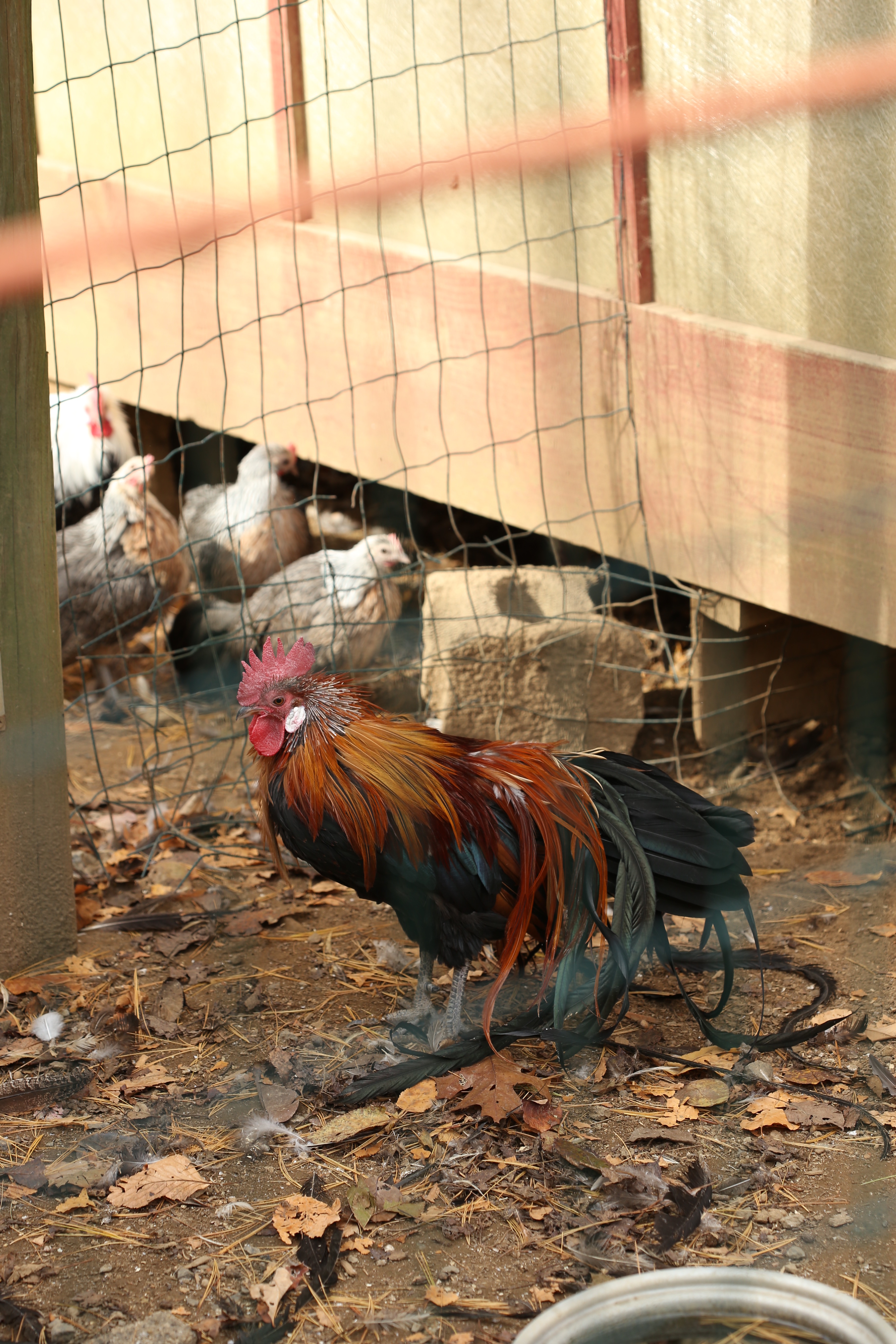
 It’s salad season in my garden. Well, specifically, it is lettuce season. Living in the south means that lettuce is a cool weather crop while all the other parts of a salad, like tomatoes or cucumbers, are warm weather crops. Luckily, it is always fresh egg season in the chicken coop!
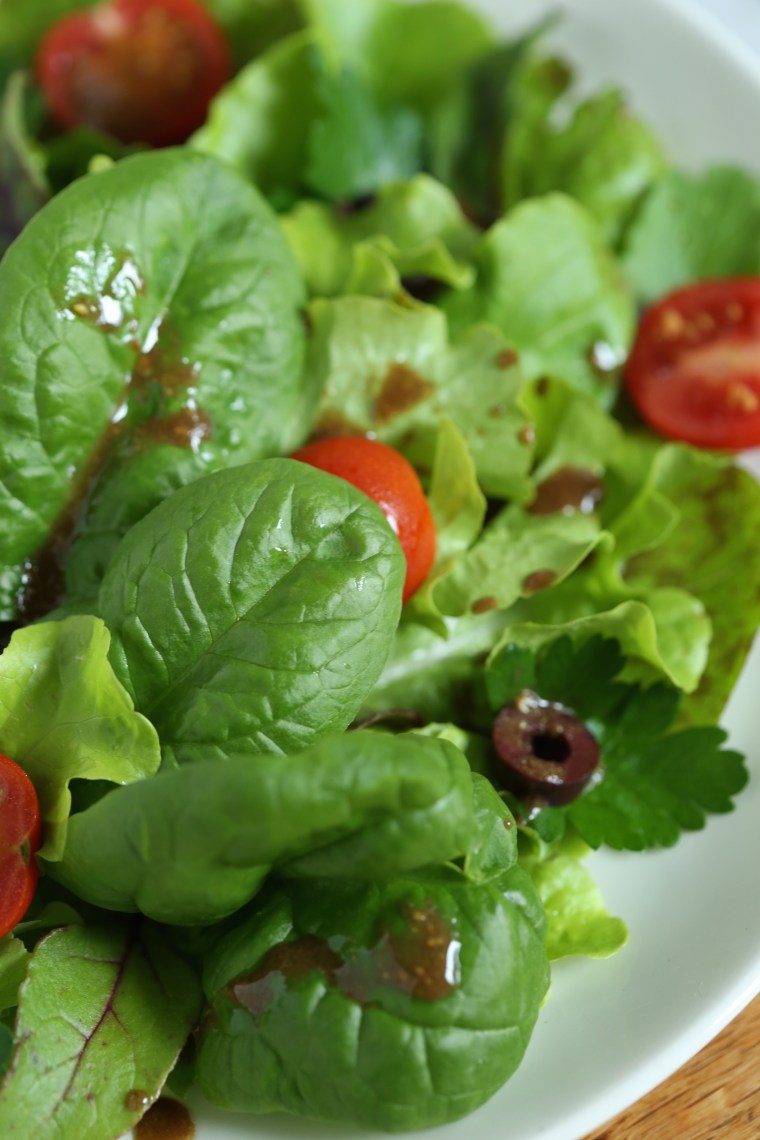 There are a dozen different salad greens in the garden right now. In the salad above are Bloomsdale spinach, baby beet greens, parsley, salad bowl leaf lettuce, buttercrunch, forellenschluss and arugula.
 Simply dressed with vinaigrette, garnished with cherry tomatoes, cucumbers and some kalamata olives and served with the paper; my idea of lunch.


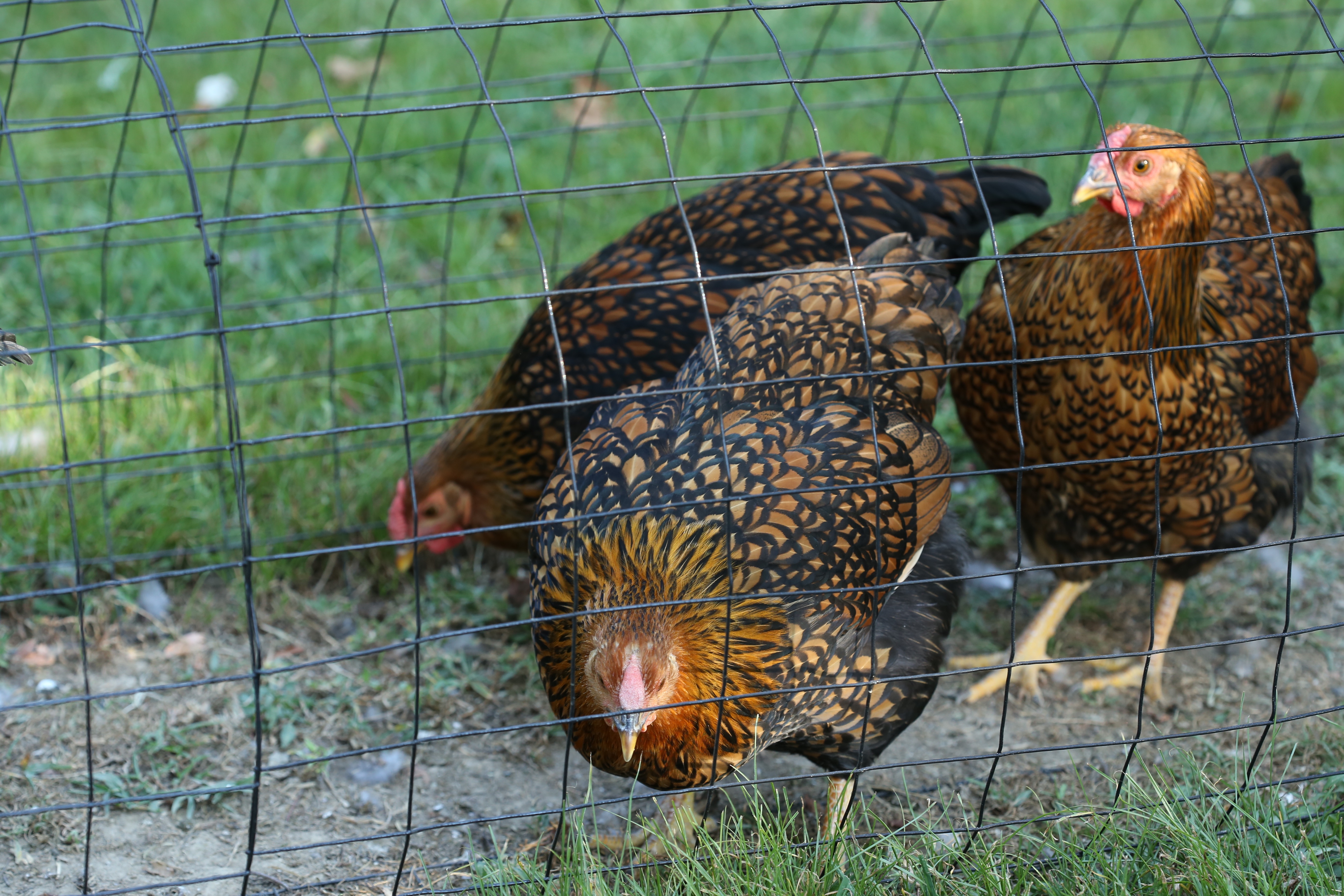
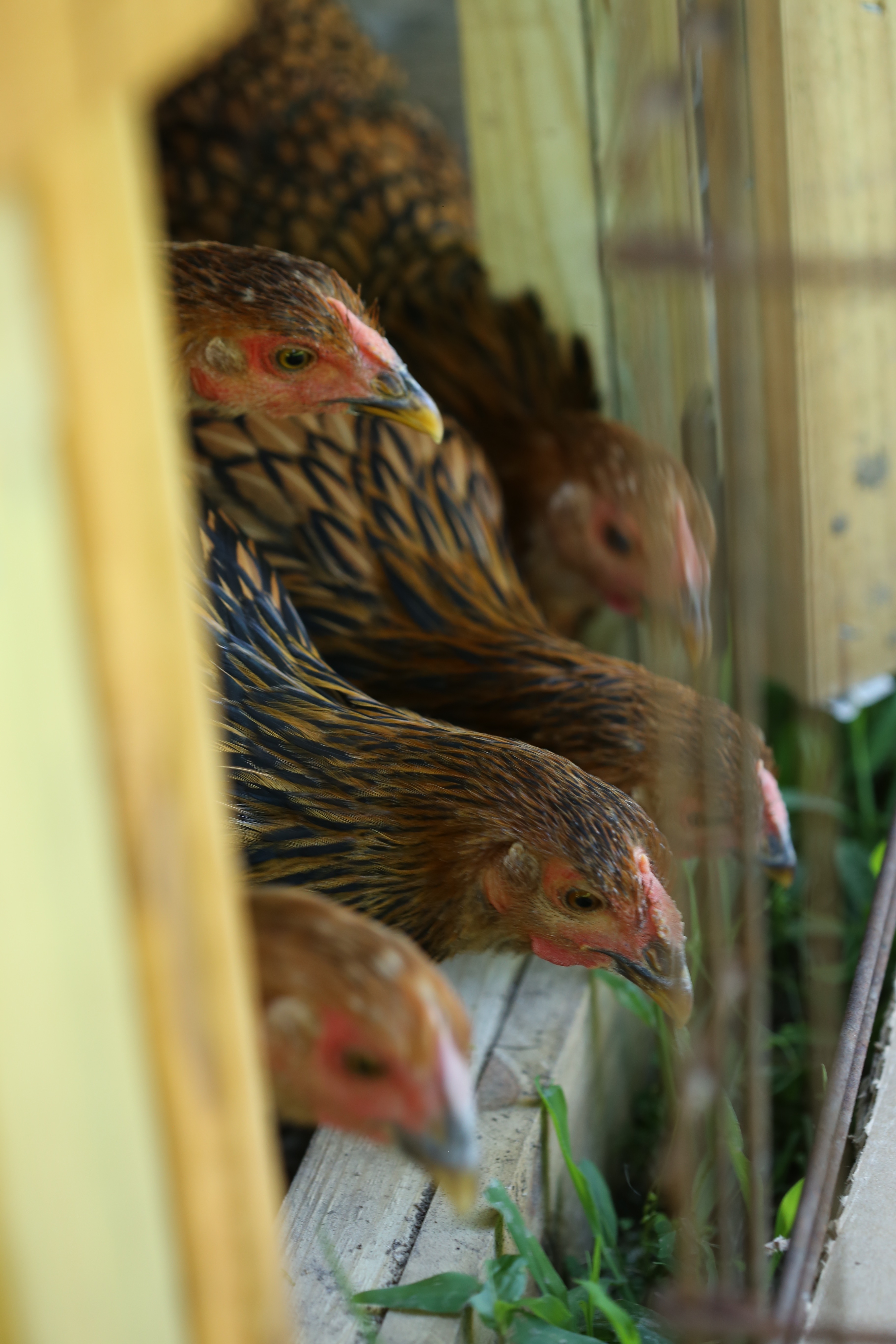
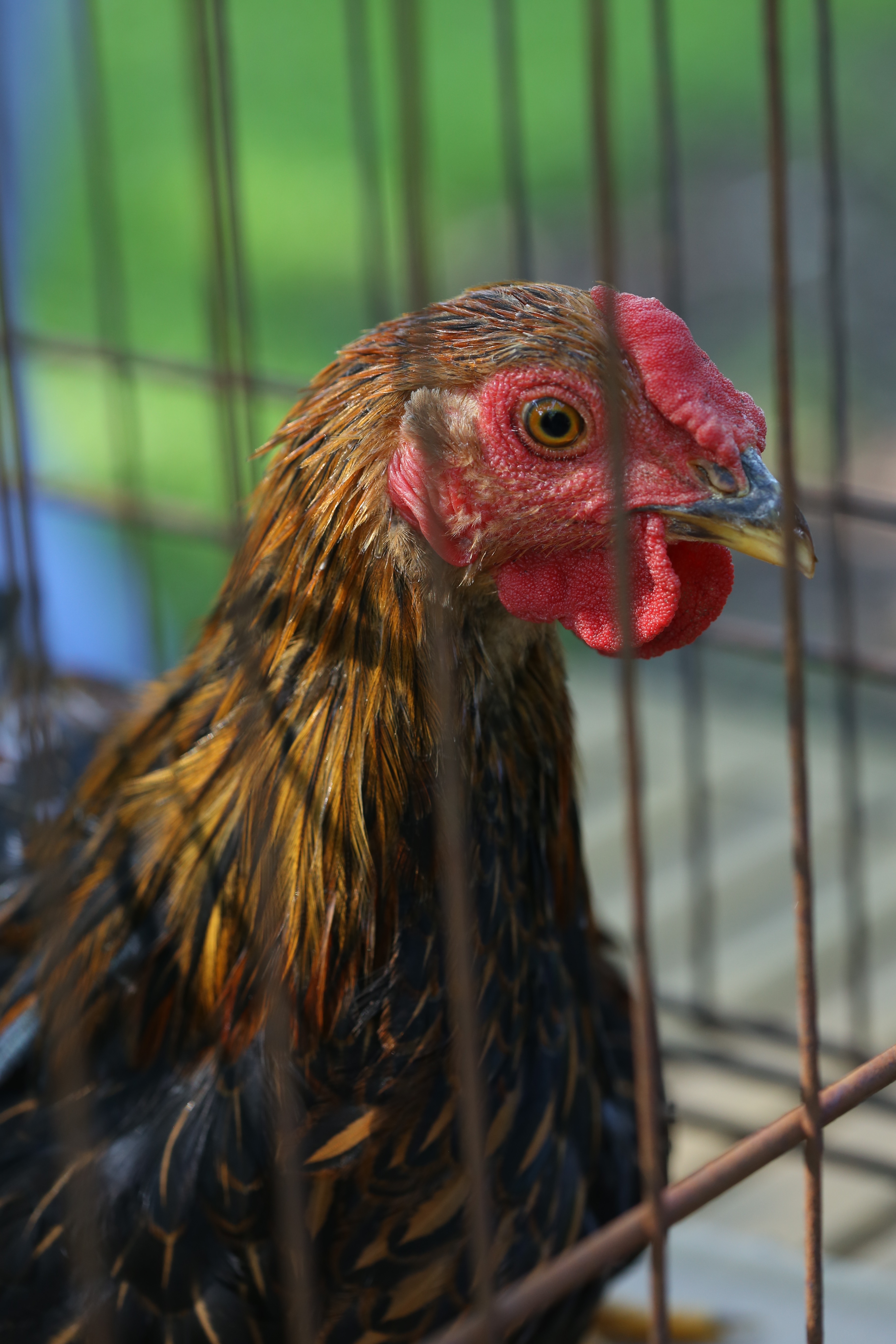
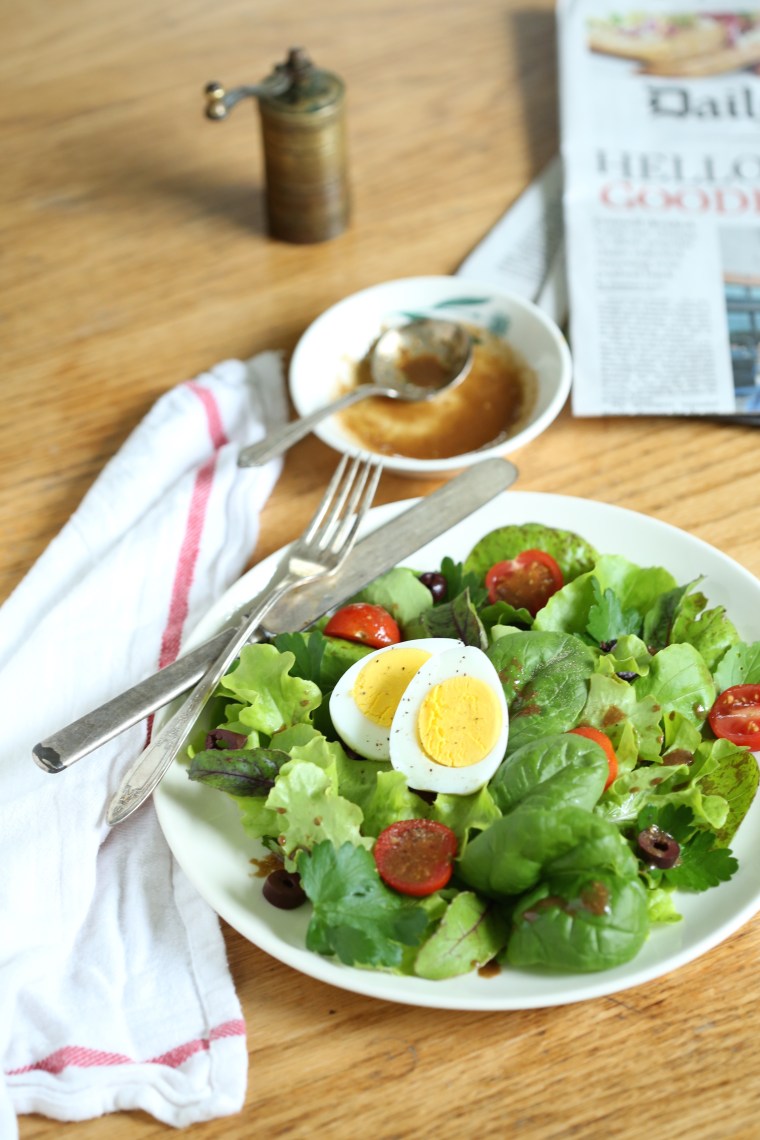 Of course, adding a hard boiled egg from one of our golden laced wyandotte hens and a slice of bread makes it a light, refreshing meal perfect for any season.
 This part of the garden does not get much direct sunlight and once the crape myrtle, which is not in the photo, leafs out completely, it gets little filtered light as well. Last spring I spent a week amending the soil and adding shade tolerant perennials to the bed. This year, nearly all of them came back except for a bleeding heart plant and they have truly filled the space.
 The iris actually gets enough light because it blooms before the crape myrtle creates shade. Also in bloom are azaleas, dianthus and phlox.
 Remind me to tell you the story of the gnome sometime… He is watching over the sunny part of the garden.
 Love the little blossoms on the strawberry begonia.
 While I have put a lot of work into the perennial beds near the front door of the house, none of that compares to the amount of work the vegetable garden has taken. We began in late fall of 2014 by composting the leaves that fell from our trees with grass clippings from the lawn and bags of coffee grounds from Starbucks. In spring of 2015, I topped each of the beds with that compost and placed 45 bales of straw on the beds in the garden. Throughout the year, I attempted to grow vegetables in the bales with out a ton of success. In early winter, when the bales began to tip like drunkards, I broke them down and scattered the straw on top of the compost along with more coffee, ground egg shells, compost (that includes litter from our hens) and a topping of purchased garden soil.
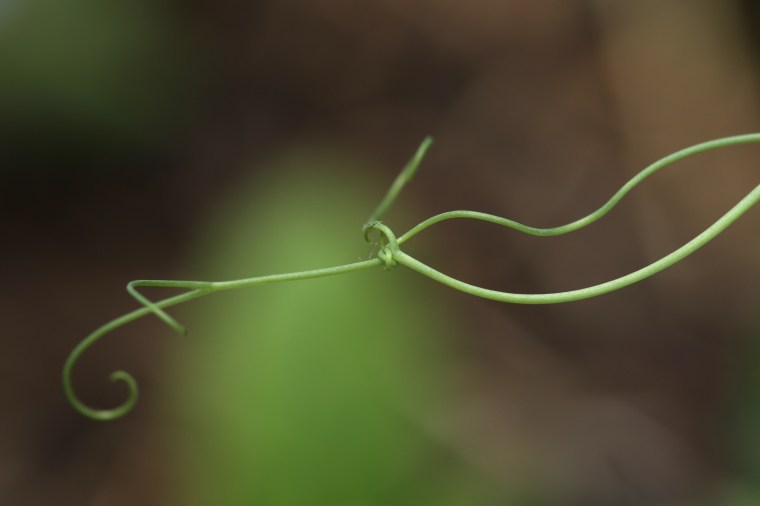 Peas were slow to get going but have finally come on board. Gotta love the tendrils and the way they tie themselves into knots.
 Everybody loves surprise potatoes! Must have missed one when I harvested them last fall. not sure what it is but I am thinking it is most likely a yukon gold but the alternative is red norland; either way works for me!
 A lot of firsts this year. Ailsa Craig onions along with some radishes from an 8 year old package of seeds I found lurking in the box! We have lots of mushrooms coming up in the beds. Did you know that is a good thing? There is a relationship between plants and mushrooms and when some combinations are grown together, you can actually improve your yields-this pairing was random and not of my doing but my fingers are crossed that it helps. Want to know more about it, pick up a copy of
  Chinese cabbage is doing so well-and I grew this from seeds!
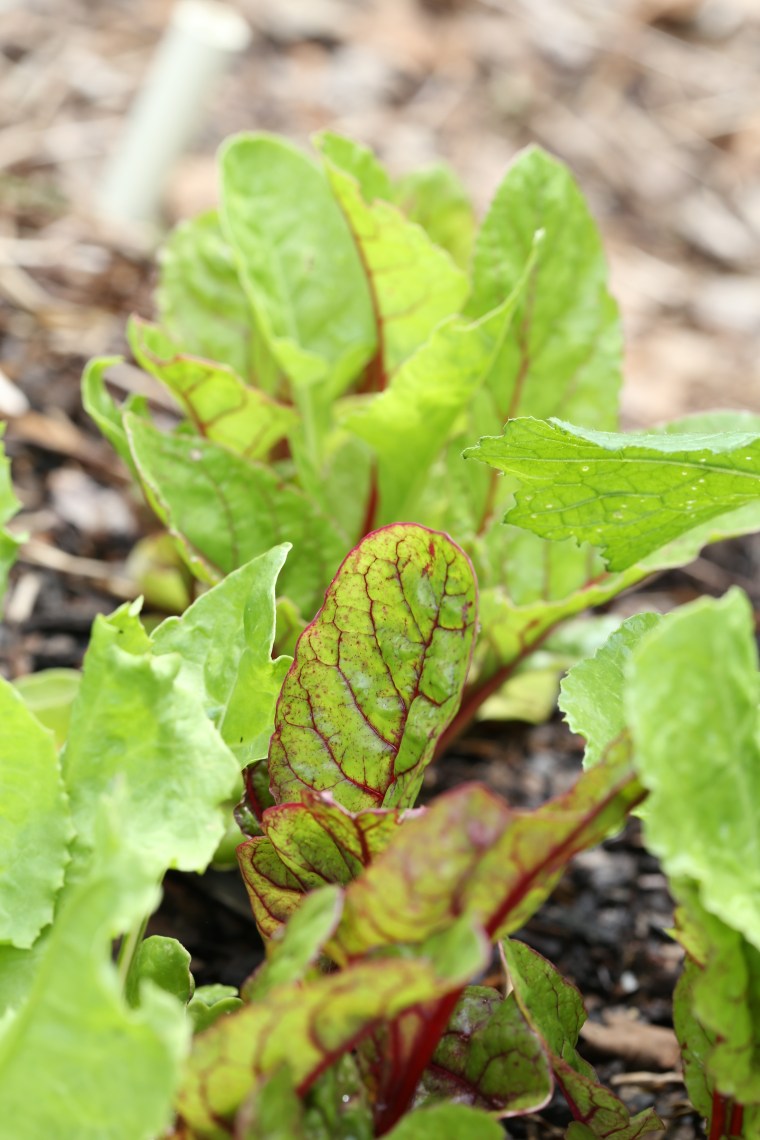 The way chard glows when backlit never gets old.
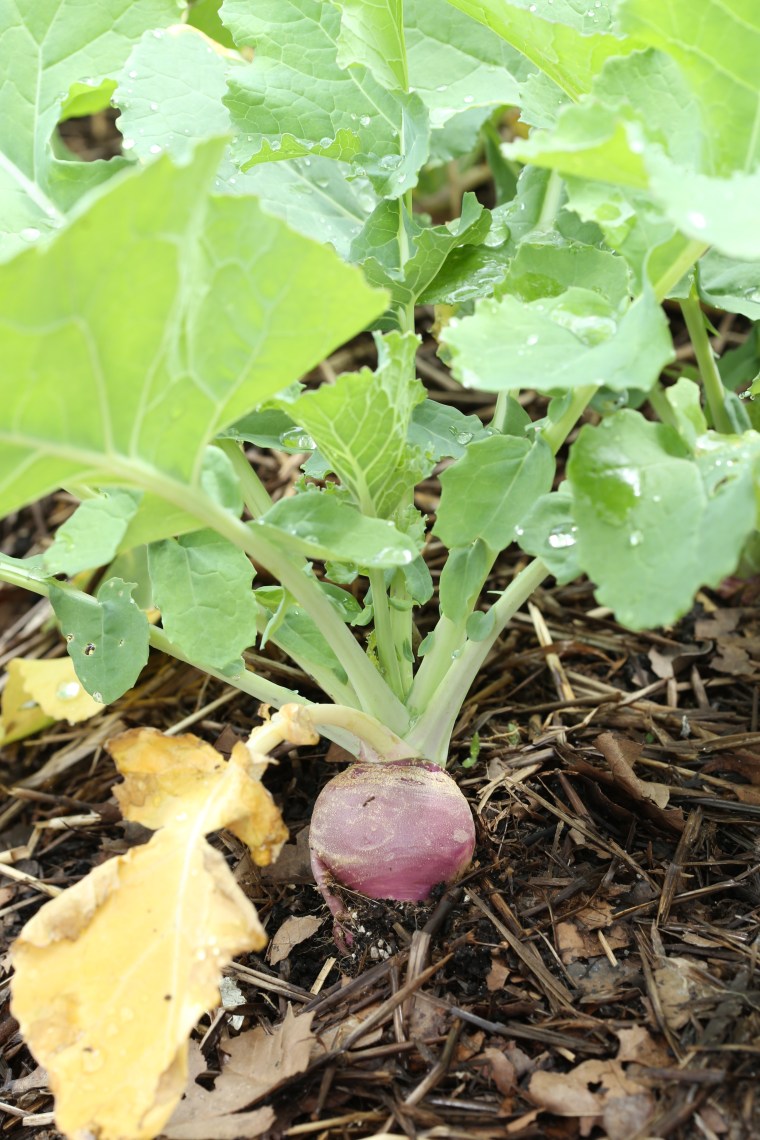 These rutabegas are taking off in the garden. If you grow them, be sure to eat the greens too! Cook them as you would collards and the plant will be doing double duty.
 Another of the firsts in our garden, salsify. Have no idea if we will enjoy it but I saw some plants in Colonial Williamsburg in the garden the the local master gardeners maintain and decided it was pretty and it needed to live in my garden too!
 Speaking of pretty, these radicchio starts have been stealing the show for a while now. We pull a few leaves off from the bottom and are letting the heads fill out.
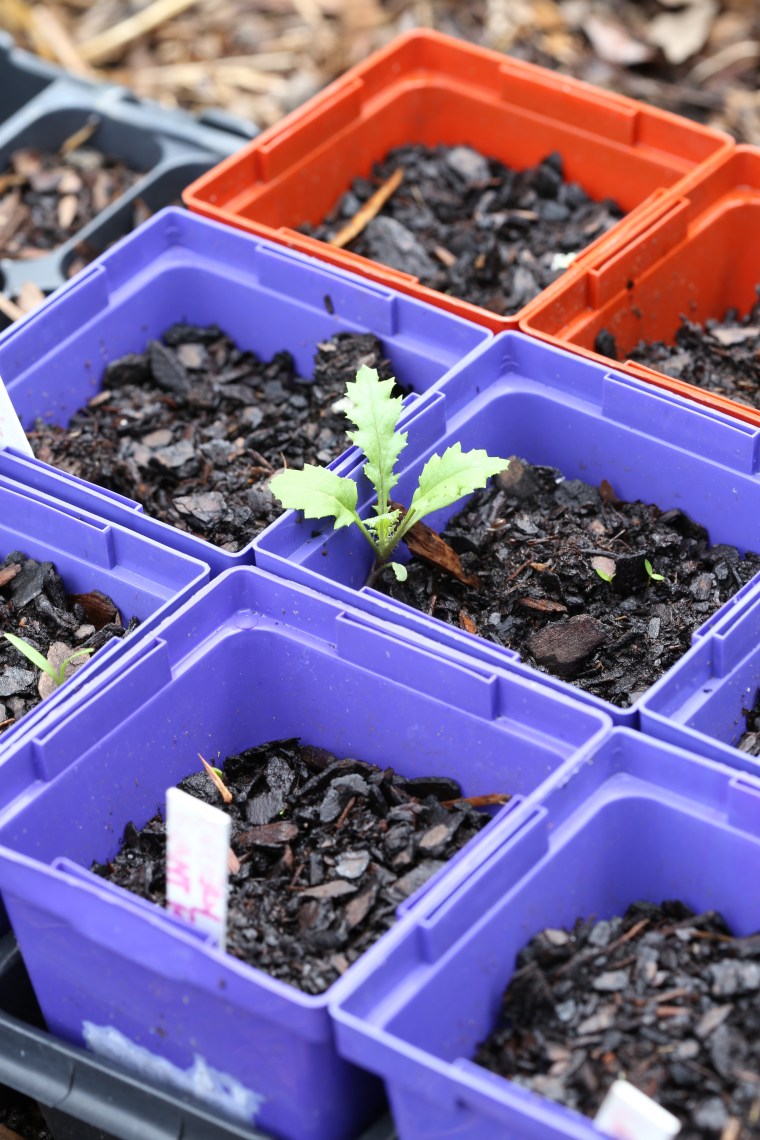 More starts, celery is taking its time.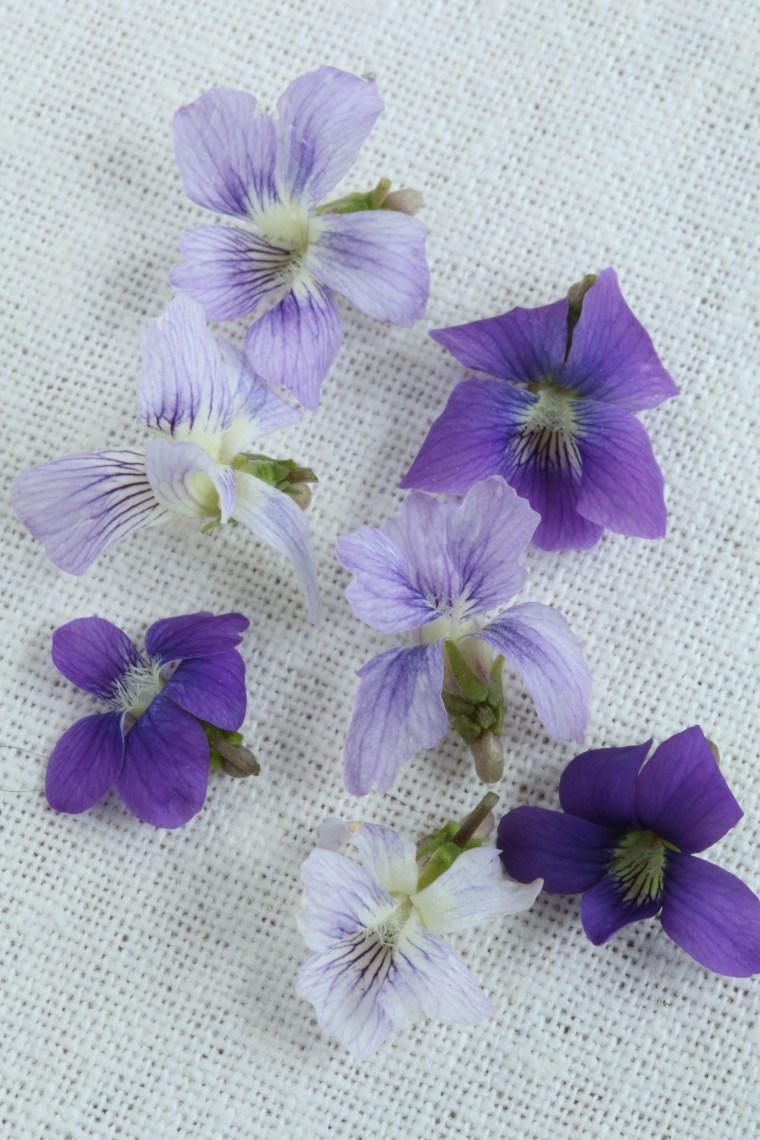
 Making liqueur is a bit tedious because you must pick large quantities of the blossoms. For the batch I made this year, I must have picked about 3 pints. For a single pint of liquer, I placed 2 cups of blossoms into a pint sized jar and added 2 cups of potato vodka and allowed the flowers to steep for a couple days, shaking it once a day. After it had sat and the flowers faded and grew limp, I strained them out and filled the jar with another 2 cups of blossoms. To this, I poured the previously infused vodka over the blossoms and allowed it to steep, shaking it daily for a couple of days and then I repeated the process a third time. My goal was to get a nice dark liqueur and a strong floral flavor.
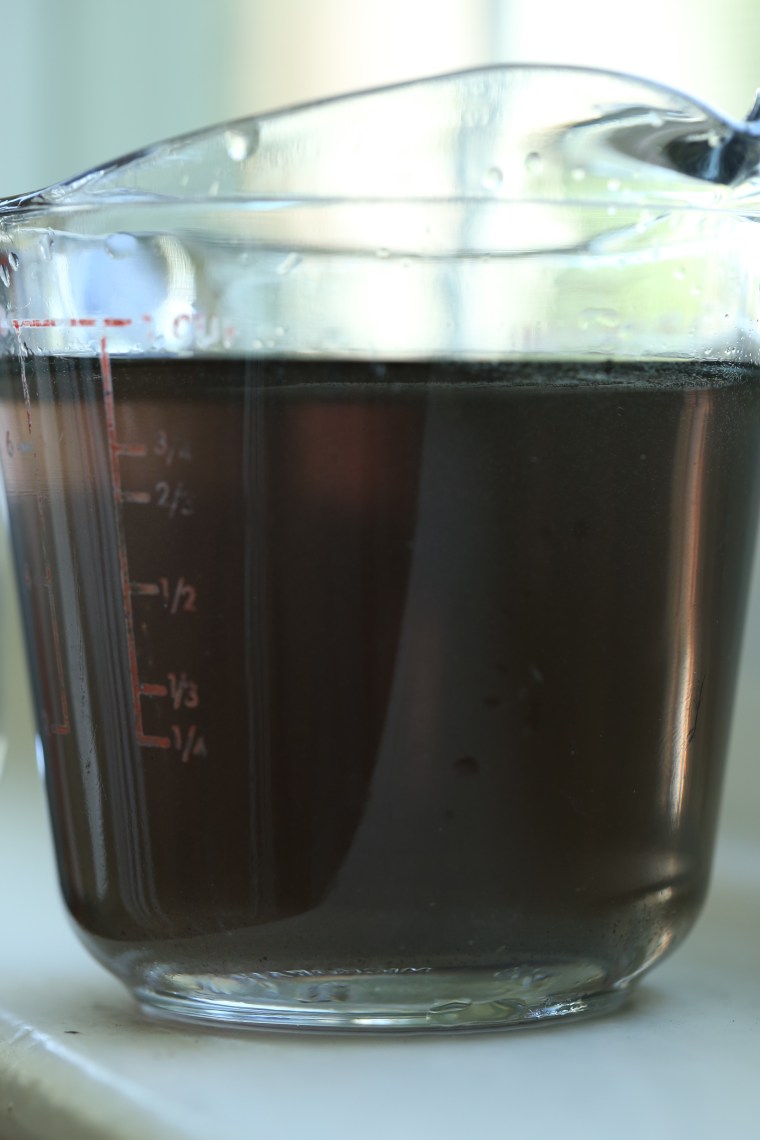 Having allowed the last batch of flowers time to infuse the batch, I strained them out and this was the result. If you look at the top of the liquid, you can see that it is a deep violet color, almost grey. Despite everything, it still had a strong alcohol taste but the aroma was all flowers-and honestly, I am not much of a vodka drinker so it was hard to not taste the vodka in the background but there was definitely a floral flavor there as well. And now that it has aged for a couple weeks, it has mellowed a bit.
 This beauty is
  A close up shot of the flower; look at the hairs on the back of the bloom and the tiny little stamens!
 Dead Nettle is a close cousin of Henbit, both are in the mint family, but if you look closely, you will see that these leaves are heart shaped and gradient in color from the top of the plant to the base while Henbit has round leaves with teeth. Another thing, Dead Nettle flowers make the blossoms from Henbit look huge!
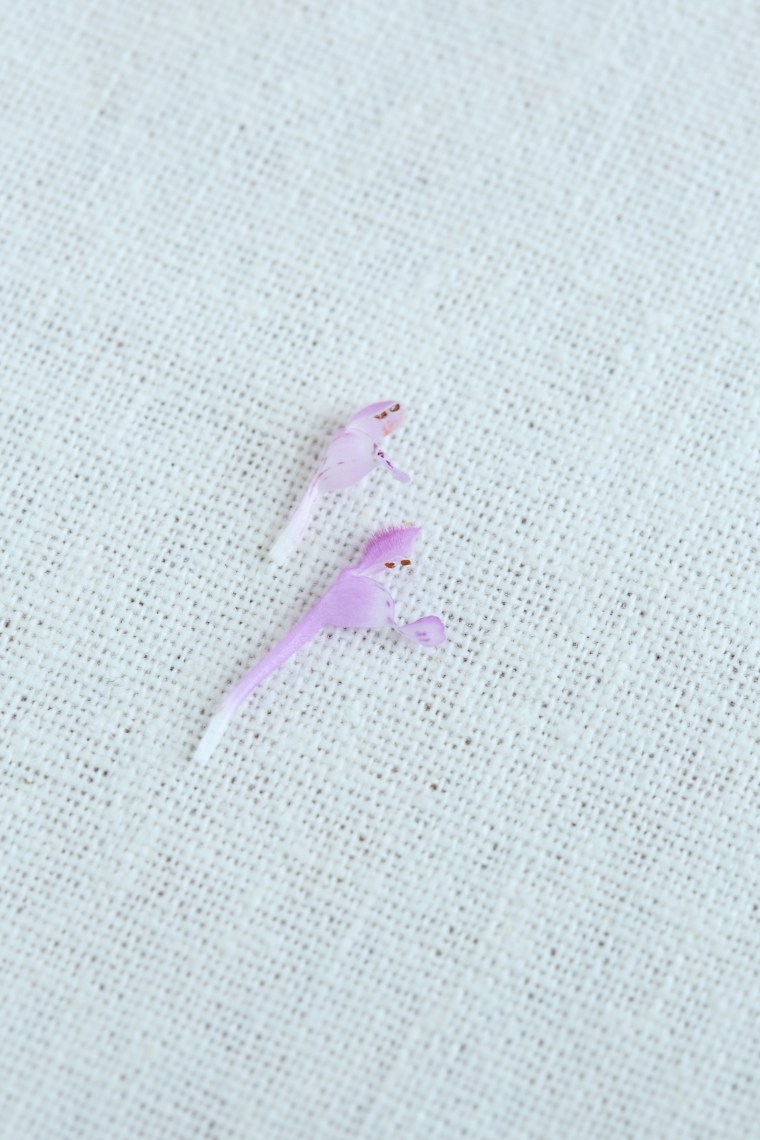 Dead Nettle flower on the top, Henbit flower on the bottom.
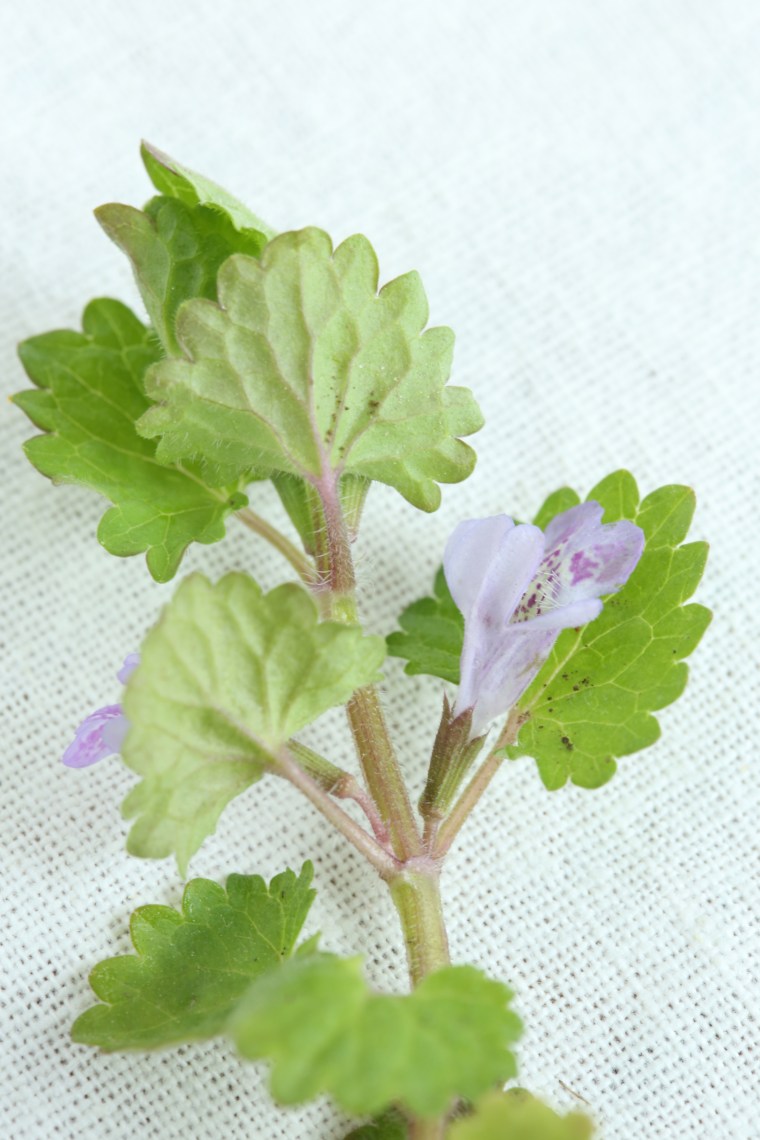 A third player in this game, Ground Ivy, also called Creeping Charlie because it trails like a vine and can quickly cover an area. These blooms are the largest of the three. While some publications will tell you that it is best to make teas rather than eat the leaves, I don’t think there is any real danger in adding a handful of blooms to a batch of likker-although, your back may cry foul!
 My first batch of lawn likker from last year, it has since changed color and is now a bright golden yellow and looks more like a bottle of urine than likker but trust me, the flavor is still floral and so is the aroma!























 will garden for cake